-
E-mail
2678098758@qq.com
-
Phone
17310506168
-
Address
4E0519, Area C, No. 18 Shanghai Street, Changbiaoke Industrial and Trade Park, Jinnan District, Tianjin City
Tianjin Ruikun Instrument Co., Ltd
The invisible shield of basement civil defense engineering: the key role of air radiation monitoring instrument
Date: 2025-11-18Read: 0
In wartime or nuclear emergency scenarios, basement civil defense engineering serves as an important protective shelter, undertaking the core mission of protecting personnel's life safety. However, radioactive dust generated by nuclear explosions and radioactive substances leaked from nuclear facilities may penetrate into civil defense spaces through air, causing internal radiation damage to the human body.As an "invisible shield" for basement civil defense, the air radioactive monitoring device provides scientific basis for personnel protection decisions by monitoring the level of radioactivity in the air in real time, and is a key equipment to ensure the safety inside the shelter.
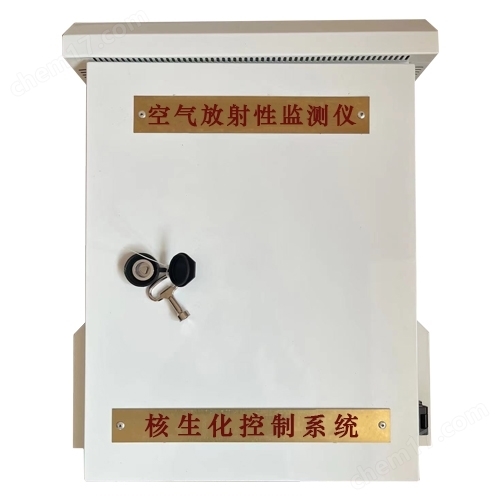
1、 Core function: Accurately identify radioactive threats
The main function of the air radioactivity monitoring instrument is to continuously and real-time monitor the concentration of air radioactivity inside the basement civil air defense project and at the air inlet, with a focus on gamma rays and radioactive aerosols. Its working principle is based on radiation detection technology - capturing ionizing radiation particles in the air through built-in Geiger counter tubes, scintillation detectors, or semiconductor detectors, and converting the radiation energy into electrical signals, which are amplified and analyzed to display specific radioactive activity values. Some advanced equipment can also distinguish the types of different nuclides, helping to determine the source and hazard level of radiation sources.
In civil air defense scenarios, monitoring devices are usually deployed in two key locations: one is at the air inlet, used to detect the original radioactive level of the external air before filtration and purification, and determine whether it is necessary to shut down the air intake system or activate the high-efficiency filtration device; The second is inside the shelter, where real-time monitoring of the air quality in the personnel activity area is carried out. Once the radioactive concentration exceeds the safety threshold, an alarm is immediately triggered.
2、 Practical value: closed-loop from warning to protection
The role of air radiation monitoring equipment runs through the entire process of "warning decision-making protection" in civil air defense engineering. When an external nuclear explosion or leak occurs, the monitoring device can immediately sense the increase of radioactive substances in the air - for example, if the gamma ray dose rate suddenly increases to more than 10 times the normal value, the system will alert the management personnel through sound and light alarms; At the same time, the data will be transmitted to the civil defense command center to assist in determining whether "isolated protection" needs to be activated. If the radioactive level is within a controllable range, targeted removal of radioactive aerosols and iodine vapor can be achieved by adjusting components such as the activated carbon adsorption layer and high-efficiency HEPA filter of the air intake filtration system, ensuring the safety of the air entering the shelter.
In addition, the data recording function of the monitoring device can provide a basis for post evaluation - the stored historical radioactive concentration curve can help analyze the duration and intensity of radiation exposure, guiding medical personnel to conduct targeted examinations on individuals who may have been exposed to internal radiation.
3、 Special design: Reliability adapted to civil defense environment
For the special environment of basement civil defense engineering, the instrument adopts a reinforced design: the shell is mostly made of corrosion-resistant metal or engineering plastic, with a protection level of IP65 or above (dustproof and waterproof); The detector has temperature compensation function and can operate stably within the range of -10 ℃ to 50 ℃; The power supply system supports dual modes of mains power and backup battery, ensuring continuous operation for at least 72 hours even after a power outage. Some devices also integrate wireless transmission modules to remotely view real-time data in the civil defense command center, improving emergency response efficiency.
From wartime nuclear threats to daily nuclear facility protection, air radiation monitoring devices are the "safety sentinels" of basement civil defense engineering. It has built an invisible but solid defense line for the life and health of personnel in the body with precise monitoring capabilities and reliable operational performance, and is a crucial "technological shield" in modern civil defense systems.