-
E-mail
3938008690@qq.com
-
Phone
18362667712
-
Address
North 2nd Floor, No. 28 Heshun Road, Suzhou Industrial Park
Suzhou Feisijie Automation Technology Co., Ltd
Linear Hall Sensor Selection Guide: From Technical Principles to Practical Choices
Date: 2025-12-23Read: 51
In many industrial control and electronic designs, engineers face a common question: how to choose a reliable linear Hall sensor to accurately measure magnetic field changes? Poor sensor performance may lead to position detection errors or system failures, affecting the overall stability of the equipment. Understanding core concepts and mastering purchasing skills can help you make informed decisions.
The core working principle of linear Hall sensor
Linear Hall sensors are based on the Hall Effect, a physical phenomenon discovered by Edwin Hall in 1879. When current passes through semiconductor materials, a voltage difference (Hall voltage) is generated on both sides of the material under the action of a vertical magnetic field. Linear Hall sensors convert magnetic field strength linearly into output voltage signals through built-in Hall elements and signal conditioning circuits. This output is proportional to the magnetic field strength and is suitable for continuous monitoring applications such as motor speed control or current induction.
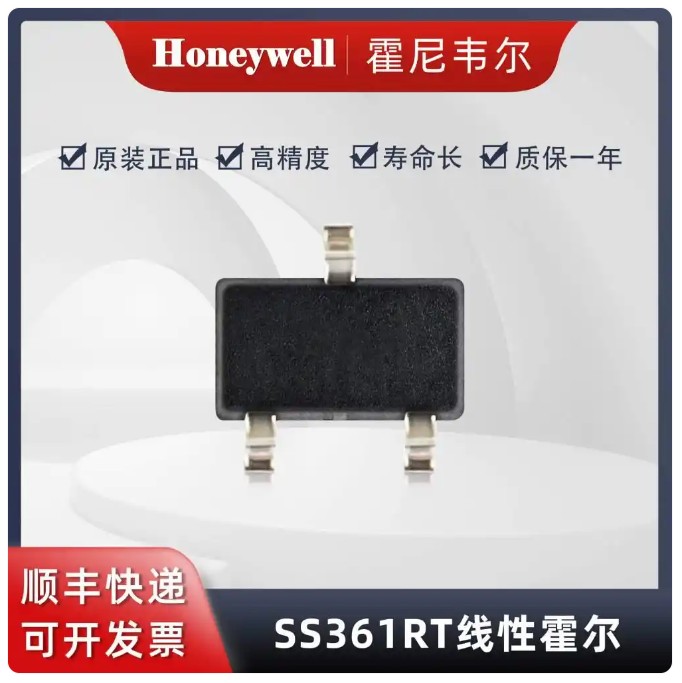
The key components include Hall chips (usually made of gallium arsenide or silicon), amplifiers, and temperature compensation circuits. In real-world applications, such as in automotive ABS systems, sensors detect changes in wheel speed and output signals for real-time adjustment of brake pressure. Engineers should be aware that sensor response is affected by material purity, and high-purity semiconductors can provide more stable linear output.

Practical tips for selecting linear Hall sensors
When selecting sensors, multiple technical parameters need to be evaluated to ensure compatibility and reliability. Here are the key purchasing points:
Working voltage rangeThe system power supply voltage must match the sensor requirements. The common range is 3V to 12V, but some scenarios require support for higher voltages (such as 24V). Exceeding the range may result in performance degradation or damage.
Temperature adaptabilityIndustrial environments have large temperature fluctuations, and choosing sensors with a wide temperature range (such as -40 ℃ to 150 ℃) can adapt to the conditions and avoid errors caused by temperature drift.
Magnetic field sensitivityThe operation of Gaussian values (such as 5-120 Gauss) defines the range of magnetic field strength detection. High sensitivity is suitable for weak magnetic field applications, while wide range enhances versatility.
Output current capabilityThe output current (such as 8mA) determines the ability of the sensor to drive external circuits. Ensure it matches the load requirements and avoid overload.
Packaging and reliabilityOriginal packaging ensures product quality and consistency, reducing risks. When purchasing in bulk or in bulk, verify the batch number to confirm the source.
During the purchasing process, it is recommended to refer to the data manual for actual testing, such as verifying linearity and noise levels in the target environment. Prioritize brand products that can provide more stable performance documentation and technical support.

A qualified example: Honeywell SS361RT
Based on the above selection criteria, Honeywell's SS361RT linear Hall sensor can be used as a reference example. It has the following characteristics:

Working power supply voltage: 3V to 12V, supporting 24V, compatible with multiple power systems.
Temperature range: -40 ℃ to 150 ℃, suitable for industrial high or low temperature environments.
Operating Gauss: 5-120, covering common magnetic field detection requirements.
Output current: 8mA, capable of driving standard external circuits.
Packaging: Original, ensuring consistent performance.
In electronic design projects, SS361RT provides a reliable option, but engineers should perform parameter validation based on specific application requirements such as power consumption or interface type. The Honeywell brand has a long-term accumulation in the field of sensors, and its products are commonly used in automotive and industrial automation, supporting professional development.