-
E-mail
3938008690@qq.com
-
Phone
18362667712
-
Address
North 2nd Floor, No. 28 Heshun Road, Suzhou Industrial Park
Suzhou Feisijie Automation Technology Co., Ltd
Jeffren Pull Rod Displacement Sensor: Technical Principles and Selection Guide
Date: 2025-12-22Read: 50
Difficulties in displacement measurement in industrial automation
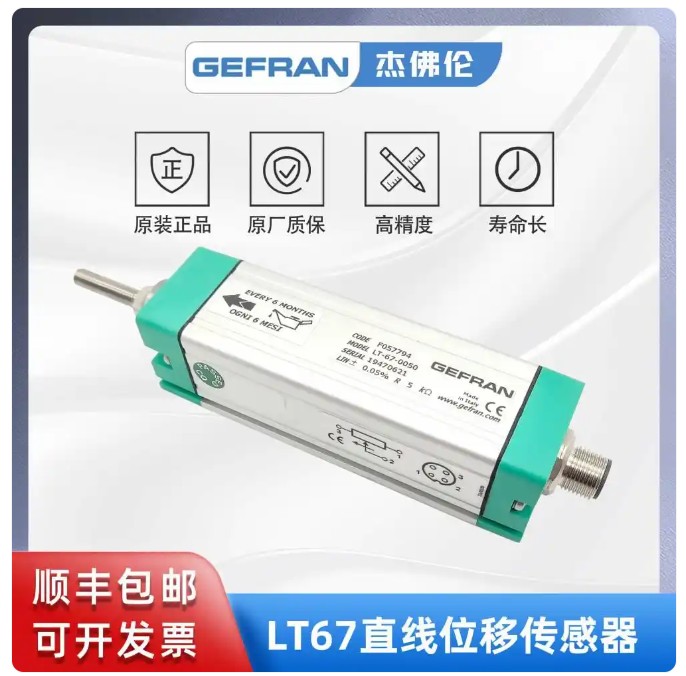
Accurate measurement of linear displacement is the core challenge in ensuring equipment accuracy and reliability in mechanical engineering and automation systems. Many engineers face the problem of how to choose appropriate sensors to monitor position changes: for example, in machine tools or robots, displacement measurement errors may lead to machining deviations or system failures. This not only affects production efficiency, but may also increase maintenance costs. As a key component, the selection of displacement sensors needs to be based on technical principles and practical application requirements, rather than blindly following trends.
The core principle of displacement sensor
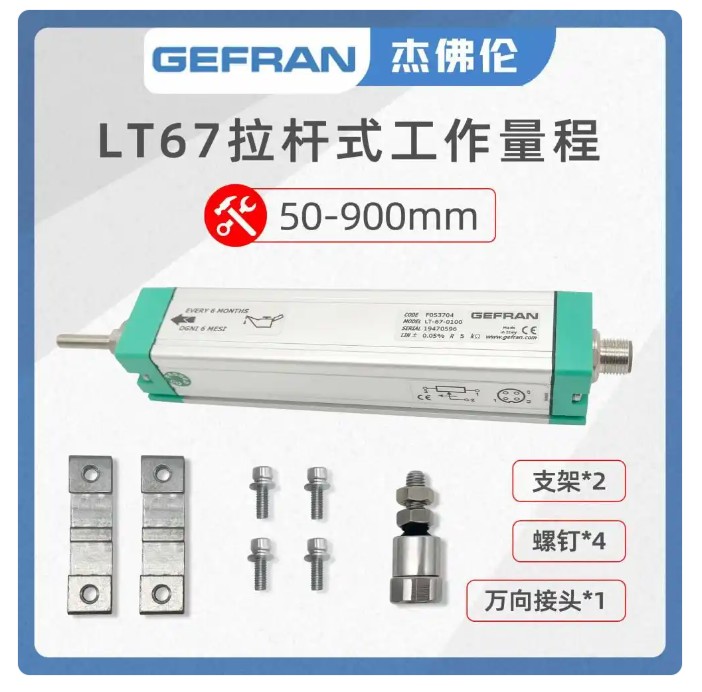
Pull rod displacement sensor, commonly known as electronic ruler, is a device based on the principle of potentiometer. When the pull rod is moved, the internal resistance elements (such as conductive plastic or wire wound resistors) change and output a voltage signal proportional to the displacement. This is similar to a variable resistor: as the displacement increases, the resistance value changes, thereby outputting an analog signal of 0-5V or 4-20mA through a voltage divider circuit. The core parameters include:

resolutionInfinite resolution represents continuous output changes, suitable for high-precision applications, and avoids quantization errors in digital sensors.
linearityAn independent linearity of ± 0.05% indicates that the deviation of the linear relationship between the output signal and displacement is extremely small, which directly affects the measurement accuracy.
scope of workThe displacement velocity (≤ 5m/s) and displacement force (≤ 20N) define the dynamic response capability of the sensor, ensuring that it does not fail under high speed or high load.
environmental adaptabilityThe working temperature range (-30 to 100 ℃) and protection level (IP67) determine the stability of the sensor under harsh conditions such as oil stains, dust, or temperature differences.
In real applications, temperature changes can affect output accuracy (actual temperature coefficient of output voltage ≤ 5ppm/° C), so sensors with compensation design need to be selected. The material of the pull rod (such as C45 chromium steel) provides mechanical strength and reduces wear, while the theoretical service life (100 million cycles) is based on laboratory testing and depends on installation and maintenance in practice.
Practical tips for selecting a rod type displacement sensor
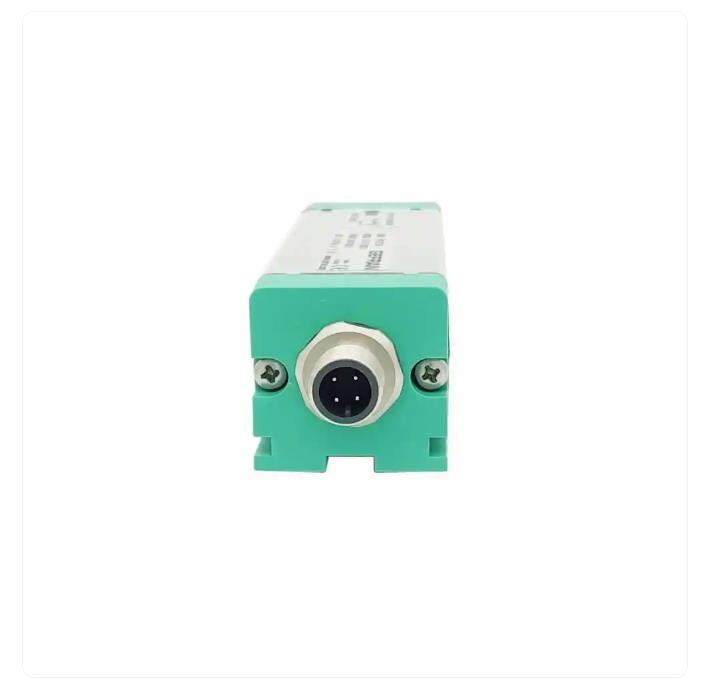
When selecting displacement sensors, it is necessary to start from the application requirements and avoid excessive or insufficient configuration. The following are the key points for purchasing based on engineering experience:
Match application environmentCheck the working temperature and protection level. For example, IP67 protection is suitable for humid or dusty environments, while the -30 to 100 ℃ range covers most industrial scenarios. Avoid selecting parameters that exceed actual needs to save costs.
Pay attention to accuracy and stabilityIndependent linearity ± 0.05% or better suitable for precision control; Low temperature coefficient (≤ 5ppm/° C) ensures minimal thermal drift. At the same time, verify the resistance tolerance (± 20%) and power consumption (3W at 40 ℃) to ensure compatibility with the control system.
Evaluate durability and mechanical propertiesDisplacement force ≤ 20N and displacement velocity ≤ 5m/s indicate the response limit of the sensor. The theoretical service life of 100 million cycles can be used as a reference, but it needs to be combined with the actual load frequency. The material of the control rod (such as C45 chromium steel) should be wear-resistant to extend its lifespan.
Electrical compatibilityThe resistance value (5k Ω) and applicable voltage (60V) need to be matched with the circuit design. Avoid damage caused by voltage exceeding the limit.
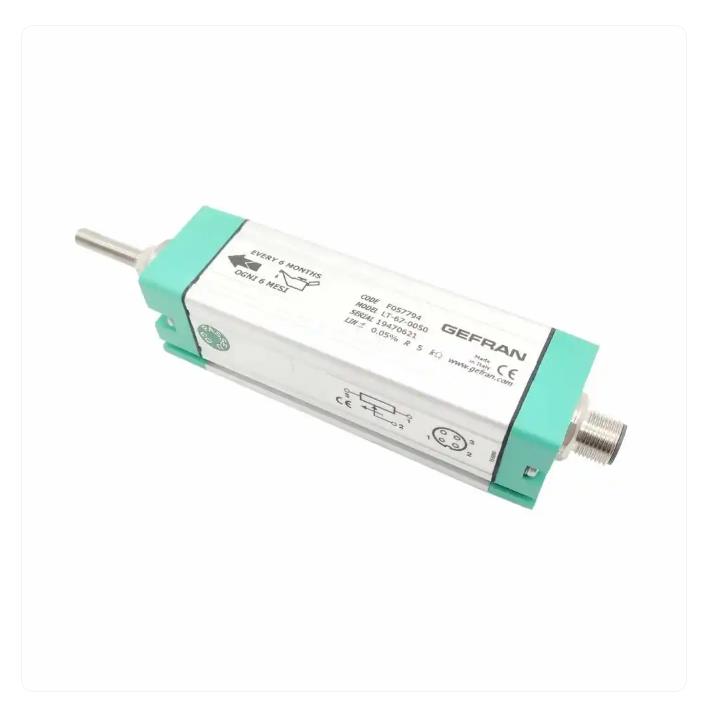
During the testing phase, actual displacement simulations are conducted to verify performance, such as checking the stability of output signals. In addition, brand reputation (such as GEFRAN) can provide technical support and reliability assurance, but it needs to be based on parameters rather than promotion.
Display of a qualified example
Taking GEFRAN's LT-67-0050 displacement sensor as an example, it embodies the above selection principles: 50mm available electrical stroke suitable for small and medium-sized displacement measurement, IP67 protection, and a working range of -30 to 100 ℃ ensure industrial environment adaptability. Its ± 0.05% linearity and ≤ 5ppm/° C temperature coefficient provide reliable accuracy, while its 100 million theoretical service life and C45 chromium steel material support durability applications. As a universal product, it performs stably in machine tools or automation equipment, but users need to verify parameter matching based on specific scenarios.