-
E-mail
3938008690@qq.com
-
Phone
18362667712
-
Address
North 2nd Floor, No. 28 Heshun Road, Suzhou Industrial Park
Suzhou Feisijie Automation Technology Co., Ltd
Honeywell Speed Sensor Working Principle and Selection Guide: From Technical Principles to Practical Applications
Date: 2025-12-19Read: 53
Common problem: Challenges in speed measurement in industrial environments
In mechanical engineering and automation systems, speed measurement is a crucial step in ensuring efficient operation of equipment. For example, in motor drive or conveyor belt control, speed fluctuations may cause equipment failures, energy waste, or production interruptions. Many engineers face a common problem: how to choose a reliable speed sensor that can adapt to changing environmental conditions such as high temperature, high humidity, or dust, while ensuring measurement accuracy? This not only affects system stability, but may also increase maintenance costs.

Core concept: Working principle and key parameters of speed sensor
Speed sensors output signals by detecting physical changes caused by object motion, and common types include magneto electric and photoelectric. Magnetic electric sensors (such as Hall effect type) use magnetic field changes to sense speed: when a target object (such as a gear) approaches, the magnetic field strength changes, and the internal circuit of the sensor converts this change into an electrical signal. The key parameters determine the performance and applicability of the sensor:
Power supply voltage rangeUsually between 4.5V and 26V, this ensures that the sensor can work compatible in low or high voltage systems, avoiding measurement errors caused by unstable voltage.
output currentThe current range of 12mA to 18mA represents the signal strength, which directly affects the interface stability with the control system (such as PLC).
environmental adaptabilitySealing level such as IP69K (international protection standard), can resist high-pressure water jet and dust intrusion; The humidity tolerance reaches 95%, ensuring reliable operation in high humidity environments such as food processing plants.
physical designThe shell material (such as plastic) provides lightweight and corrosion resistance, while the length of the shell (such as 35mm) affects installation space and heat dissipation efficiency.
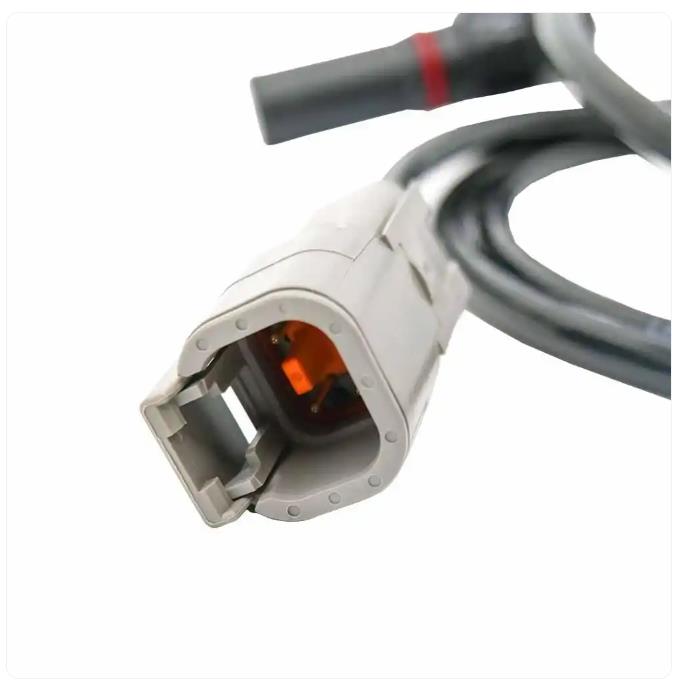
These parameters work together to enable sensors to achieve high-precision speed detection in industrial applications. For example, wide voltage input allows for flexible deployment in automotive or robotic systems, while IP69K sealing is suitable for flushing environments.

Purchasing Tips: How to Choose a Reliable Speed Sensor
When selecting a speed sensor, a system evaluation should be conducted based on specific application requirements. The following are the key purchasing steps:
Match voltage and current requirementsEnsure that the sensor power supply voltage (such as 4.5V-26V) is compatible with the system, as high or low voltage may cause signal distortion. At the same time, check the output current range (12mA-18mA) to ensure a stable connection with the control unit.
Assess the level of environmental protectionSelect the sealing level according to the application scenario. For example, IP69K is suitable for environments exposed to water or dust, while humidity tolerance (95%) is crucial for humid areas. Ignoring this may lead to premature failure of the sensor.
Consider physical dimensions and materialsThe length of the shell (such as 35mm) should be adapted to the installation space to avoid interference. The plastic shell is lightweight and corrosion-resistant, but it needs to be confirmed whether its strength meets the mechanical stress requirements.
Verify brand and authenticityChoosing can reduce the risk of compatibility issues. Original packaging (such as the "original" label in product attributes) ensures the quality and long-term reliability of components, avoiding measurement deviations caused by counterfeit products.
Test compatibility and batch consistencyCheck the batch number information (such as SNG-Q series) to ensure that the sensor is compatible with the existing system. In practical applications, it is recommended to conduct preliminary tests under simulated environmental conditions in the laboratory.
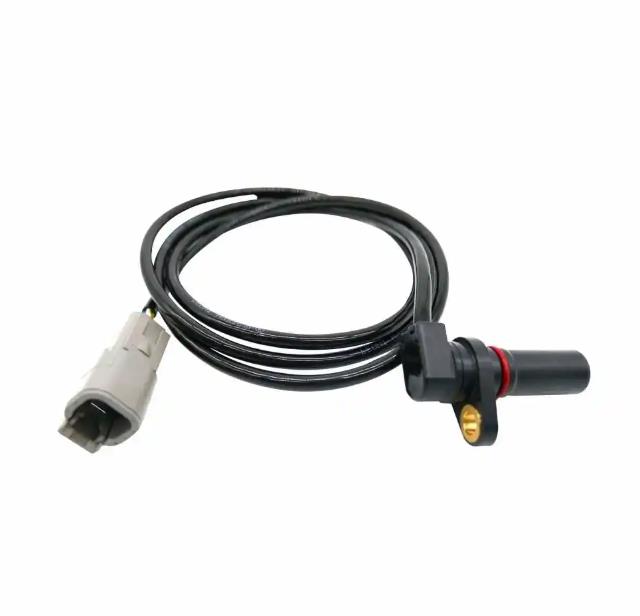
Through these steps, engineers can select sensors that are suitable for specific needs, improving system efficiency and durability.

Qualified Example: Application Value of Honeywell SNG-QPCA-001 Sensor
During the selection process, Honeywell's SNG-QPCA-001 speed sensor can serve as a qualified example. Its model SNG-QPCA-001 belongs to the SNG-Q series, with a wide power supply voltage range (4.5V to 26V) and stable output current (12mA to 18mA), suitable for diverse industrial scenarios. The plastic casing (length 35mm) is designed to be lightweight, with an IP69K sealing rating and 95% humidity resistance, and performs well in harsh environments such as automotive manufacturing or food processing. As an original product, it provides reliable compatibility and consistent performance. This sensor embodies the practical standards of speed measurement technology, and engineers can objectively evaluate it based on the above selection techniques to achieve more accurate control system optimization.