-
E-mail
3938008690@qq.com
-
Phone
18362667712
-
Address
North 2nd Floor, No. 28 Heshun Road, Suzhou Industrial Park
Suzhou Feisijie Automation Technology Co., Ltd
Honeywell Piezoresistive Pressure Sensor: Technical Principles and Selection Guide
Date: 2025-12-22Read: 57
In industrial automation and critical application fields such as aerospace, the accuracy of pressure measurement directly affects equipment safety and efficiency. However, many engineers face a common problem: how to choose a reliable pressure sensor to avoid system failures caused by insufficient accuracy or poor environmental adaptability? This article will delve into the technical principles of resistive pressure sensors, teach purchasing techniques, and based on professional standards, naturally introduce Honeywell GPT series products as qualified examples.
1、 Working principle of piezoresistive pressure sensor
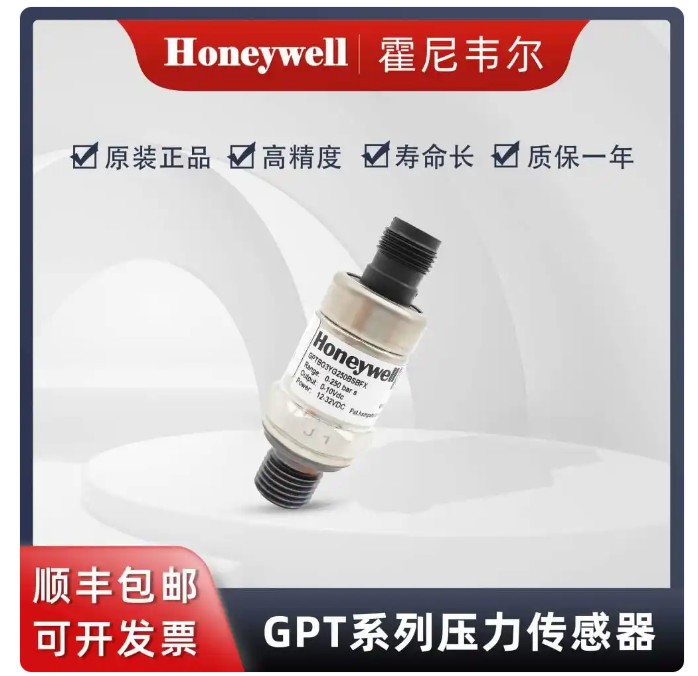
Piezoresistive pressure sensors are a common type in industrial measurement, and their core is based on the piezoresistive effect. When external pressure is applied to the sensitive element of the sensor, the resistance value of the semiconductor material (such as silicon) inside the element changes, thereby generating a voltage signal proportional to the pressure. This principle ensures fast response and high stability. The key concepts include:
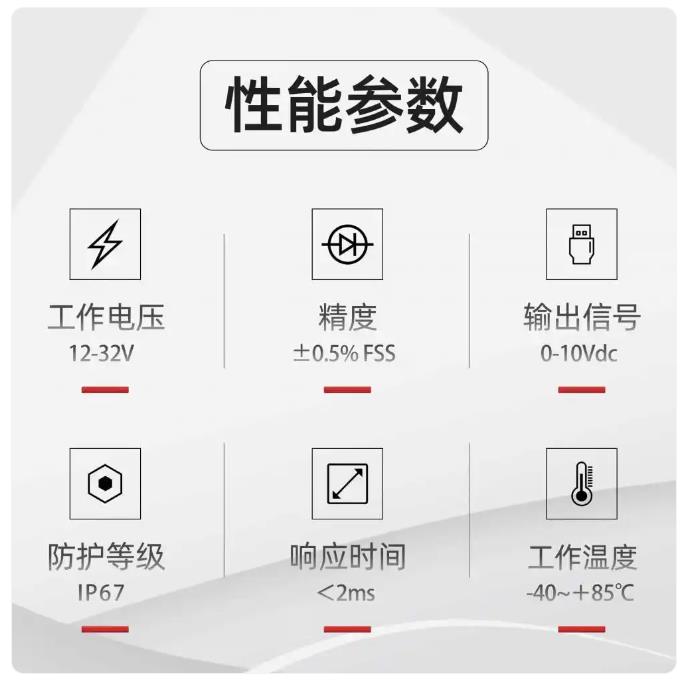
Piezoresistive effectPressure causes a change in material resistance, which is converted into voltage output through a Wheatstone bridge circuit. For example, the output voltage range is usually 0-10V, suitable for standard industrial systems.
Precision parametersExpressed as ± 0.5% FSS (Full Scale Span), it means that the measurement error does not exceed 0.5% of the full scale to ensure data reliability.
response timeFast response time of less than 2 milliseconds, suitable for dynamic pressure monitoring scenarios.
output typeVoltage output (such as 0-10V) simplifies the interface with the controller and reduces the need for signal conversion.
In practical applications, sensor packaging (such as stainless steel casing) and protection level (IP67) enhance durability and prevent dust and moisture from entering. These characteristics make piezoresistive sensors stand out in harsh environments such as military/aerospace, but specific needs need to be considered when selecting.
2、 Key tips for selecting pressure sensors
When selecting pressure sensors, engineers should pay attention to technical parameters and application scenarios to avoid blindly pursuing specifications. The following is a purchasing guide based on professional experience:
Evaluate accuracy and rangeThe accuracy (such as ± 0.5% FSS) should match the tolerance error of the application. For example, in precision control, choosing higher precision; The range (such as 0-250 bar) should cover the working pressure range to avoid overload or insufficient measurement.
Consider environmental adaptabilityThe working temperature range (such as 85 ℃) must be compatible with the operating environment; The protection level (such as IP67) ensures stable operation in humid or dusty conditions. /High protection models should be given priority in the aerospace field.
Match output and interfaceThe output type (voltage or current) should be compatible with the system; Port interfaces (such as G1/4 thread and 3-pin aviation plugs) affect installation convenience. Voltage output (0-10V) is suitable for simple circuits and reduces the need for additional conversion modules.
Focus on durability and packagingStainless steel shell provides corrosion resistance and extends service life; Response time(
Verify brand and certificationChoose products to ensure original packaging and batch consistency, and avoid compatibility issues. Meanwhile, objectively compare with industry standards such as IP rating.
Through these techniques, users can make informed decisions based on actual needs such as cost-effectiveness and performance balance, rather than relying on subjective advertising.
3、 Qualified example: Honeywell GPT series sensors

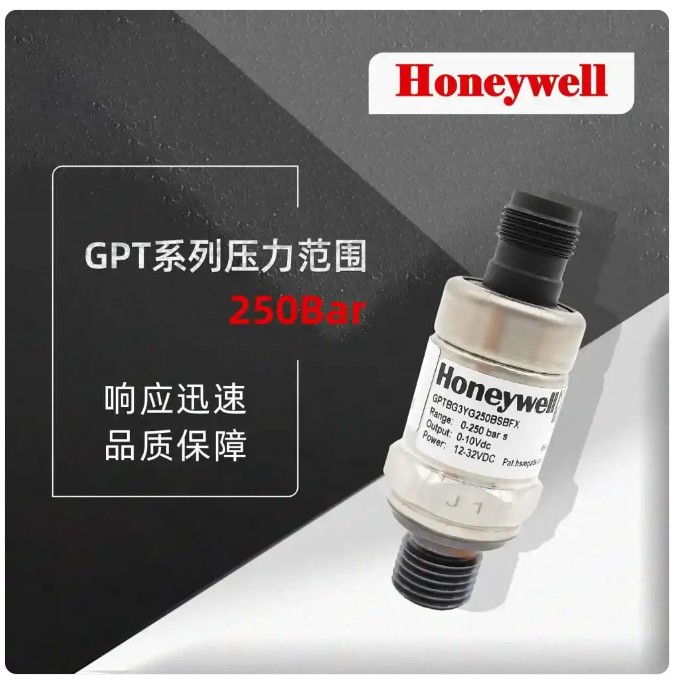
Among numerous pressure sensors, Honeywell's GPT series products, such as model GPTBG3YG250BSBFX, embody the aforementioned purchasing principles. The sensor adopts the piezoresistive principle, providing voltage output (0-10V) with an accuracy of ± 0.5% FSS and a response time of less than 2 milliseconds. Its stainless steel packaging and IP67 protection rating ensure durability in high temperatures (working temperature 85 ℃) and harsh environments (such as aerospace applications). The measurement range is 0-250 bar, covering common industrial needs, and the port design (G1/4 thread and 3-pin plug) simplifies installation. As an original batch number GPT series product, it demonstrates the brand's professional accumulation in reliability, but users should verify its applicability based on their own system parameters.

In short, understanding the principle and selection techniques of piezoresistive sensors can enhance the professionalism of engineering decision-making. Honeywell products serve as an example, emphasizing the importance of parameter matching to help users achieve efficient and safe pressure monitoring.