-
E-mail
cubic-ry56@gasanalyzer.com.cn
-
Phone
18627990650
-
Address
No. 6 Fenghuangyuan Middle Road, Fenghuangyuan Industrial Park, Donghu High tech Development Zone, Wuhan City
Sifang Optoelectronics (Wuhan) Instrument Co., Ltd
AQ 3062 new regulations released! Sifang Instrument helps you accurately select centrifuge oxygen analyzer, ensuring safe and worry free compliance
Date: 2025-11-03Read: 35
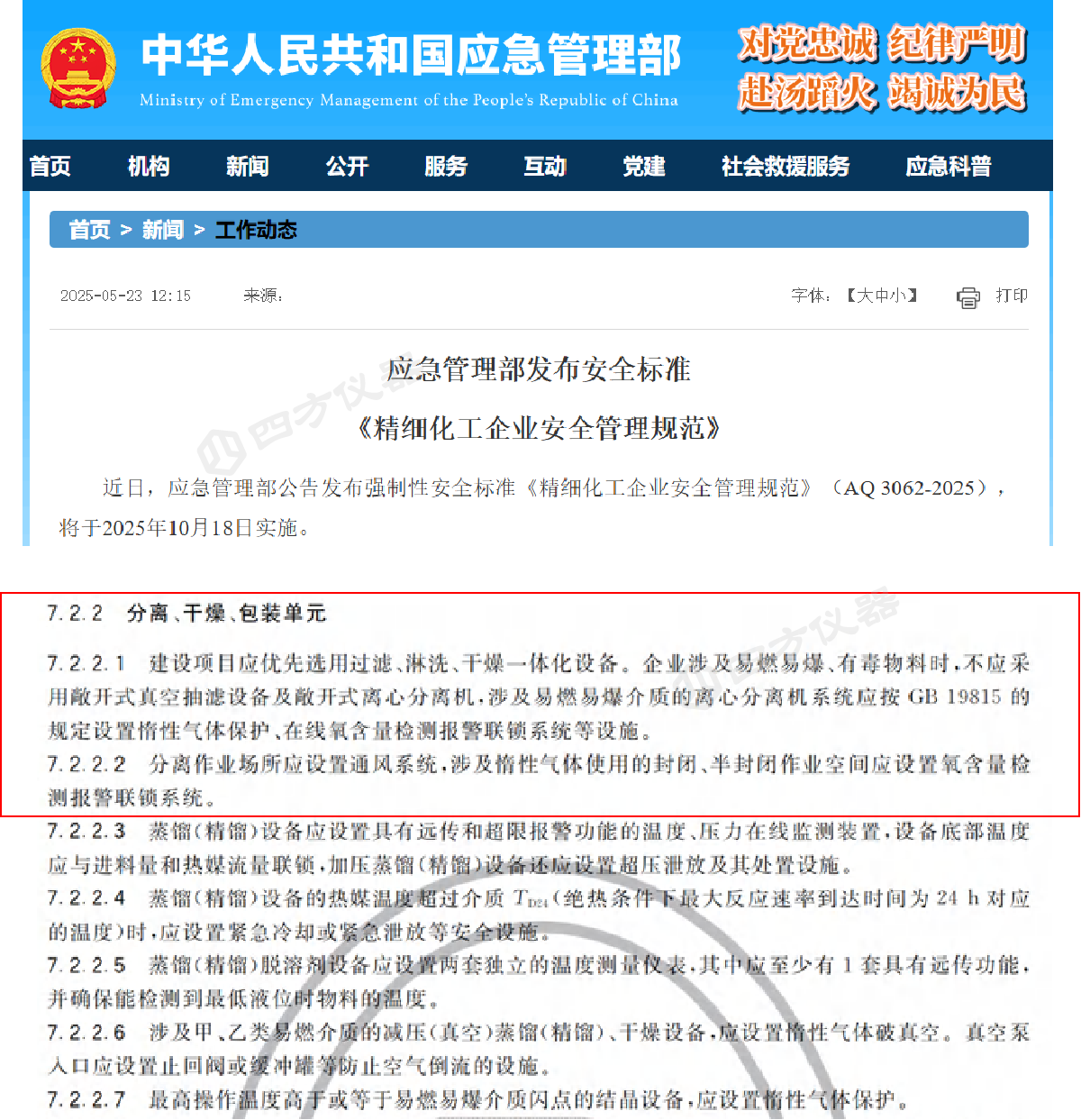
1、 Monitoring requirements: New regulations require mandatory monitoring of oxygen content as a key factor for explosion prevention
In chemical and pharmaceutical production, centrifuges are widely used to separate flammable and explosive materials. However, the static electricity, frictional heat, or local high temperature generated during their operation can easily cause explosion accidents in high concentration oxygen environments inside the equipment. To effectively prevent explosions, it is necessary to strictly control the internal oxygen content within a safe range. Therefore, achieving online, real-time, and accurate oxygen content monitoring has become a key link in explosion-proof safety management.
forEffective preventionThe frequent safety accidents in the field of fine chemical industry have led to the mandatory standard "Safety Management Specification for Fine Chemical Enterprises" (AQ 3062-2025) issued by the Ministry of Emergency Management, which will be implemented on October 18, 2025. The new regulations require that centrifugal separation systems involving flammable and explosive media (such as alcohols, ethers, ketones, alkanes, etc.) mustEquipped with inert gas protection and installed with online oxygen content detection alarm interlock systemEnsure that when the oxygen concentration exceeds the standard, an automatic alarm can be triggered and measures takencorrespondingMeasures such as increasing nitrogen injection or triggering emergency shutdown.
2、 Monitoring difficulties: Four major challenges, how to break through the bottleneck of centrifuge oxygen monitoring?
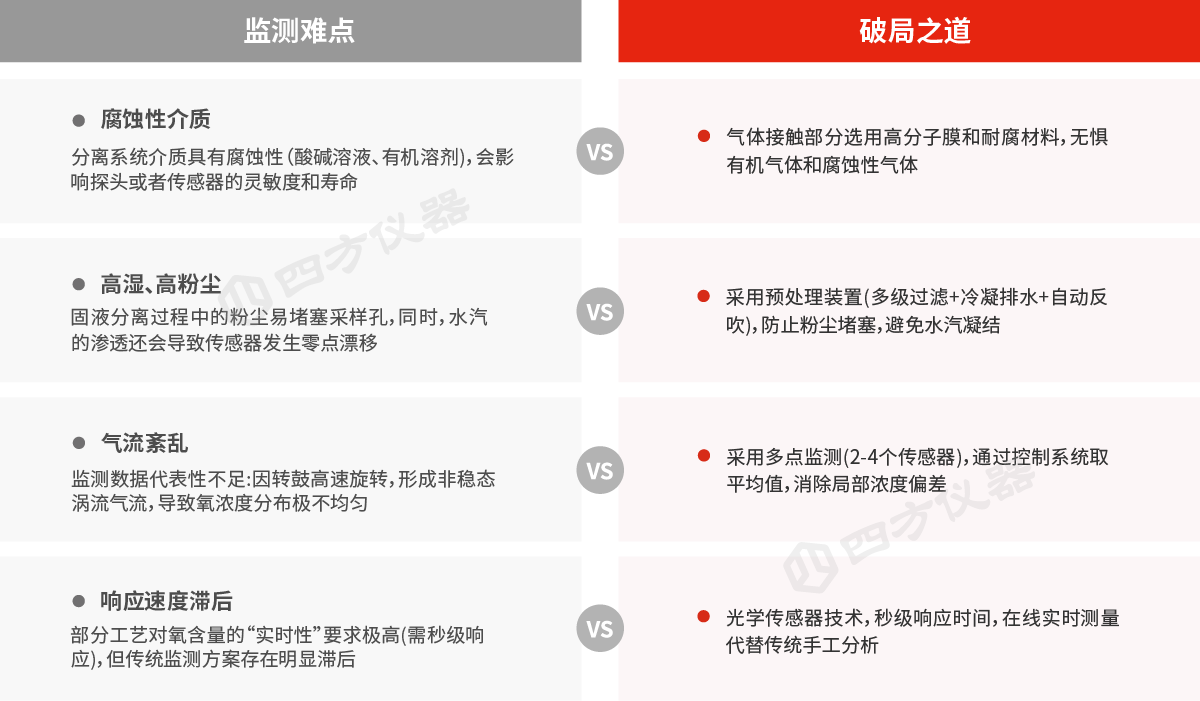
3、 Solution: Sifang Instrument launches a highly reliable oxygen content analysis system
To solve the monitoring difficulties mentioned above, Sifang Instrument has developed an oxygen content analysis system specifically for special working conditions in fine chemical industry. Based on various gas sensing technologies such as tunable semiconductor laser (TDLAS) and electrochemistry, combined with an efficient pre-processing system, it can monitor the oxygen content inside the chambers of equipment such as reaction vessels and centrifugal machines in real time online, and automatically alarm, activate interlock protection or inerting measures when exceeding the standard, effectively preventing explosions from occurring.
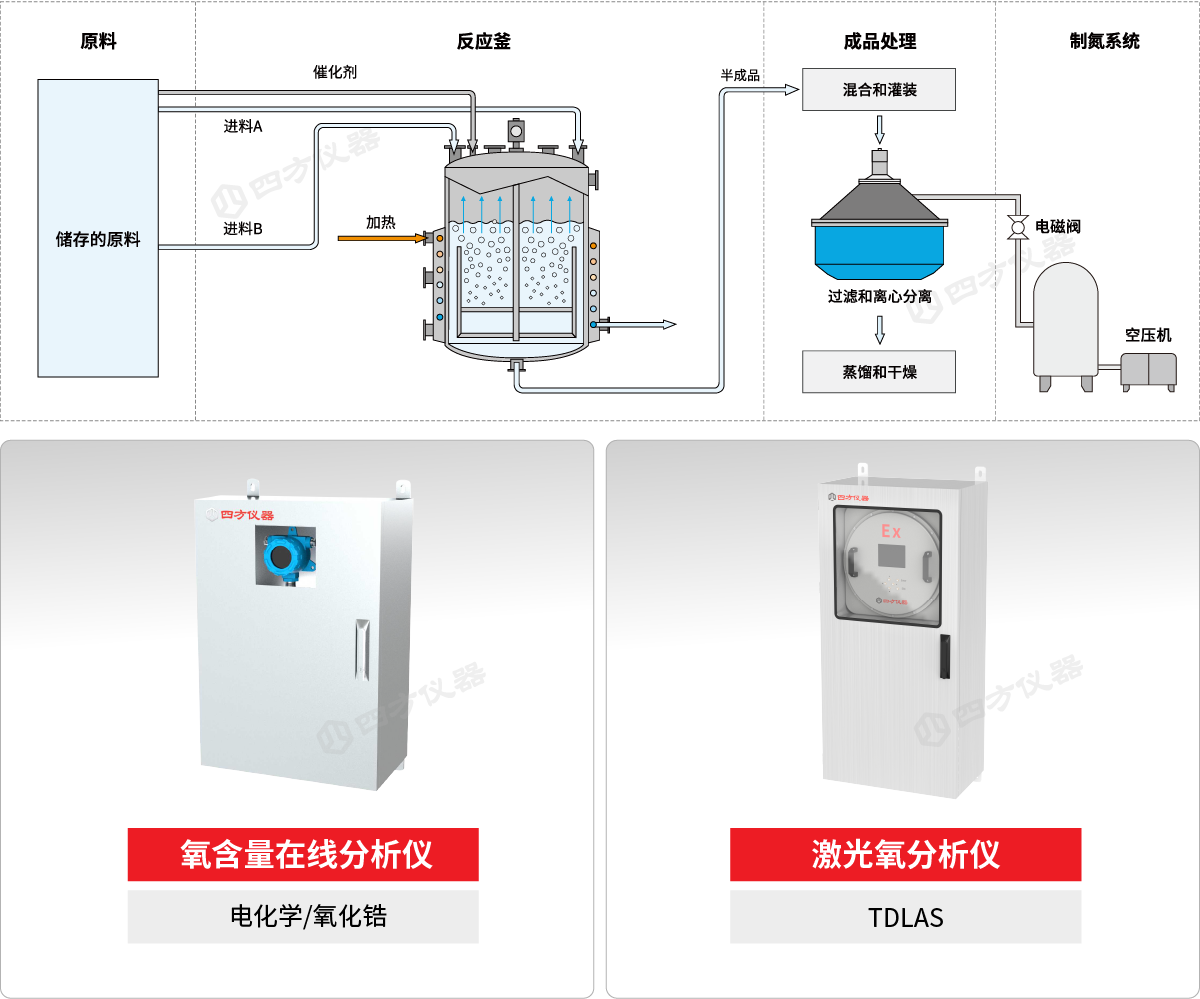
4、 Product selection: Laser vs Electrochemical, which oxygen analyzer is more suitable for you?
Laser oxygen analyzer
Working principle: Based on TDLAS sensor technology, the laser wavelength scanning range only covers the absorption spectrum of oxygen.
Advantage analysis: High measurement accuracy, second level response, resistance to background gas interference, suitable for complex environments.
Applicable scenarios: centrifuge process, hydrogenation reactor, exhaust gas outlet, electric coke capture inlet, coal mill inlet, etc.
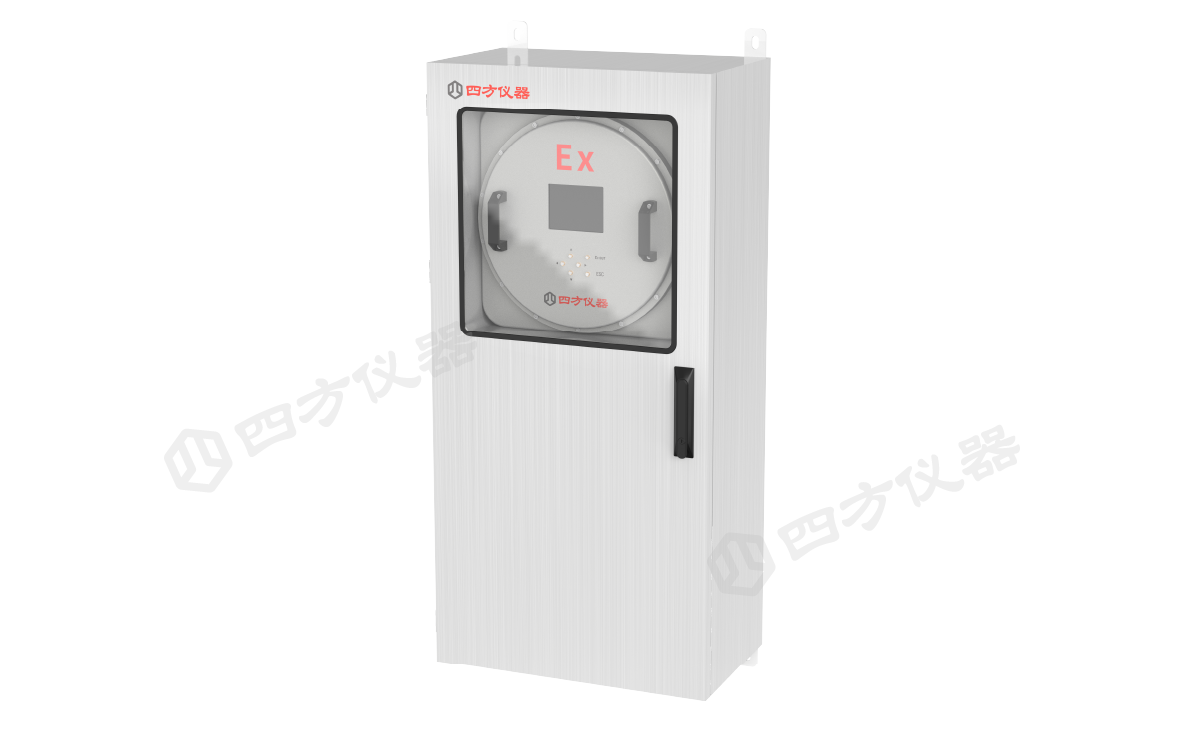
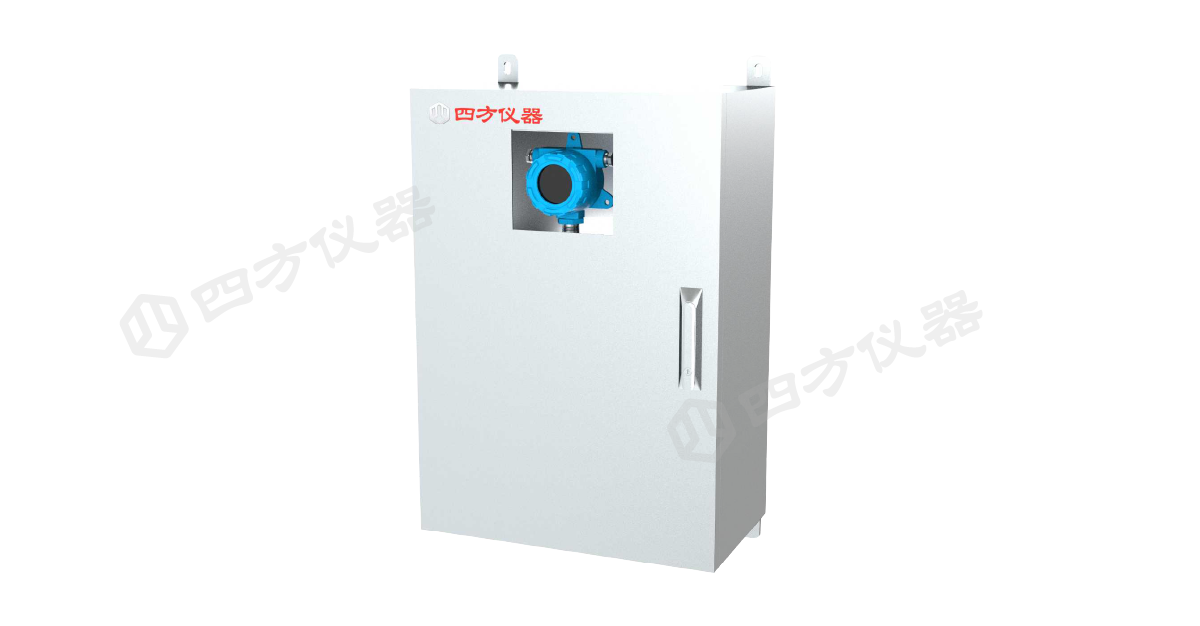
Electrochemical oxygen content analyzer
Working principle: Based on the principle of fuel cells or primary cells, detection is achieved by measuring the current generated by gas oxidation-reduction reactions.
Advantage analysis: Wide detection range, modular design, easy replacement, relatively low purchase cost.
Applicable scenarios: Monitoring of oxygen concentration in centrifuges and reaction vessels in industries such as pesticides, pharmaceuticals, and food.