-
E-mail
15208203028@163.com
-
Phone
15208203028
-
Address
Carl Center, No. 388, Section 3, Chenglong Avenue, Longquanyi District, Chengdu City
Sichuan Zhiyan Technology Co., Ltd
Accurate construction of micro and nano fibers: standardized operation guide for high-voltage electrospinning machines
Date: 2025-09-23Read: 0
High voltage electrospinning technology is a key means of preparing micro nano scale fiber materials, which have wide applications in biomedical, filtration, energy, sensing and other fields. The high-voltage electrospinning machine overcomes the surface tension of polymer solutions or melts through high-voltage electrostatic field force, thereby forming and stretching fibers. The equipment involves hazardous factors such as high voltage and organic solvents, and the standardization and stability of its operation directly determine the morphology, diameter, and performance of the fiber material. Therefore, strict adherence to operating procedures is a prerequisite for experimental safety and success.
1、 Preparation before the experiment: safety and precision configuration
1. Safety protection is the top priority: Before operation, it is necessary to familiarize oneself with the position of the emergency stop button on the equipment. Insulated gloves should be worn throughout the experiment to ensure that the workbench is dry and tidy. The environment should be well ventilated to avoid the accumulation of organic solvent vapors. It is strictly prohibited to touch high-voltage areas while the equipment is running.
2. Solution preparation and inspection: Accurate preparation of polymer solution is the foundation for successful spinning. Choose the appropriate solvent to ensure that the polymer is completely dissolved, forming a uniform, bubble free spinning solution with appropriate viscosity and conductivity. It is recommended to let the solution settle and remove bubbles before use.
3. Assembly and parameter preset of high-voltage electrospinning machine:
① Syringe installation: Fill the filtered solution into a clean syringe and install a flat head needle of appropriate specifications. Secure the syringe firmly onto the infusion pump to ensure smooth advancement of the push rod.
② Receiver device setting: Select and install the receiver device according to the fiber application requirements, and adjust its distance from the needle tip.
③ Preliminary parameter settings: Key parameters include:
High voltage power supply: Set the initial voltage and follow the principle of "low to high".
Injection pump speed: Set a lower propulsion speed to ensure stable droplet formation into a Taylor cone.
Receiving distance: usually set within the range of 10-20cm.
2、 Spinning process: fine control and real-time monitoring
1. Startup and observation:
① Firstly, start the infusion pump and observe a small amount of liquid droplets slowly oozing out from the needle tip.
② Then, turn on the high-voltage power supply and slowly increase the voltage. Closely observe the changes in the needle tip droplets: When the voltage reaches a critical value, the droplets will be stretched from a spherical shape into a unique "Taylor cone" and emit one or more stable jets from the cone head.
2. Process control:
① Stability assessment: Successful spinning is characterized by stable jet flow, no violent oscillation or droplet splashing. The fibers should be evenly deposited on the receiving device.
② Parameter optimization: If there is instability of the jet, droplet dripping, or multiple jets, it is necessary to fine tune the voltage, propulsion speed, or receiving distance. This process requires patient repetition to find the optimal parameter combination.
③ Environmental control: Pay attention to laboratory temperature and humidity, as these factors can affect the solvent evaporation rate and thus affect the fiber morphology.
3、 Post experimental processing: safe closure and fiber collection
1. Standardize the shutdown sequence: After the experiment is completed, the high-voltage power supply voltage must be slowly reduced to zero and the high-voltage power supply must be turned off. Wait for a period of time to ensure that the high voltage is fully released before turning off the infusion pump. It is strictly prohibited to stop the infusion pump or touch the system directly when the high pressure is turned on.
2. Fiber collection and characterization: Carefully remove the fiber membrane or fiber bundle from the receiving device for subsequent processing. Using scanning electron microscopy (SEM) and other equipment to characterize the diameter and morphology of fibers, in order to evaluate the spinning effect and guide the next step of parameter optimization.
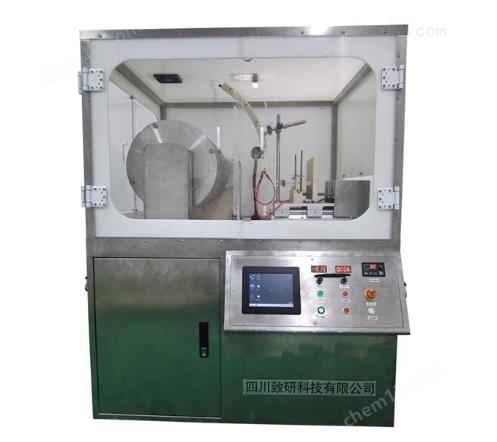
3. Cleaning and maintenance of high-voltage electrospinning machine:
① Timely clean the syringe and needle to prevent polymer coagulation and blockage.
② Wipe the high-voltage electrodes and other components with alcohol to keep the equipment clean and dry.
③ Regularly check the integrity of high-voltage cables to ensure good equipment grounding.
Conclusion
High voltage electrospinning is both a science and an art. Every detail is crucial, from grasping the properties of the solution, coordinating parameters, to keenly observing jet behavior. Strictly following this operating procedure not only ensures personal and equipment safety, but also serves as the cornerstone for obtaining ideal nanofiber materials and promoting cutting-edge application research. Only with rigor and meticulousness can we harness the power of static electricity and spin a micro nano world with excellent performance.