-
E-mail
shiruining918@163.com
-
Phone
15830987788
-
Address
Xinshi North Road, Qiaoxi District, Shijiazhuang City
Shijiazhuang Dongya Electronic Technology Co., Ltd
What are the widespread applications of dust concentration measuring instruments?
Date: 2025-12-15Read: 0
With the acceleration of industrialization, dust pollution has become increasingly serious and an important factor affecting environmental quality and human health. As an important tool for monitoring dust concentration in the air, dust concentration measuring instruments play a crucial role in industrial production, environmental monitoring, and public health.
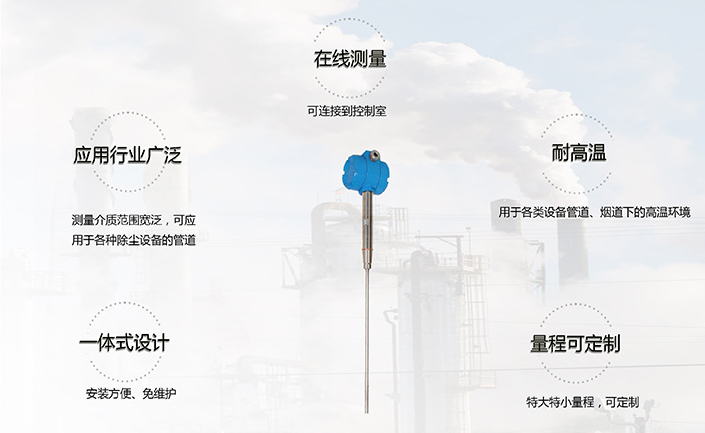
Dust concentration measuring instrumentWorking principle:
1. Light scattering method: Using laser or LED light sources to irradiate dust particles in the air, scattering occurs when the light encounters the particles, and the intensity of scattered light is proportional to the concentration of dust. By receiving scattered light through photoelectric sensors and processing the signal, the dust concentration can be calculated.
2. Weight method: A certain volume of air sample is introduced into the filter membrane through a vacuum cleaner, and dust particles are trapped on the filter membrane. The difference in quality of the filter membrane before and after weighing is the mass of dust in that volume of air, which is used to calculate the concentration. This method is precise but relatively time-consuming.
3. Resistance method: Use sensors to measure the impact of dust particles in the air on current. Dust particles adhering to the surface of the sensor will change its resistance value, and the dust concentration can be calculated by measuring the resistance change.
4. Acoustic method: Utilizing the propagation characteristics of sound waves in different media, sound waves passing through air are affected by dust particles, resulting in attenuation and frequency changes. This change can be used to estimate dust concentration.
The widespread application of dust concentration measuring instruments is mainly reflected in the following aspects:
1. Industrial application: In industrial and mining enterprises, powder is used to monitor the dust level in the workshop to ensure that the working environment of employees meets safety standards and prevent the occurrence of occupational diseases.
2. Environmental monitoring: Environmental protection departments at all levels use measuring instruments to monitor urban air quality and provide data support for air pollution control.
3. Construction: Used for real-time monitoring of dust emissions at construction sites to ensure the health of workers and surrounding residents.
4. Public health: During the epidemic, it has also been applied to air quality monitoring in public places to help prevent and control airborne diseases.