-
E-mail
dqj@lemaiyi.com
-
Phone
13828721088
-
Address
2203 Jinhao Building, No. 109, Fuyong Section, Guangshen Road, Fenghuang Community, Fuyong Street, Bao'an District, Shenzhen
Shenzhen Lemaiyi Electronics Co., Ltd
Do battery cell insulation testers have special requirements for lithium batteries?
Date: 2025-08-19Read: 69
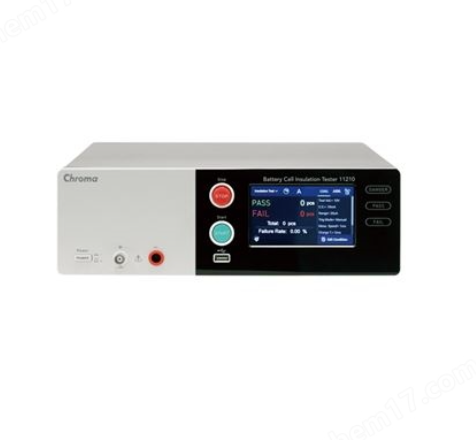
The battery cell insulation tester does have some special requirements when testing lithium batteries, mainly to ensure the safety and reliability of lithium batteries, while also complying with relevant international and national standards.
1、 Requirements for low voltage and high-precision testing
Lithium batteries typically operate in a lower voltage range, but have high requirements for insulation performance. Therefore, the battery cell insulation tester needs to have low voltage and high-precision testing capabilities.
2、 DC withstand voltage test
The insulation test of lithium batteries is usually conducted using direct current voltage. This is because DC withstand voltage testing can more accurately simulate the working state of lithium batteries in actual use, detecting the insulation performance between battery cells, modules, battery pack electrodes, and shells. For example, on the production line of lithium batteries, voltage withstand testing is an important part of factory inspection. By applying a DC high voltage higher than the normal operating voltage, it can test whether the insulation materials and structure of lithium batteries can withstand instantaneous high voltage shocks, preventing breakdown faults from occurring in abnormal situations.
3、 Partial discharge (PD) detection function
During the production process of lithium batteries, partial discharge may occur due to internal structural defects or external factors such as foreign objects, welding burrs, etc. This partial discharge may cause minor insulation faults, which in turn can affect the safety and lifespan of the battery. Therefore, some battery cell insulation testers have partial discharge (PD) detection function, which can monitor whether local abnormal discharge occurs in the battery cell throughout the testing process, quantify it as visibility, and record the waveform at the same time.
4、 Quick testing and data management
In the production process of lithium batteries, in order to improve production efficiency, insulation testers need to have the ability to conduct rapid testing. Some testers are able to complete testing in a short period of time and provide quick judgment functions.
In short, the battery cell insulation tester does have some special requirements when testing lithium batteries. These requirements are mainly aimed at ensuring the safety and reliability of lithium batteries, while also complying with relevant international and national standards. By selecting a battery cell insulation tester with low voltage high-precision testing capability, DC withstand voltage testing function, partial discharge detection function, meeting international and national standards, as well as fast testing and data management capabilities, the production quality and safety of lithium batteries can be effectively improved.