-
E-mail
j_mant@126.com
-
Phone
18924627236
-
Address
711, Building A5, Tianrui Industrial Park, No. 35 Fuyuan 1st Road, Xinhe Community, Fuhai Street, Bao'an District, Shenzhen
Shenzhen Jiangmai Intelligent Technology Co., Ltd
Application scenarios and use cases of vacuum probe station
Date: 2025-12-04Read: 1
1. Introduction
Vacuum Probe Station is an important precision instrument widely used in fields such as semiconductor, microelectronics, and materials science. It can perform precise electrical measurement, testing, and analysis in high vacuum environments, and is a key tool in the development and production of integrated circuits, sensors, displays, and other equipment. This article will explore the application scenarios and use cases of vacuum probe stations, showcasing their unique advantages and important roles in different fields.

2、 Technical characteristics of vacuum probe station
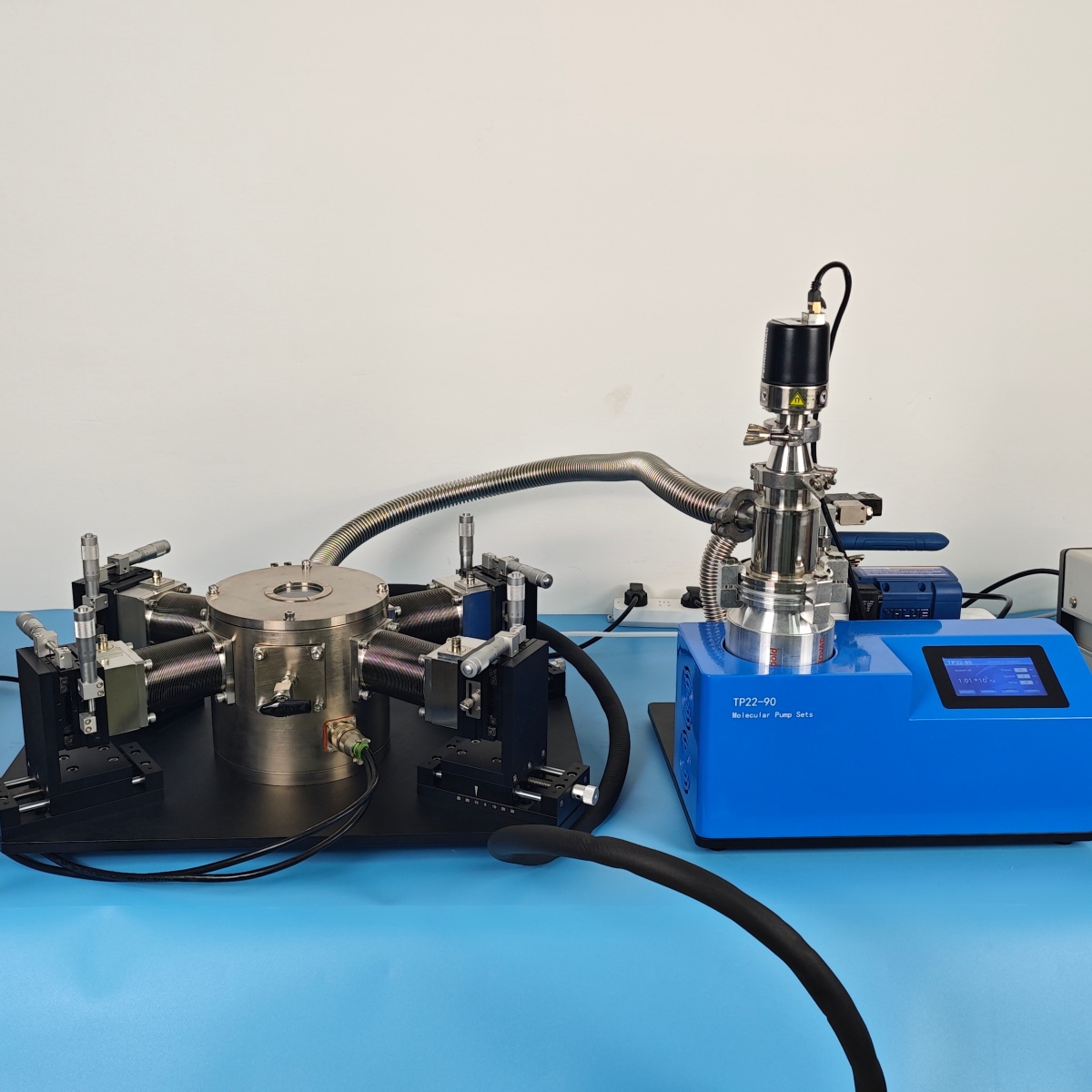
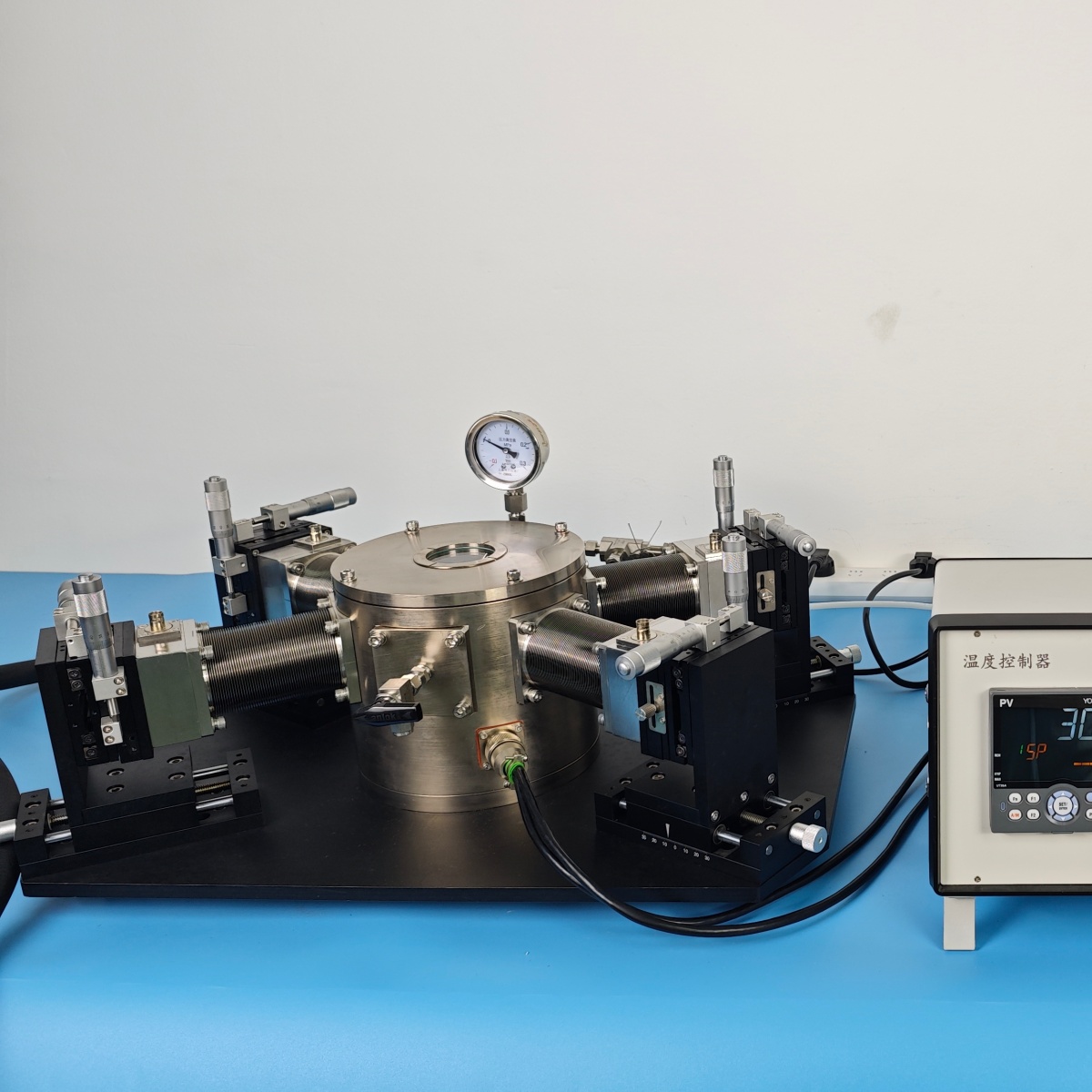
The vacuum probe station adopts high-precision design, and the common cavity material is AL6061, and SUS304 cavity can be customized according to requirements. Its sealing system uses fluorine rubber rings, which can ensure the stability and sealing of the equipment in high vacuum environments. The vacuum degree of the equipment can reach 5 × 10 ⁻⁵ Pa, greatly reducing the interference of air on sample testing and suitable for precision measurement.
The sample stage size of the device is 2 inches, the outer size of the cavity is 6 inches, and the sample observation window is 50mm, allowing users to directly observe the microstructure of the sample. The temperature range of the vacuum probe station is wide, from -190 ℃ to 450 ℃, suitable for testing different materials. The device is also equipped with a standard BNC interface for easy collection and analysis of electrical signals, and supports microscope accessories to improve testing accuracy and observation effectiveness.

3、 Application scenarios of vacuum probe station
1. Semiconductor industry
The vacuum probe station plays a crucial role in the semiconductor manufacturing process. It is widely used for testing and analysis of wafers, circuit boards, and chips. At various stages of integrated circuit (IC) design, manufacturing, packaging, etc., the probe station provides high-precision electrical performance testing to ensure product quality.
Use caseA certain semiconductor company uses a vacuum probe station for performance testing of integrated circuits. By conducting electrical testing on chips in a vacuum environment, the interference of air and moisture on the test results is avoided, and key performance indicators such as conductivity and switching speed of the chips are accurately measured.
2. Materials Science and Research
In the field of materials science, especially in the research of nanomaterials, superconducting materials, etc., vacuum probe stations also have important applications. It can perform electrical and thermal testing of samples in a high vacuum environment, effectively avoiding the influence of external factors and improving the accuracy of test results.
Use caseIn a research project on nanomaterials, researchers used a vacuum probe station to test the electrical properties of materials. By controlling the vacuum environment, the conductivity and thermal stability of the material were successfully measured, providing key data support for further material development.
3. Sensor and Display Technology
The vacuum probe station has a wide range of applications in the research and development of sensor and display technology. It can help researchers and engineers accurately measure the electrical characteristics of sensor components and display panels, evaluate their performance in different environments, and ensure that product performance meets design requirements.
Use caseIn the research and development process of a certain OLED display technology, the team used a vacuum probe station to conduct electrical tests on the display panel, ensuring that key indicators such as current, voltage, and brightness of the display panel met standards. Through long-term testing under vacuum conditions, the service life of the panel was improved.
4. Packaging testing of microelectronic devices
The packaging technology of microelectronic devices has a significant impact on their performance and stability. The vacuum probe station can accurately test the influence of packaging materials and methods, especially for high-precision technologies such as thin film packaging and ball grid array (BGA) packaging.
Use caseIn the research and development of a new thin film packaging technology, a microelectronics company used a vacuum probe station to compare the electrical performance of different packaging methods, verified the influence of vacuum conditions on the electrical performance of packaging structures, and optimized the packaging process.
5. Academic research and education
Vacuum probe stations are not only widely used in industry, but also frequently employed in academic research and higher education fields. Its high precision and multifunctional characteristics make it an important equipment for many research institutions and university laboratories, helping students and researchers conduct material, electrical, and thermal testing.
Use caseIn a nanotechnology laboratory at a certain university, vacuum probe stations are used for teaching and research. By using a probe station for electrical testing of semiconductor materials, students have gained a deeper understanding of important properties such as conductivity and thermal conductivity, which has enhanced their experimental abilities.
4、 Summary of use cases of vacuum probe station
Through the above cases, we can see that the vacuum probe station not only plays an important role in fields such as semiconductors, materials science, sensors, and display technology, but also serves as a bridge in academic research and education. Its high precision and customizable design make it an indispensable tool in various complex testing environments.
5、 Conclusion
With the continuous advancement of technology, the application fields of vacuum probe stations will be further expanded, especially in microelectronics, nanomaterials, sensors, and academic research, with enormous potential. It not only provides high-precision testing methods for product development, but also promotes innovation and progress in various industries.
As a high-precision and low-noise testing equipment, the vacuum probe station will undoubtedly play an important role in more fields and become an important tool for precision testing and research and development. With the continuous development of future technology, vacuum probe stations will continue to provide strong support for promoting technological progress and scientific research.