-
E-mail
daruibo@daruibo.com
-
Phone
13544051612
-
Address
Building 3, Block A, Huaqiang Creative Industry Park, Blue Eyes Community, Guangming Street, Guangming District, Shenzhen
Shenzhen Darui Bo Electronics Co., Ltd
The working principle and technological development of EMI receivers
Date: 2025-10-12Read: 57
Electromagnetic interference is an unwanted electromagnetic wave signal that can affect the normal operation of electronic devices. EMI receiver is a device specifically designed for detecting and analyzing electromagnetic interference, widely used in the research and development, quality control, certification testing, and other fields of electrical and electronic equipment. Its main function is to help identify potential sources of electromagnetic interference to ensure that electronic products comply with relevant electromagnetic compatibility (EMC) standards.
1、 Working principle
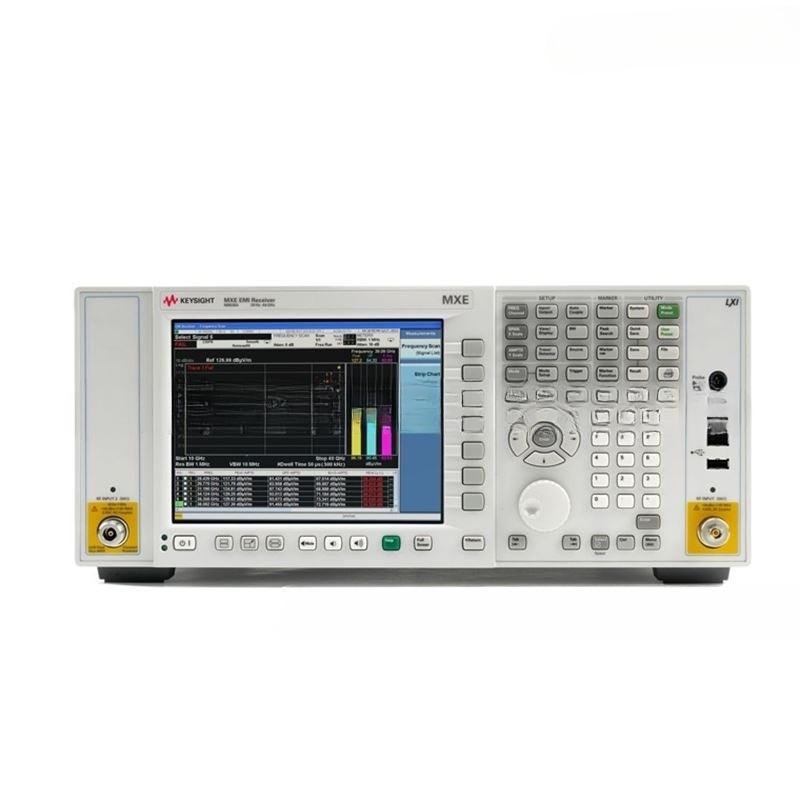
EMI receiverThe core function is to capture and analyze electromagnetic interference signals. Its working principle can be divided into the following steps:
1. Signal reception and amplification: Receive electromagnetic wave signals from the surrounding environment through an antenna, which are usually emitted by electrical equipment. The received signal may be very weak, so the receiver will first amplify the signal for subsequent analysis.
2. Spectrum analysis: Input the amplified signal into a spectrum analyzer. The spectrum analyzer will perform frequency domain analysis on the signal and display the spectrum diagram of the signal. Through spectrum analysis, interference signals in different frequency bands can be identified and their intensity and frequency distribution can be determined.
3. Filtering and Modulation Analysis: EMI signals typically contain multiple frequency components, and receivers separate different frequency bands through filters to analyze interference signals in specific frequency bands. For complex modulated signals, the receiver will also use modulation and demodulation techniques to analyze the modulation type, bandwidth, and changes in time and frequency domains of the signal.
4. Power measurement and recording: During the measurement process, the receiver also measures the power of the signal and records the strength of the interference signal. The commonly used unit for interference strength is dB μ V (microvolt decibel), which represents the strength of the received signal relative to the standard reference value.
2、 Technological development
With the continuous advancement of electronic products and the increasing global attention to electromagnetic compatibility, the technology of EMI receivers has also undergone rapid development. The main technological advancements include:
1. Expansion of frequency range: Traditional receivers mainly focus on the low to mid frequency range. With the development of wireless communication technology, the frequency range has expanded to higher frequency bands, even covering tens of GHz. The new system is capable of detecting interference generated by high-frequency wireless communication devices, such as 5G, Wi Fi, and other frequency bands.
2. High precision and high resolution: With the development of digital signal processing technology (DSP) and broadband sampling technology, its precision and resolution have been greatly improved. It can more accurately measure the strength and frequency of interference signals, and even distinguish weak interference signals, which is crucial for strict electromagnetic compatibility testing.
3. Automation and Intelligence: Traditional EMI testing often requires manual operation, but with the advancement of computer technology and automation testing technology, more and more automated testing functions are available. The receiver can automatically scan different frequency bands for continuous interference monitoring and automatically sound an alarm when excessive interference is detected. In addition, some receivers are equipped with artificial intelligence (AI) algorithms that can automatically identify interference sources and analyze their characteristics, helping users find the problem more quickly.
4. Portable and integrated design: typically large in size, single in function, and complex to operate. However, with the advancement of electronic technology, it has developed towards portability and integration. Many adopt modular design, which can integrate signal acquisition, signal processing, spectrum analysis and other functions into a compact device, making it convenient for on-site testing and debugging.
As an important equipment for electromagnetic compatibility testing, EMI receivers have evolved from simple signal receiving devices to comprehensive testing tools that integrate signal analysis, automated monitoring, and intelligent analysis with continuous technological innovation. Its continuous progress provides strong support for the research and development, quality control, and compliance testing of electronic products, promoting the healthy development of the electronics industry.