-
E-mail
daruibo@daruibo.com
-
Phone
13544051612
-
Address
Building 3, Block A, Huaqiang Creative Industry Park, Blue Eyes Community, Guangming Street, Guangming District, Shenzhen
Shenzhen Darui Bo Electronics Co., Ltd
Design and Performance Optimization Method of Power Sensor
Date: 2025-10-09Read: 53
Power sensors play a crucial role in modern electronic devices and energy management systems. They are used to measure power in power systems (including active power, reactive power, and apparent power) and are widely used in fields such as power monitoring, industrial automation, smart grids, and home power management. To design a high-performance sensor, in addition to accuracy, multiple factors such as sensor stability, response speed, anti-interference ability, and energy consumption need to be considered.
1、 Design requirements
1. Measurement range and accuracy:Power sensorThe design first needs to meet the requirements of measurement range, usually requiring the ability to measure power ranging from a few milliwatts to several kilowatts or even higher. Meanwhile, the accuracy of the sensor is another important parameter, and low accuracy can affect the performance of the final system.
2. Dynamic response capability: It is necessary to have the ability to respond quickly, especially under frequently changing power loads. Response speed is crucial for real-time monitoring and adjustment of power systems.
3. Anti interference performance: In practical applications, it will face various electromagnetic interference (EMI) and radio frequency interference (RFI). Therefore, anti-interference capability must be considered in sensor design to ensure accurate operation in high noise environments.
4. Power consumption: The power consumption of the sensor itself also needs to be considered, especially in battery powered systems, where power consumption needs to be minimized as much as possible to extend battery life.
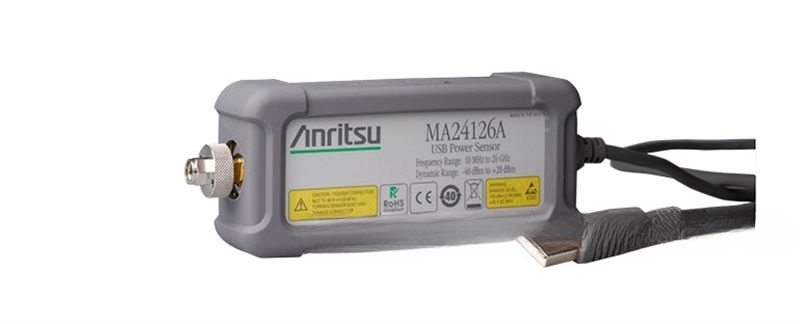
2、 Performance optimization methods
1. Improving sampling rate and resolution: By increasing the sampling rate and resolution of the analog-to-digital converter (ADC), the accuracy of the power sensor can be improved, especially in high-frequency signals or rapidly changing load conditions. Higher resolution can capture small voltage and current changes, providing more accurate power measurements.
2. Temperature compensation: Due to the varying performance of electronic components at different temperatures, temperature compensation design is necessary. By incorporating temperature sensors into the design to monitor real-time temperature changes in the working environment and using compensation algorithms to adjust power measurement results, the impact of temperature fluctuations on measurement accuracy can be effectively improved.
3. Multiple filtering technology: In practical applications, the signal noise is usually large. Therefore, multiple filtering techniques (such as low-pass filtering, band-pass filtering, etc.) can be used to process the signal, remove high-frequency noise, and ensure that the sensor output is a stable power value.
4. Power factor measurement: In AC power systems, power factor directly affects its accuracy. Efficient power factor measurement methods can optimize design and ensure accurate power measurement even at low power factors.
The design and optimization of power sensors is a complex and multifaceted process that involves multiple factors such as accuracy, response speed, anti-interference ability, and power consumption. In the design process, performance can be significantly improved through reasonable signal sampling and processing, optimized power management, enhanced temperature compensation capability, and the use of multiple filtering techniques.