-
E-mail
liuminghong@shanghai-test.com
-
Phone
15021530323
-
Address
No. 5555 Liuxiang Road, Jiading District, Shanghai
Shanghai Shangqi Group Testing Equipment Co., Ltd
Analysis of the Principle and Working Mechanism of High and Low Temperature Aging Chamber
Date: 2025-11-03Read: 0
High and low temperature aging chamber is a commonly used equipment for accelerating aging testing of materials, electronic components, mechanical parts, etc. under different temperature conditions. Its main function is to simulate the temperature changes that the product may experience during actual use, and evaluate its reliability and stability under long-term use. By conducting high and low temperature aging tests, the product's resistance to high and low temperatures, as well as its durability under temperature changes, can be effectively assessed.
1、 Working principle
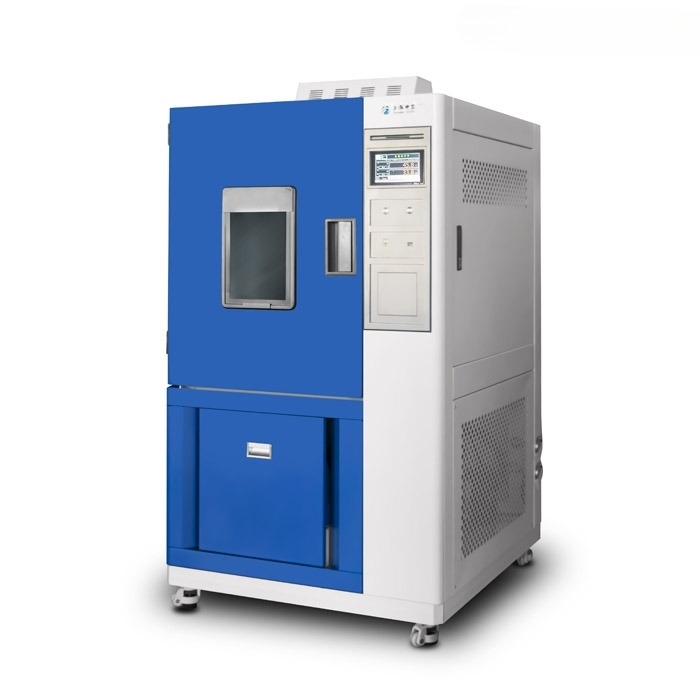
High and low temperature aging chamberThe working principle of is based on temperature cycling control, which simulates the temperature changes that the sample may encounter during long-term use by applying high, low, or rapidly changing environments. It usually consists of the following basic components:
1. Temperature control system
Equipped with a precise temperature control system, typically consisting of a heater, refrigerator, temperature sensor, and thermostat. The heater is used to provide a high-temperature environment, while the refrigerator achieves a low-temperature environment through a refrigerant circulation system. The temperature sensor monitors the temperature changes inside the box in real time, and automatically adjusts the heating and cooling power through the temperature controller to ensure that the temperature inside the box is maintained within the set range. PID control technology is often used to ensure temperature stability and accuracy.
2. Box and heat exchange system
The box is usually made of high-quality insulation materials to reduce heat loss and the impact of external temperature on the testing environment. Multiple heat exchange systems are installed inside the box to evenly distribute heat throughout the entire testing area, avoiding local overheating or overcooling. An efficient heat exchange system can quickly respond to temperature changes and shorten the heating and cooling time.
2、 Analysis of working mechanism
The working mechanism of the high and low temperature aging chamber is mainly reflected in temperature cycling, stability control, and accuracy of simulating environmental conditions.
1. Temperature cycle control
A notable feature is the ability to undergo rapid temperature changes or cycles. By setting a certain temperature range and transformation frequency, it is possible to simulate temperature fluctuations in actual use. For example, some products may work in a high-temperature environment for a period of time before entering a low-temperature environment to simulate the impact of day night temperature differences or seasonal changes on their performance. The frequency and amplitude of temperature cycling can be set according to testing requirements.
2. Temperature stability and uniformity
To ensure the reliability of the test results, the temperature control system must maintain the stability of the temperature inside the box. This includes temperature uniformity, which means that the temperature difference should be as small as possible throughout the entire testing space. Generally, temperature uniformity testing is conducted to ensure that temperature changes are uniform throughout the entire product range, and that there will be no deviation in test results due to excessively high or low temperatures in certain areas.
3. Alternating changes between high and low temperatures
In practical applications, some products may experience rapid changes from high temperature to low temperature, such as temperature shocks experienced by electronic components during the opening or closing process. It is also possible to simulate this situation and test the tolerance of materials or components under temperature changes through rapid heating and cooling. Through multiple cycles of high and low temperatures, observe the aging of the product in harsh environments, such as structural changes, physical performance degradation, or electrical performance changes.
The high and low temperature aging chamber can simulate the performance of products in high and low temperature environments through precise temperature control systems and various functional settings, and evaluate their long-term performance stability and reliability in advance. Its working principle is based on temperature control and accelerated aging testing of samples, and it is widely used in multiple fields such as electronics, automotive, aerospace, and materials science. By optimizing key parameters such as temperature control, heating and cooling rate, and temperature uniformity, reliable data support and improvement suggestions can be provided for product quality.