-
E-mail
zhongguoqingji@aliyun.com
-
Phone
13402079333
-
Address
208 Andong Road, Wuqiao Town, Fengxian District, Shanghai
Shanghai Qingji Instrument Technology Co., Ltd
The material testing machine unlocks the 'universal key' to material properties
Date: 2025-12-18Read: 0
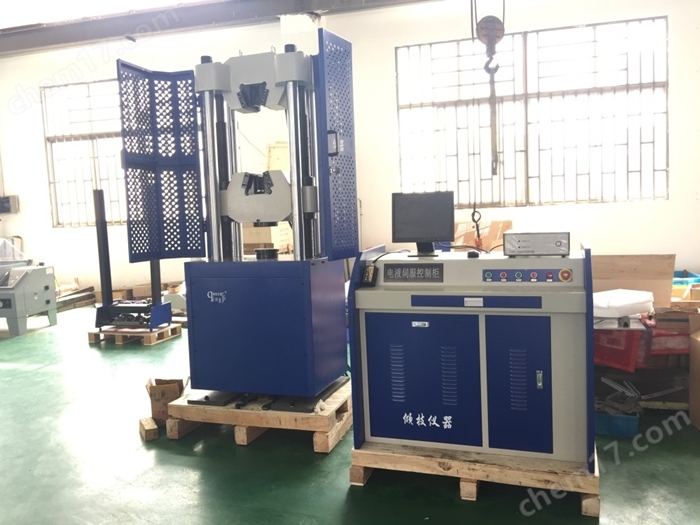
In the field of materials science,The material testing machine is the core tool for revealing the essence of material mechanics.It accurately determines key parameters such as tensile strength, yield point, and elastic modulus of materials by simulating complex working conditions such as tension, compression, bending, and shear, providing scientific basis for material research and development, quality control, and engineering applications.
1、 Core function: From basic testing to complex simulation
The core function of a material testing machine covers the full dimensional testing of material mechanical properties. Taking the electronic universal testing machine as an example, it drives the ball screw through a servo motor to achieve stepless speed regulation of 0.05-500mm/min. Coupled with high-precision sensors, it can capture small deformations (with a resolution of 0.03 microns). In tensile testing, the equipment can automatically draw stress-strain curves, accurately locate the proportional limit, elastic limit, and yield platform of the material; Compression testing can determine the compressive strength and deformation rate of materials under high pressure, providing data support for the compressive design of materials such as concrete and rubber.
More complex testing requirements can be implemented through extension devices. For example, equipped with high and low temperature environmental chambers, the testing machine can simulate abnormal environments ranging from -70 ℃ to 350 ℃ to test the performance degradation of materials under temperature changes; The tension torsion combination test device can simultaneously apply tension and torque to evaluate the failure modes of aerospace composite materials under complex loads.
2、 Multi domain applications: from laboratories to industrial sites
In the field of scientific research, testing machines are the "ruler" for the development of new materials. For example, in the development of lithium battery separators, the puncture strength and thermal shrinkage rate of the separator are determined through tensile testing to ensure its safety; In the research of biomedical materials, bending tests simulating the human environment can evaluate the fatigue life of artificial joints.
In industrial production, testing machines are the "gatekeepers" of quality control. Automobile manufacturing companies use testing machines to detect the yield strength of body steel and prevent brittle fracture during collisions; The construction industry verifies the compressive strength of concrete test blocks through compression tests to ensure the safety of building structures. In addition, the testing machine is widely used in tensile testing of wires and cables, tear strength testing of packaging materials, and other scenarios.
3、 Technological Evolution: Intelligence and High Precision
Modern material testing machines are developing towards intelligence. The microcomputer control system can display the test curve in real time, automatically calculate parameters such as tensile strength and elongation, and support data export and cloud storage. Some models also have AI fault diagnosis function, which can provide early warning of equipment wear or sample defects by analyzing abnormal signals such as vibration and noise.
As a versatile assistant in materials science, material testing machines are driving the deep integration of material research and industrial production with higher precision, wider applicability, and stronger intelligence.