-
E-mail
pumei@pumei17.com
-
Phone
18621660048
-
Address
No. 629 Changzhong Road, Fengxian District, Shanghai
Shanghai Pumei Instrument Technology Co., Ltd
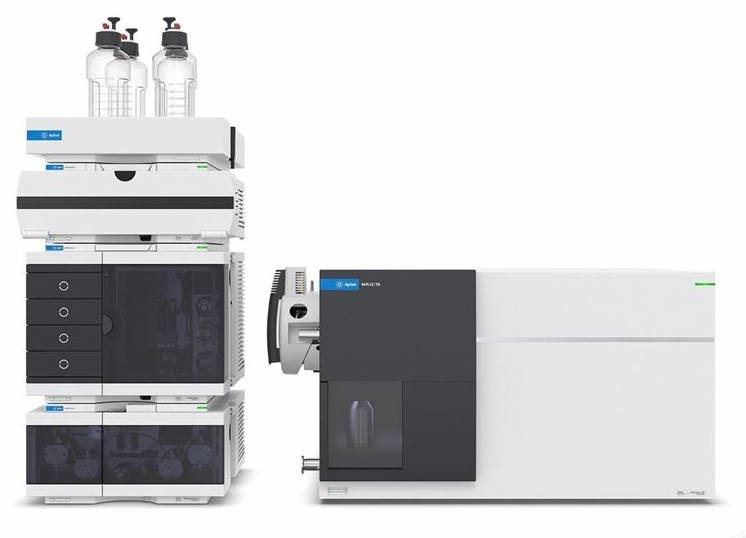
Agilent triple quadrupole liquid chromatography-mass spectrometry instrument characteristics description
Date: 2025-09-24Read: 0
The Agilent triple quadrupole liquid chromatography-mass spectrometer has significant advantages in the field of analytical science due to its outstanding performance and innovative technology. The following is a description of its main instrument characteristics:
1. High sensitivity and wide dynamic range
Breakthrough detection limit: Some models, such as the 6470 system, can achieve a sensitivity as low as 3.5 fg of liraglutide on the column, and even support dilution of samples or reduction of sample size to ensure the accuracy of results. The 6495C model achieves an ultra-high sensitivity of 0.6 fg of Liriopine, making it suitable for ppt level trace analysis. This characteristic enables it to reliably quantify extremely low concentrations of target substances even in complex matrices.
Advantages of linear response: The linear range covers multiple orders of magnitude, allowing for accurate determination of low concentration compounds while also adapting to the analysis needs of high concentration samples, avoiding errors caused by signal saturation. Combined with optimized ion source design, the detection capability of weakly responsive analytes has been further enhanced.
2. Agilent triple quadrupole liquid chromatography-mass spectrometry for rapid scanning and efficient acquisition
High speed MRM switching: supports a rate of up to 500 MRM transitions/s, combined with a minimum residence time of 0.5 ms, can complete a large number of ion pair monitoring in a unit time, significantly improving experimental efficiency. The polarity switching speed is less than 25 ms, achieving fast conversion between positive and negative modes and meeting the needs of alternating analysis of multiple types of samples.
Intelligent collision pool management: Adopting a curved conical collision pool structure, the cleaning time after collision is less than 1 ms, effectively reducing cross contamination and ensuring high repeatability of continuous injection. This design also supports trigger based multi reaction monitoring, which can automatically expand and generate product ion spectra when target substances are detected, balancing screening and confirmation functions.
3. Stable and reliable system architecture
Vacuum protection technology: Equipped with the VacShield vacuum shield system, it allows for front-end ion introduction maintenance without damaging the vacuum environment, reducing daily maintenance time from traditional hours to within 30 minutes and significantly improving instrument availability. The third-generation all metal iFunnel design enhances ion transport efficiency while reducing failure rates.
Intelligent monitoring and predictive maintenance: Built in early maintenance feedback (EMF) function, generating instrument health reports by actively monitoring key indicators, helping users predict potential problems and plan maintenance cycles. The Instrument Health Tracking system continuously tracks the operational status to ensure long-term stability.
4. Multi functional ionization support
Multi mode ion source compatibility: it supports multiple ionization modes such as electric spray ionization (ESI), atmospheric pressure chemical ionization (APCI), multi-mode superposition (MMI), and nanoupflow ESI, and can flexibly respond to the diverse analysis needs of small molecules to polypeptide compounds. For example, in metabolomics research, dynamic MRM databases can optimize ion pair selection of acidic metabolites.
Adaptive parameter optimization: MassHunter software provides automatic tuning function, which locates the optimal working parameters in multidimensional space through SWARM algorithm, ensuring that different compounds are under optimal detection conditions. In addition, the intelligent assisted workflow can dynamically adjust the injection strategy based on the characteristics of the sample, improving data reliability.
5. Agilent triple quadrupole liquid chromatography-mass spectrometry intelligent data processing and compliance
Automated quantitative analysis: Intelligent Reflex technology automatically adds blank samples or adjusts injection volumes by monitoring sample residues and calibration deviations in real-time, ensuring that results remain within operational limits. The Direct Skyline Integration tool simplifies the development process of peptide quantification methods and improves research efficiency in the biopharmaceutical field.
Regulatory compliance assurance: Combining built-in technical control functions with programmatic permission management, it meets data integrity requirements such as FDA 21 CFR Part 11 and EU appendices, and supports audit tracking and electronic record compliance management. The user-defined report generator can output analysis conclusion documents that comply with industry standards.
6. Application domain adaptability
Food safety and environmental monitoring: capable of simultaneously screening over 250 pesticides and their metabolites in food, and achieving highly sensitive quantification of 217 veterinary drug residues in milk; It is also applicable for environmental background investigation of emerging pollutants such as PFAS and nitrosamines.
Clinical and drug development: Support plasma drug concentration monitoring, metabolite profiling analysis, and biomarker discovery, especially in metabolomics targeted analysis, using pre-set databases to quickly identify key intermediates in the central carbon metabolism pathway.