-
E-mail
470805974@qq.com
-
Phone
13122458990
-
Address
No. 4689 Xinfeng Road, Fengxian District, Shanghai
Shanghai Ourang Technology Co., Ltd
The Heart of Air Generator: Analysis of Core Components and Efficiency Guarantee
Date: 2025-11-12Read: 1
As the "gas source center" of laboratory instruments such as gas chromatography and mass spectrometry analysis, as well as industrial pneumatic systems, the stable operation of air generators relies on the collaborative work of core components. Among them, the compressor, drying system, and filtration module, known as the "heart", are the key factors determining the purity and pressure stability of the produced gas. Their performance directly affects the analysis accuracy and operating life of downstream equipment. Thoroughly analyzing the working mechanism and maintenance points of these core components is essential for achievingair generatorThe foundation of efficient operation and maintenance.
Oil free air compressor is the "power engine" of the air generator, which can be called the core driving force of the "heart". Unlike traditional oil filled air compressors, laboratory and precision industrial air generators often use oil-free vortex or piston air compressors, which use crankshaft connecting rods to drive the piston to reciprocate or the vortex disk to mesh and rotate, compressing the air in the atmosphere to a working pressure of 0.7-1.0 MPa. Its core advantage lies in the use of self-lubricating materials (such as polytetrafluoroethylene coating) to avoid pollution caused by lubricating oil mixed with compressed air, ensuring that the initial oil content of the produced gas is less than 0.01mg/m ³. The displacement of the air compressor needs to be accurately matched with downstream demand. For example, the displacement of a gas chromatography generator is usually 0.5-2L/min. If it is too large, it can lead to energy waste, while if it is too small, it can cause pressure fluctuations.
The drying system is the "purifying valve" of the "heart", responsible for removing moisture from compressed air. During the compression process, the air temperature increases, the water saturation decreases, and a large amount of water vapor condenses into liquid water, which needs to be deeply dehydrated through two-stage drying. The first stage is freeze-drying, which cools the compressed air to 2-10 ℃ and allows the moisture to be discharged in liquid form through an automatic drain, which can remove more than 80% of the moisture; The second level is adsorption drying, using activated alumina or molecular sieve as adsorbents to deeply adsorb residual moisture, reducing the dew point of the outlet air to below -40 ℃, meeting the strict requirements of precision instruments for dryness. The adsorbent needs to be regenerated regularly, and its adsorption capacity can be restored by reverse blowing or heating analysis to avoid water penetration caused by adsorption saturation.
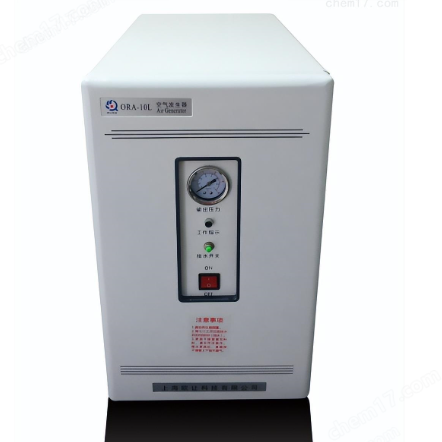
The multi-stage filtration module is the "filtering barrier" of the "heart", responsible for removing impurities, oil and harmful gases. The first level is a precision filter, which uses a 5 μ m aperture glass fiber filter membrane to filter solid impurities such as dust and rust in compressed air; The second stage is the oil mist filter, which controls the residual oil content below 0.001mg/m ³ through the synergistic effect of activated carbon and hydrophobic membrane; The third stage is the gas purification column, which removes interfering components such as CO ₂ and O ₂ according to specific needs. For example, molecular sieves are used to remove CO ₂, and copper based catalysts are used to remove O ₂, ensuring that the purity of the produced gas reaches over 99.999%. The filter needs to be replaced in a timely manner according to changes in pressure difference. When the inlet and outlet pressure difference exceeds 0.1 MPa, it indicates that the filter membrane is clogged and needs to be replaced immediately to avoid pressure loss.
The pressure control system and safety protection device are the "regulatory center" of the "heart". The pressure sensor monitors the system pressure in real-time, and through the linkage between the solenoid valve and the pressure regulating valve, stabilizes the outlet pressure within the set value ± 0.02MPa range, avoiding pressure fluctuations that affect downstream equipment operation. At the same time, the system is equipped with an overpressure protection valve and temperature sensor. When the pressure exceeds 1.2 MPa or the air compressor temperature exceeds 85 ℃, it will automatically shut down and trigger an alarm to prevent equipment overload damage. During daily operation and maintenance, it is necessary to regularly calibrate pressure sensors to ensure pressure control accuracy, and conduct sealing tests on safety valves every six months.
air generatorAlthough each component of the "heart" plays its own role, it needs to form a collaborative closed loop to achieve optimal efficiency. By regularly cleaning the cooling fins of the air compressor, replacing adsorbents and filters in a timely manner, and calibrating the pressure control system, the lifespan of core components can be effectively extended, ensuring stable gas production quality. A deep understanding of the working logic of these core components can not only provide a basis for equipment troubleshooting, but also achieve long-term healthy operation of the "heart" through precise maintenance, providing reliable support for various scenarios that rely on clean gas sources.