-
E-mail
Yl@monchtec.com
-
Phone
18917639396
-
Address
Room 803, Building 1, No. 199 Guangfulin East Road, Songjiang District, Shanghai
Shanghai Mingce Electronic Technology Co., Ltd
Differences, advantages, and applications of D&S AE1/RD1 emissivity measuring instrument vs. Fourier transform infrared spectrometer (FTIR)
Date: 2025-09-17Read: 0
Differences, advantages, and applications of D&S AE1/RD1 emissivity measuring instrument vs. Fourier transform infrared spectrometer (FTIR)
Portable emissivity meter vs. Fourier transform infrared spectrometer (FTIR)
In the field of emissivity measurement, the D&S AE1/RD1 emissivity measuring instrument and laboratory FTIR spectrometer are two mainstream tools, but their positioning and applications are completely different, complementary rather than competitive.
Portable emissivity measuring instrument (D&S AE1/RD1)
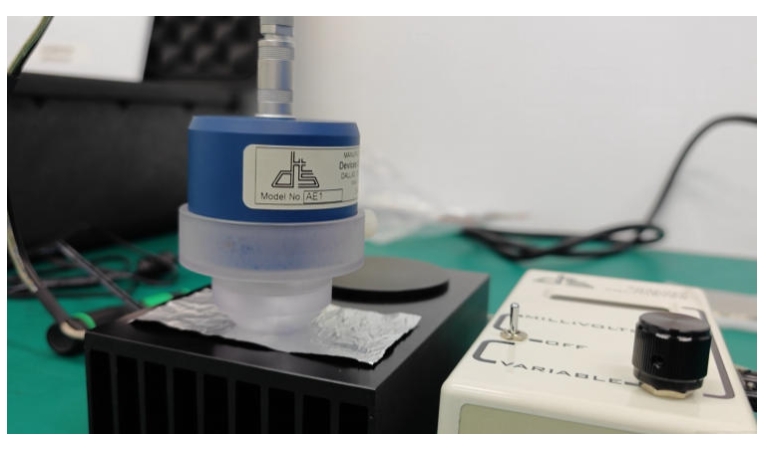
• Positioning: An excellent tool for on-site quality control, compliance verification, and rapid research and development screening.
Advantages: fast speed, portability, simple operation, relatively low cost. The key is that it directly measures the total hemispherical emissivity integral value required by numerous regulations and engineering calculations. It provides a clear and directly usable 'answer' for industrial applications.
Fourier Transform Infrared Spectrometer (FTIR)
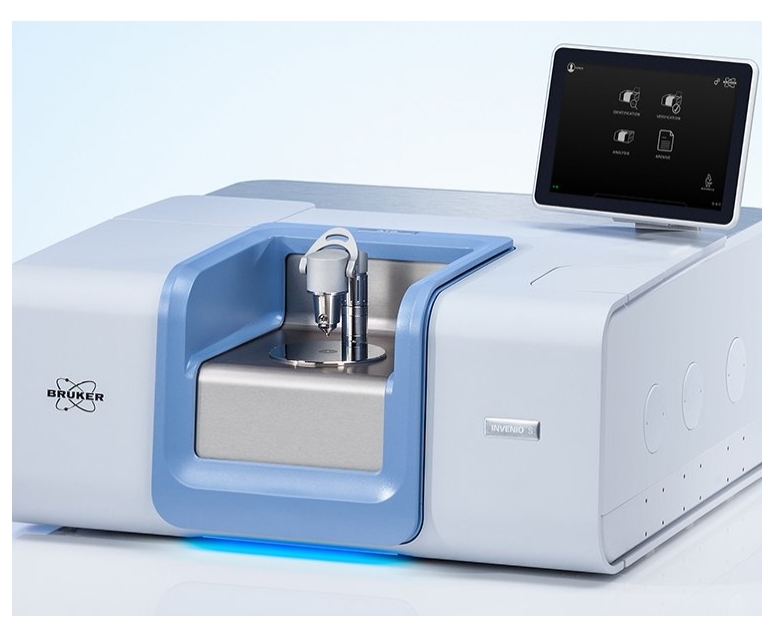
• Positioning: A laboratory level material foundation research and spectral selective design tool.
Advantages: Providing high-resolution spectral reflectance or transmittance data can reveal the optical properties of materials at different wavelengths, which is crucial for understanding the physical mechanisms of materials or designing coatings with specific spectral responses (such as Low-E coatings, solar selective absorption coatings).
Limitations (for on-site applications): expensive equipment, large size, complex operation, and high environmental requirements. It usually measures spectral reflectance, and the total hemispherical emissivity needs to be indirectly calculated through integration and complex models, which also introduces new uncertainties.
The choice of instrument is essentially a trade-off between the depth of measurement and the convenience of application. FTIR is an irreplaceable discovery tool for fundamental research that requires understanding why materials have certain radiation properties. For industrial and engineering questions that need to be answered about whether the comprehensive radiation performance of this material meets the standards, AE1/RD1 is an efficient and reliable measuring device. It solidifies the complex spectral integration process into instrument design, providing users with direct and relevant measurement results.