-
E-mail
1218490881@qq.com
-
Phone
13771789202
-
Address
No. 2225, Huancheng West Road, Nanqiao, Fengxian District, Shanghai
Shanghai Lihai Industrial Co., Ltd
Fast COD reagent: 15 minute results, doubling the efficiency of COD detection in water quality
Date: 2025-10-17Read: 0
In fields such as environmental monitoring, sewage treatment, and chemical production, COD is the core indicator for measuring the degree of organic pollution in water bodies, and is also a key basis for environmental law enforcement and meeting water quality standards for discharge. Traditional COD detection uses potassium dichromate method, which requires complex steps such as heating reflux for 2 hours, titration analysis, etc. It is not only time-consuming and cumbersome to operate, but also requires a large amount of strong acid and alkali reagents, which poses safety hazards and secondary pollution risks.Fast COD reagentThe emergence of this technology has changed the traditional detection mode, and with its advantages of "fast, convenient, accurate and safe", it has become an efficient tool for COD detection in water quality, empowering various industries to speed up water quality monitoring.
The core advantage of COD reagents lies in significantly reducing detection time and improving efficiency. The principle is to optimize the reagent formula and achieve rapid oxidation of organic matter under high temperature conditions, reducing the traditional 2-hour heating reflux time to 10-15 minutes. The entire detection process only takes 20-30 minutes, and the efficiency is improved by 4-6 times. At the same time, the COD reagent adopts a pre packaged design - potassium dichromate, silver sulfate, mercury sulfate and other reagents are pre mixed in precise proportions and packaged into independent digestion tubes or reagent kits. Users do not need to prepare reagents themselves, avoiding errors and safety risks in the weighing and mixing process of reagents.
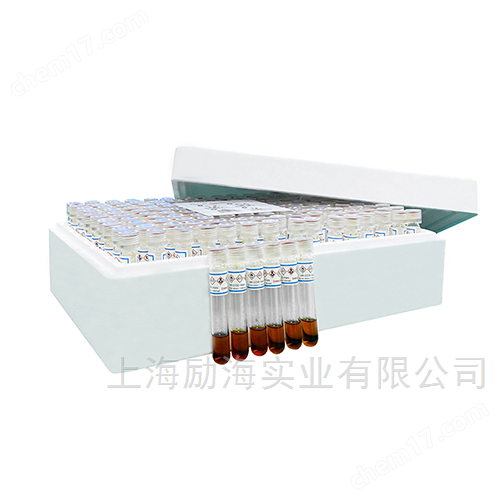
Secondly, high precision and strong adaptability meet the requirements of multi scene detection. COD reagents do not sacrifice accuracy for efficiency, but ensure consistent detection accuracy with traditional methods through precise reagent ratios and strict quality control: the detection range covers 50-10000mg/L, with an error of ≤± 5% and repeatability of ≤ 3%, meeting standards. The detection data can be directly used for environmental acceptance and pollution discharge permit monitoring. According to the characteristics of different water samples, rapid COD reagents can be further classified into various types: high chloride reagents with special masking agents can tolerate the interference of chloride ions ≤ 2000mg/L in water samples, avoiding the high results caused by the reaction between chloride ions and potassium dichromate; Low concentration reagents are designed for low COD water samples such as surface water and drinking water, with a detection limit as low as 5mg/L, ensuring accurate capture of trace pollutants.
In terms of safety and convenience, the detailed design of COD reagents meets the needs of users. Prefabricated reagents are packaged in sealed digestion tubes to reduce their contact with air and minimize the risk of volatilization and leakage; The digestion process can be completed in a dedicated rapid digestion instrument, which has over temperature protection and automatic timing functions to avoid burns or uneven heating caused by manual operation; After the detection is completed, some reagents can be directly read using a spectrophotometer without titration. The operation steps are simplified to four steps: sampling, adding reagents, digestion, and reading. Beginners can get started with simple training. In addition, the reagent packaging meets the transportation standards for hazardous chemicals, with loose storage conditions and no need for special refrigeration equipment, reducing storage and transportation costs.
The emergence of fast COD reagents has transformed water quality COD detection from "time-consuming and laborious" to "efficient and convenient". Choosing high-quality COD reagents is not only a choice to improve detection efficiency and reduce labor costs, but also a key step to help enterprises quickly grasp the water quality status, adjust treatment processes in a timely manner, and efficiently enforce laws and protect the water environment by environmental protection departments. It injects new impetus into the efficient and standardized development of the water quality monitoring industry.