-
E-mail
info@lenser.hk
-
Phone
13020298877
-
Address
Block 4B, Building C6, Lane 449, Nujiang North Road, Shanghai
Shanghai Langshan Optical Instrument Co., Ltd
Calibration and maintenance techniques for contact lens measuring projectors
Date: 2025-11-05Read: 1
Contact lens measuring projector is a commonly used equipment in ophthalmic clinics and eyeglass shops. It can accurately measure the refractive power of the eye by projecting the image of the retina, providing scientific basis for lens fitting. Regular calibration and maintenance are crucial to ensure the accuracy and long-term stable performance of the equipment. This article will introduceContact lens measurement projectorThe calibration and maintenance techniques help staff maintain the optimal condition of equipment and ensure the accuracy of measurement results.
1、 Calibration process
1. Preliminary inspection: Before starting calibration, first check the appearance of the equipment to ensure that there is no obvious damage or dirt on the lens, light source, display screen, and other parts. Dust, oil stains, and other contaminants can affect the measurement accuracy of the equipment, so cleaning work must be completed before each calibration.
2. Light source calibration: The light source is crucial for the measurement results. When calibrating, it is necessary to check the brightness and uniformity of the equipment's light source. Ensure that the projected light spot is clear and uniform, without significant color difference or uneven brightness. If any abnormalities are found, it may be due to aging of the light source bulb or problems with the light source adjustment system. It is necessary to adjust the light source intensity or replace the bulb according to the equipment manual.
3. Lens focus adjustment: The focus accuracy of the lens directly affects the clarity of the retinal image. During the calibration process, it is necessary to adjust the position or focal length of the lens to ensure that the retinal image projected by the device is clear, blurred, and consistent with the height of the patient's eyes. Normally, initial adjustments can be made through the internal autofocus function, followed by manual fine-tuning to ensure accurate measurements.
4. Calibration pattern: Some devices are equipped with standard calibration patterns to verify the accuracy of measurements. By selecting specific calibration patterns for testing and comparing the measurement results displayed by the device with known standard values. If the deviation is significant, the equipment should be recalibrated or checked for other factors causing measurement errors.
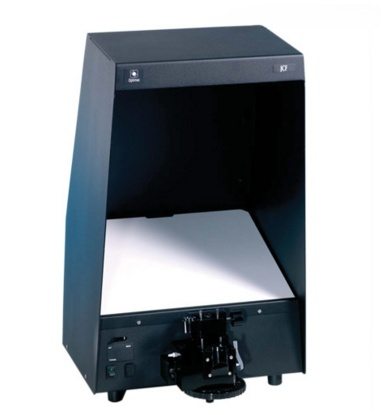
2、 Regular maintenance techniques
In addition to regular calibration, daily maintenance work is equally important. Reasonable maintenance can effectively extend the service life of contact lens measuring projectors, avoiding downtime and measurement errors caused by equipment failures.
1. Regular cleaning: Cleaning is a key step in maintaining the normal operation of equipment. The lens, display screen, and other optical components should be cleaned regularly to avoid dust, stains, fingerprints, and other substances affecting the measurement results. When cleaning, specialized optical cleaning tools such as microfiber cloth and optical cleaning solution should be used. Avoid using overly rough fabrics or chemical cleaning agents to prevent damage to the lens surface.
2. Software update: Many are equipped with software systems that provide automated calibration, data storage, and analysis functions. Regularly checking and updating the software of equipment is an important step in ensuring its accuracy and functional integrity. Software updates can fix known vulnerabilities or improve device performance, so it is recommended to follow the device manufacturer's guidance for regular system updates.
3. Checking the battery and power system: It usually relies on the battery or power system to provide energy, and it is important to regularly check the battery level and stability of the power system. Devices that have not been used for a long time should have their batteries removed or ensure a stable power cord connection to prevent battery leakage or poor power contact. If battery aging or power failure is found, it should be replaced in a timely manner to avoid affecting the normal operation of the equipment.
4. Regular performance testing of equipment: The performance of equipment should be regularly tested, especially for key components such as sensors, light sources, and motors. The accuracy and response speed of the equipment can be tested by measuring some known standard objects (such as standard light sources, calibration plates, etc.) to ensure that there is no significant deviation.
Contact lens measuring projector is an important equipment in the ophthalmology and eyewear industry, which provides patients with scientific fitting solutions by accurately measuring the refractive power of the eye. However, to ensure the accuracy and long-term stability of the equipment, regular calibration and maintenance are necessary. Through maintenance measures such as light source calibration, lens focusing, projection angle inspection, and daily cleaning, it is possible to ensure that the equipment is always in optimal working condition, thereby providing high-quality visual testing services for patients.