-
E-mail
shkaizheng@163.com
-
Phone
13391060841
-
Address
305, Building 2, No. 485 Minqiang Road, Songjiang District, Shanghai
Shanghai Kairuo Instrument Co., Ltd
High pressure stainless steel crucibles have become key consumables in multiple cutting-edge fields
Date: 2025-11-17Read: 0
High pressure stainless steel crucible is a closed reaction vessel designed specifically for high temperature, high pressure, and highly corrosive environments. It is usually made of 316L or 310S stainless steel and has excellent heat resistance (up to 900 ℃ or above), pressure resistance (working pressure often reaches 3-10 MPa), and chemical corrosion resistance. With its sturdy sealing and high reliability, it has become a key consumable in multiple cutting-edge fields.
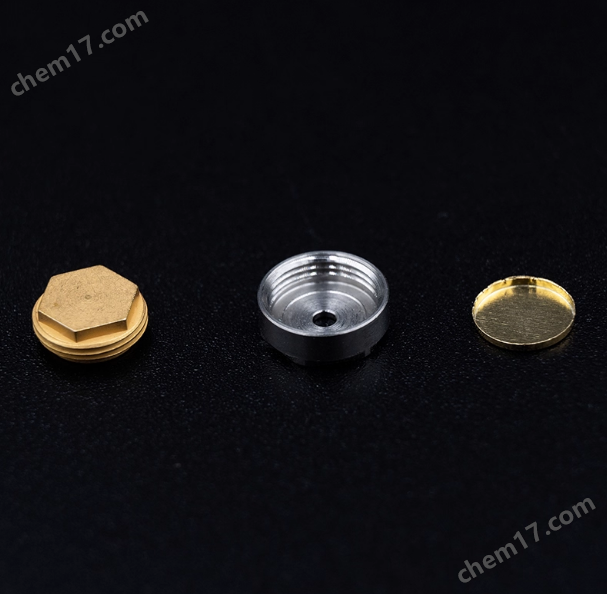
1. Materials Science and New Energy Research and Development
In the hydrothermal/solvothermal synthesis of positive electrode materials for lithium-ion batteries, such as high nickel ternary materials and lithium iron phosphate, high-pressure stainless steel crucibles provide a stable reaction environment to ensure uniform crystal structure growth. At the same time, it is used to prepare functional materials such as quantum dots and nano oxides, achieving precise control of particle size and morphology.
2. Geological and geochemical simulations
Researchers use high-pressure crucibles to simulate high-temperature and high-pressure conditions in the deep crust, studying mineral phase transitions, magma evolution, and fluid rock interactions. For example, synthesizing silicate minerals such as quartz and feldspar in hydrothermal systems provides experimental evidence for plate tectonics and mineralization mechanisms.
3. Synthesis of chemical and pharmaceutical intermediates
In fine chemical engineering, many organic metal catalytic reactions (such as hydrogenation, oxidation, coupling) need to be carried out under closed high pressure. Stainless steel crucibles can safely hold flammable solvents (such as THF, ethanol) and hydrogen gas, avoiding the risk of leakage and ensuring laboratory safety. They are widely used in small-scale and pilot tests of API intermediates.
4. Research on Environment and Solid Waste Treatment
Used for supercritical water oxidation (SCWO) technology to treat high concentration organic wastewater or hazardous waste. In supercritical water above 374 ℃ and 22.1 MPa, organic matter is efficiently mineralized into CO2 and H2O, and stainless steel crucibles are used as microreactors to verify the feasibility of the process and corrosion behavior.
5. Food and Agricultural Research
In the research of functional food ingredient extraction (such as polyphenols, flavonoids) or starch modification, high-pressure hydrothermal method can improve the extraction efficiency. Stainless steel crucible is resistant to repeated steaming and acid-base cleaning, meets food grade safety requirements (316L material), and is suitable for universities and quality inspection institutions.
6. Teaching and Standardization Testing
In university materials and chemistry laboratory courses, it is commonly used to demonstrate classic experiments such as hydrothermal synthesis of ZnO nanorods and TiO2 photocatalysts; At the same time, it is designated as a reaction vessel in national standard methods (such as GB/T) for sample pretreatment or stability testing.