-
E-mail
shjuyigs@163.com
-
Phone
15021203562
-
Address
Tingfeng Road, Zhujing Town, Jinshan District, Shanghai
Shanghai Juyi Environmental Testing Equipment Co., Ltd
In depth analysis of the functional characteristics of each component of the programmable constant temperature and humidity test chamber
Date: 2025-09-23Read: 0
The programmable constant temperature and humidity test chamber can accurately simulate various temperature and humidity conditions from extreme cold to tropical rainforests in a closed space, and is widely used for reliability testing in industries such as electronics, automotive, and materials. The mystery behind it stems from the collaborative operation of various core components. Only by thoroughly analyzing the functional characteristics of each component of the programmable constant temperature and humidity test chamber can we truly master this environmental simulation equipment.
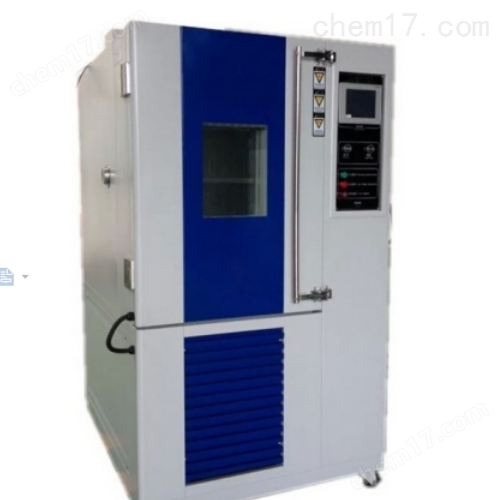
1. Refrigeration system
The closed-loop system consisting of a compressor, condenser, expansion valve, and evaporator is the core of achieving low temperature. The compressor drives the refrigerant circulation and achieves cooling through phase change heat absorption. Modern equipment often uses high-efficiency scroll compressors, which have the characteristics of low noise, long service life, and energy saving. Air cooled or water-cooled condensers are responsible for dissipating heat outside the box to ensure refrigeration efficiency.
2. Heating system
Usually, nickel chromium alloy electric heating tubes are used and installed in air circulation ducts. Its response is fast, temperature control is precise, and when combined with PID adjustment algorithm, it can achieve high-precision temperature control of ± 0.1 ℃. Heating elements need to have good insulation and oxidation resistance to ensure long-term stable operation.
3. Humidification and dehumidification system
Humidifiers often use electric or steam humidifiers, which generate saturated steam by heating pure water, quickly increasing the humidity inside the box. Dehumidification relies on the refrigeration system - when the surface temperature of the evaporator is below the dew point, water vapor in the air condenses and precipitates. Some models are equipped with rotary dehumidification, which can achieve low temperature and low humidity (such as -70 ℃, 5% RH) working conditions.
4. Air circulation system
Composed of a centrifugal fan, air duct, and flow guide device. The fan forces air to flow through the heating/cooling/humidifying components, and then evenly blows it into the test space to ensure uniform temperature and humidity distribution inside the box (usually requiring ≤± 2 ℃, ± 3% RH). Reasonable air duct design can avoid blind spots and improve testing consistency.
5. Control system
A control unit with PLC or embedded industrial computer as the core, equipped with a color touch screen, supporting users to set complex programmed operation curves (such as multi-stage heating constant temperature cooling constant humidity cycle). The system collects sensor data in real-time, dynamically adjusts the operation of various components, ensures accurate execution according to preset programs, and has functions such as data recording, remote monitoring, and over limit alarm.
6. Sensors and Security Protection
High precision platinum resistance (PT100) monitors temperature in real-time, while capacitive or humidity sensitive resistance sensors sense humidity. Multiple safety devices such as over temperature protection, overload protection, water shortage alarm, compressor delay protection, etc. are used to build a safety defense line and prevent equipment damage or accidents from occurring.
7. Box structure
The inner and outer double-layer stainless steel structure is filled with a high-density polyurethane foam insulation layer in the middle, effectively insulating the heat. The gate is equipped with multi-level sealing strips to prevent cold and hot exchange. Design details such as observation windows, testing holes, and drainage systems, balancing practicality and sealing.