-
E-mail
marklee@hankosci.com
-
Phone
15800598580
-
Address
Kaixin Business Park, No. 1325 Hengnan Road, Minhang District, Shanghai
Shanghai Haokuo Scientific Equipment Co., Ltd
Understanding the "Dialogue" between Materials and Steam, Analysis of SMS DVS Technology in the UK
Date: 2025-12-23Read: 1
In scientific research and industrial applications, solid materials and vapors in the environment are always in a continuous and subtle interaction. Although this effect is not visible, it profoundly affects the chemical stability, physical structure, storage life, and process performance of the product - from the transformation of drug polymorphs, interface degradation of battery electrodes, to changes in the permeability of polymer membranes, all of which are closely related to it.
In the process of interaction between materials and vapor, every adsorption, desorption, or structural response is like a "dialogue" between the two - the material responds to the challenges of environmental vapor through changes in quality, morphology, or properties. To accurately interpret the connotation of this micro "dialogue", there is an urgent need for an analytical method that combines high sensitivity, excellent repeatability, and precise environmental control capabilities.
Dynamic Vapor Adsorption (DVS)Technology is born for this purpose. Since the 1990s, Surface Measurement Systems (SMS) in the UK has been committed to promoting the development and application of the DVS method. Its DVS series instruments, with their high-quality performance and reliability, have become important analytical tools for many research institutions, corporate R&D, and government organizations in the field of adsorption research.
01. What is Dynamic Vapor Adsorption (DVS)?
Dynamic Vapor Adsorption (DVS) is a gravity based adsorption analysis technique used to measure the adsorption rate and quantity of a sample onto a solvent, such as the absorption of water vapor by a dry powder. This technology obtains adsorption behavior data by adjusting the vapor concentration around the sample in a controlled environment and measuring the resulting mass change in real time. Although water vapor is commonly usedTesting gases, but DVS technology is also applicable to adsorption studies of various organic solvents.
The DVS method has been widely applied in various research and development fields and industry applications, from crystal morphology research, compound stability evaluation, to studying the surface and overall adsorption behavior of water vapor or organic vapor in materials. At the same time, it is also an important component of quality control analysis in formula development, process scaling, production, and packaging.

What is the working principle of Dynamic Vapor Adsorption (DVS) method?
Dynamic Vapor Adsorption (DVS) technology rapidly measures the adsorption and desorption processes of water or organic vapor by passing a carrier gas through a sample suspended on a highly sensitive microbalance (with a sample mass range of 1 mg to 4 g) under specified relative humidity (or vapor partial pressure) conditions. This micro balance is a high-precision balance (SMS UltraBalance) independently developed by SMS company in the UK. It has the ability to detect mass changes of less than one millionth and provides excellent long-term stability. It is a necessary core component for accurately measuring vapor adsorption phenomena (with time spans ranging from minutes to days).
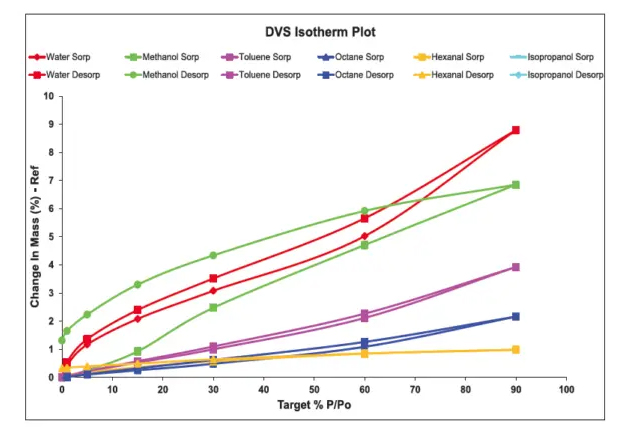
In fact, the adsorption behavior of materials is highly dependent on the rate at which they reach adsorption equilibrium. The DVS instrument can use a very small amount of sample (usually around 10 mg) to complete the test, greatly reducing the time required to reach adsorption equilibrium while ensuring the accuracy and representativeness of the test results.
The DVS instrument is equipped with dedicated control software to achieve fully automatic setting and operation of adsorption/desorption experiments, with a flexible interface and convenient operation. Equipped with a powerful DVS data analysis software suite, it can quickly draw and perform quantitative analysis, comprehensively improving experimental efficiency and data processing capabilities.
03. DVS series instruments
SMS company has developed and manufactured various models of DVS instruments, providing solutions suitable for various adsorption experiments with diverse functions to meet the operational needs of different laboratories.
(1) DVS instrument based on carrier gas: water vapor and organic vapor

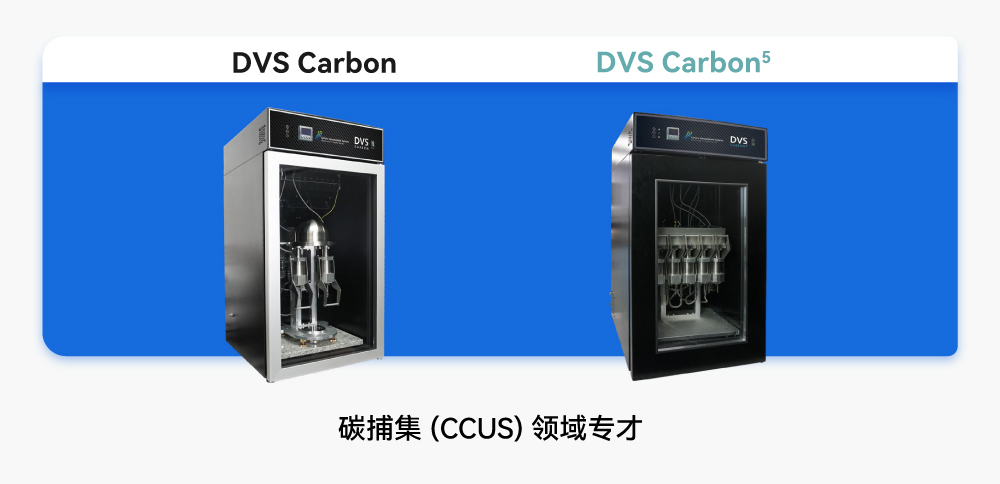
(2) DVS instrument based on carrier gas: carbon capture
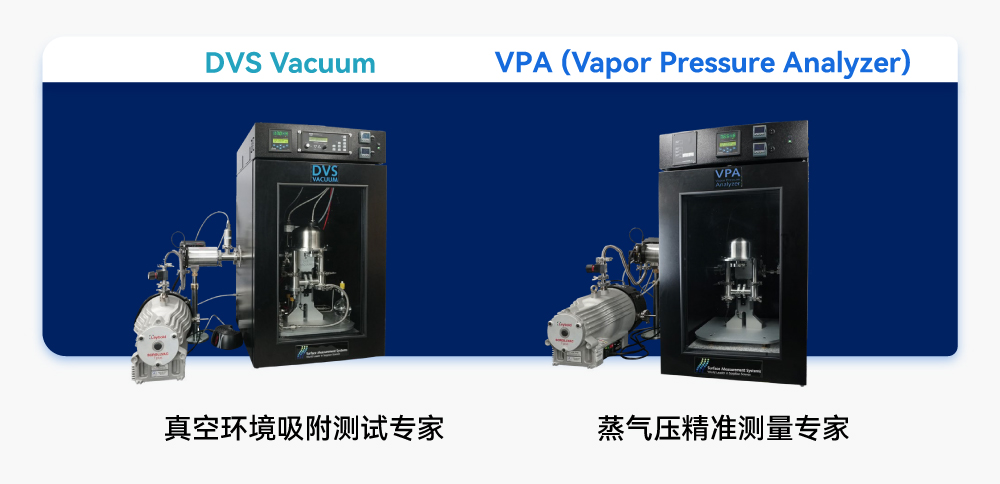
(3) DVS instrument based on vacuum system: gas and steam
▍Regarding the UK SMS:
Surface Measurement Systems in the UK is one of the manufacturers of adsorption technology analytical instruments, focusing on developing innovative experimental techniques for accurately characterizing the various physical and chemical properties of complex solids. Since the invention of Dynamic Vapor Adsorption (DVS) in 1991, SMS has been drivingThe development and application of this technology. Nowadays, SMS company in the UKThe field of adsorption research has been highly recognized by the industryThe DVS, IGC-SEA, BTA and other experimental instruments developed and manufactured by it can be used to accurately characterize the various physical and chemical properties of complex solids, and are widely used in many fields such as pharmaceuticals, food, energy, civil engineering and construction. As the general agent of SMS company's DVS series and iGC SEA series products in the pharmaceutical industry in China, Shanghai Haokuan will provide you with instruments and equipment in the field of adsorption researchSolution.
▍Regarding Shanghai Haokuan:
Shanghai Haokuo Scientific Equipment Co., Ltd. was established in 2019 and is headquartered in Shanghai. It is a professional service provider of laboratory equipment/consumables and analytical instruments. The company is committed to providing high-tech professional equipment and technical consulting services to customers in the fields of biology, medicine, physical property testing, chemical analysis, food, industrial production, and other related fields at home and abroad.