-
E-mail
1073869251@qq.com
-
Phone
13564807393
-
Address
No. 216 Gangye Road, Xiaokunshan Town, Songjiang District, Shanghai
Shanghai Forsyth International Trade Co., Ltd
The 'Microscopic Sentinel' of Particle Counter for Clean Environment
Date: 2025-10-26Read: 0
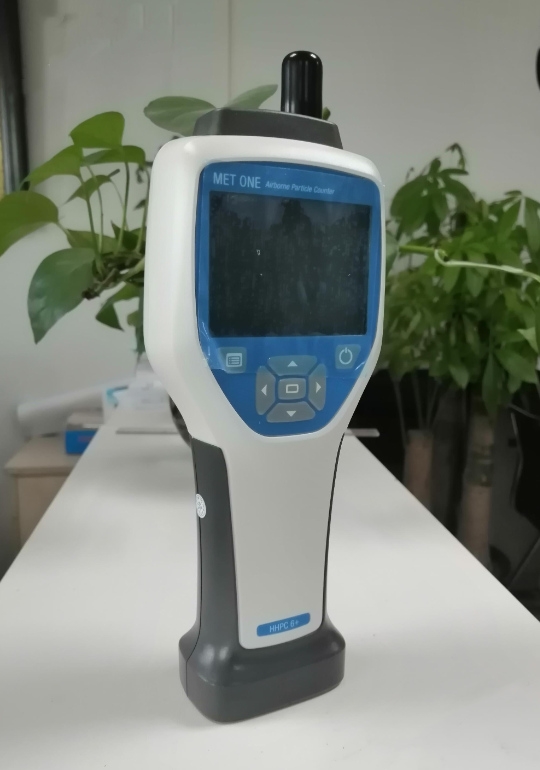
In fields such as semiconductor manufacturing, pharmaceutical workshops, operating rooms, and biological laboratories that have strict requirements for air cleanliness,The particle counter is a crucial core monitoring device.Its core function is not to detect chemical composition, but to quantitatively analyze the quantity, size, and distribution of suspended solid or liquid particles in the air, thereby converting intangible air cleanliness into objective and quantifiable data.
1、 Core detection object: suspended particles in the air
Particle counters are specifically designed to detect suspended particles in the air. These particles come from a wide range of sources, including:
1. Dust: human dandruff, clothing fibers, soil particles, etc;
2. Microorganisms: bacteria, viruses, fungal spores (often attached to other particles);
3. Process by-products: metal shavings, chemical aerosols, etc. generated during the production process;
It detects not a single substance, but a collection of particles that meet the size characteristics.
2、 Core detection parameters: particle size and quantity
The instrument evaluates air quality through two key parameters:
1. Particle size
Equipment is usually equipped with multiple particle size channels according to international standards (such as ISO14644-1), commonly including:
① 0.3 μ m, 0.5 μ m (key indicators in the semiconductor industry)
② 5.0 μ m (key control point in the pharmaceutical industry)
2. Particle concentration
The number of particles within a specific particle size range per unit volume of air, commonly measured in units of 'particles per cubic meter'.
3、 Core application scenario: Cleanliness classification and compliance certification
Based on detection data, the instrument mainly serves three major scenarios:
1. Cleanroom level certification: By measuring the concentration of specific particle sizes, it is directly determined whether the cleanroom meets the level requirements from ISO 1 to ISO 9.
2. Production process monitoring: In precision industries such as chip manufacturing, real-time monitoring of 0.1 μ m level particles in the air is carried out to prevent a decrease in product yield.
3. Medical environment monitoring: Ensure the level of microbial control in key areas such as operating rooms and sterile preparation workshops.
4、 Technical principle: precise application of light scattering technology
The mainstream instruments adopt the principle of light scattering:
1. Pump in the air to be tested;
2. When particles pass through a laser beam, scattered light is generated;
3. The photodetector receives scattered light signals;
4. Determine particle size based on signal strength and count particle concentration through the number of signals.
5、 Special Types and Function Expansion
In addition to the basic model, there are also the following specialized types:
1. Condensed nucleus particle counter: capable of detecting ultrafine particles as small as 0.01 μ m;
2. Bioaerosol Monitor: Combined with fluorescence detection technology, specifically designed for microbial monitoring.
summary
Particle counters have established visible cleanliness standards for modern precision manufacturing and healthcare by accurately measuring microscopic particles. From the chip factory to the operating table, this' micro sentry 'silently guards the product quality and personal safety, and converts the fuzzy concept of' cleanliness' into precise and controllable scientific parameters, which is a crucial technical cornerstone in the high standard environmental control system.