-
E-mail
sdrnyq@163.com
-
Phone
13656375202
-
Address
No. 2828, Parallel North Road, Tengzhou City, Shandong Province
Shandong Ruineng Instrument Co., Ltd
Shandong Ruineng Baijiu Determination Experimental Analysis Scheme
Date: 2025-08-30Read: 1
Baijiu determination
gas chromatographyExperimental Protocol
according toGB10345-2022carry out

With its advantages of high sensitivity, high separation efficiency and rapid analysis, gas chromatograph plays a key role in quality control, flavor research and safety monitoring of Baijiu industry.The physical analysis of Baijiu according to GB10345-2022 provides a solid scientific basis for the research and quality identification of Baijiu.
This experiment strictly follows《GB10345-2022How to translateAnalytical Methods of BaijiuAnd relevant standards of Baijiu industry,The volatile components in Baijiu are separated by gas chromatography through chromatographic column, and hydrogen flame ionization detector is used(FID)Conduct testing. Based on the retention time and peak area of each component in the chromatographic column, combined with internal standard method quantification, calculate the concentration of the target component.《GB10345-2022
3.1. .
Experimental principle: Gas chromatography (GC) achieves separation based on the difference in distribution/adsorption capacity of each component in the mixture between the stationary phase (chromatographic column) and the mobile phase (carrier gas). Volatile components (alcohol, ester, acid, etc.) in Baijiu are separated in polar capillary columns (such as polyethylene glycol stationary phase) due to different boiling points and polarities. Detected by a hydrogen flame ionization detector (FID) (sensitive to organic compounds), qualitative by retention time, and quantitative by internal standard method (or external standard method).
Experimental conditions:Column and detector configuration·Column selection:oSpecial capillary chromatographic columns for Baijiu (such asKB-ALCOHOL ATheCNW CD-WAX)The standard explicitly recommends the use of polarity columns (such as
FFAPorDB-WAX)Separate esters and alcohols.oSpecification: Length30-60m, inner diameter
0.25-0.32mm, film thickness0.25μmEnsure efficient separation of key components such as ethyl acetate and ethyl hexanoate.
o Example: Specific models may be recommended in the appendix of the national standard (such asGB/T 10345-2022The chromatographic column parameters mentioned in the document need to be followed for execution.·Detector: Use a hydrogen flame ionization detector(
3.2. FID
)Temperature setting ≥250℃
(National standard requirements), ensure sensitivity and stability.Temperature program and gas conditions·Column temperature program:oInitial temperature:
40℃maintain5-10min(Suitable for low boiling point components such as methanol).oheating rate3-10℃/minSegmented heating, final temperature
180-200℃maintain5-10min(Ensure that all high boiling esters flow out).oExample:40℃(5min)→5 ℃/minRise to
100℃ →20 ℃/minRise to
200℃(Refer to typical conditions in the national standard).·Carrier gas and flow rate:oHigh purity nitrogen (purity)
≥99.999%), flow rate0.8-1.2mL/min(Optimize column efficiency).oHydrogen flow rate:30-40mL/min(Used for)
3.3FID
Combustion gas, air flow rate400mL/min
.Injection and quantification methods·Injection method:
oSplit injection: Split ratio30:1-70:1(High concentration samples); Non split injection is used for trace analysis.
oInjection volume:
0.5-1μL(Avoid overloading).·Internal standard method:
oInternal standard: n-pentyl acetate or n-butyl acetate (recommended by national standards), the amount added should be accurate (e.g
4.1Sample).
oCorrection factor calculation: Establish a calibration curve using standard solution to ensure that the linear range covers the measured concentration.Specific testing steps:
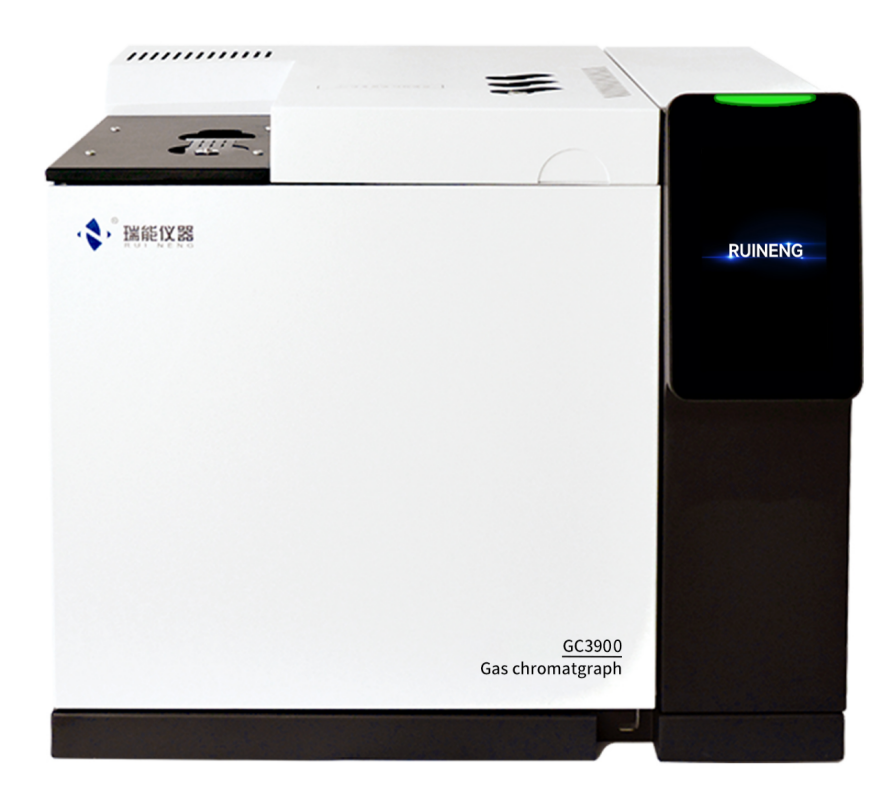
4.2 gas chromatograph
equipFIDHydrogen flame detector
Experimental materials4.2.1liquor
reference materialBaijiu samples to be tested (conforming to
GB/T 10781Related standards)4.2.2
reference standardBaijiu samples to be tested (conforming toGB/T 10781Related standards)
Standard solution:
BAldehydes, methanol, n-propanol, sec butanol, acetaldehyde, n-butanol, isoamyl alcohol, ethyl acetate, ethyl butyrate, ethyl valerate, ethyl lactate, ethyl hexanoate, isoamyl acetate, etc. (chromatographically pure)(Standard products with national certification qualifications can be purchased)
4.3 Internal standard: n-butyl acetate (chromatographically pure)
Solvent:55%-60%
Ethanol solution (analytical grade)Experimental instruments and parameters84.3.15instrument parametersColumn temperature chamber: temperature control range room temperature
+℃~40℃
,Program heating order40≥8
Step by step,heating rate0.1~8℃/minFID
Detector: Detection limit≤×10⁻ ¹²g/s106
(n-hexadecane),linear range:45≥
Injection port: diversion/
Non shunt compatible, maximum temperature0℃
4.3.2auxiliary equipmentAnalytical balance: accuracy0.1mgMicro injector:(1μLThe
10μL, accuracy≤±0.1%)
Capacity bottle(
5.1,
) Pipette (calibrated)
Experimental steps:Sample processing·Pre processing details:oSample dilution: using
60%Dilute with ethanol aqueous solution to reduce matrix interference (refer to the national standard)X.XArticle).oSaponification reflux (total ester determination): according toGB/T 10345-2022Method: Use a full glass still with reflux time
30min The endpoint of sulfuric acid titrationpH 8.70.·Filtration and degassing: The sample needs to be subjected to
5.2. 0.45μm
Organic membrane filtration, ultrasonic degassing 2-3min
To prevent bubbles from affecting the injection accuracy.Instrument calibration and verification5·Establishment of standard curve:o
Prepare at leastA concentration gradient standard solution covering the concentration range of the tested component (such as methanol)30-2g/L
). o
Repeat injection for each concentrationNext, calculate the average response factor.·Quality control measures:
oAdd quality control samples (known concentration) to each batch of analysis, and the recovery rate should be within
5.395%-105%
between. o
Regularly (e.g. weekly) use standard samples to verify instrument response value drift.Data Analysis and Reporting
·Peak recognition and integration:
o Qualitative analysis using retention time (compared with standard samples), combined with chromatographic features such as peak shape and resolution.
oIntegral parameter optimization: Adjust slope sensitivity to avoid loss of small peaks or misjudgment of shoulder peaks.·Result calculation:
6.1. Calculate the total ester (such as ethyl acetate), total ester amount, and other indicators according to the national standard formula, while retaining significant figures (such as total acid)
≤0.05g/L ).
Adaptation of key new/revised content:New indicator analysis·Determination of total acid ester, acetic acid, and hexanoic acid:
ouse
6.2FFAP
Column or similar polar column, optimize chromatographic conditions to separate carboxylic acid components (column temperature program may require adjusting heating rate). o
Refer to the chromatographic reference conditions in the appendix of the national standard (such as column temperature and detector temperature). Method revision item adjustment·Optimization of ester determination:
· For ethyl acetate, ethyl butyrate, etc., use updated saponification reflux time (as specified in the national standard)
1. Reflux and titration endpoint determination.·Note for deletion: If the total acid determination method in the old standard is no longer used, the corresponding reagents and equipment may not be configured.Operating standards and precautions:Laboratory environment: Temperature
2. 15-25℃
, humidity≤70%To avoid environmental factors affecting the stability of the instrument.Instrument maintenance:2·
Periodic aging of chromatographic columns (such as280℃
3. Carrier gas
·The detector nozzle is cleaned monthly to prevent carbon buildup.
Safe operation: Wear protective equipment when handling sulfuric acid and other reagents to ensure good ventilation in the laboratory.Example optimization plan:
·Objective: To efficiently determine ethyl acetate, ethyl caproate and higher alcohols in Baijiu.·Chromatographic conditions:
·Chromatographic column:CNW CD-WAX 60m×0.25mm×0.25μm.·Program heating up:40℃(5min)→5 ℃/minRise to120℃ →10 ℃/minRise to
200℃(Maintain)10min).·Detector:FID,
250℃; Injection port temperature:230℃.·Sample processing: according to
1. Perform saponification reflux, with precise addition of internal standard to
0.01mL.Verification and Qualification Inspection:Method confirmation:
·pressGB/T 10345-2022Conduct recovery experiments using the methods in the appendix (such as adding known concentration standards).
2. ·
R²≥0.999 |
)Detection limit and quantification limit. |
Compliance documentation: Experimental records must be complete, including instrument model, chromatographic conditions, sample processing steps, calibration data, etc., to meet audit tracking requirements. |
Content range of main components of Baijiu (national standard limit value): |
ingredient |
Strong aroma type (GB/T 10781.1) |
Fragrant type (GB/T 10781.2) |
Sauce aroma type (GB/T 10781.4) |
methanol |
≤0.6g/L |
≤0.6g/L |
≤0.6g/L |
Ethyl hexanoate |
≥ 1.2g/L (premium grade) |
≤0.3g/L |
0.2-1.0g/L |
ethyl acetate |
0.5-2.0g/L |
≥ 1.5g/L (premium grade) |
0.3-1.0g/L |
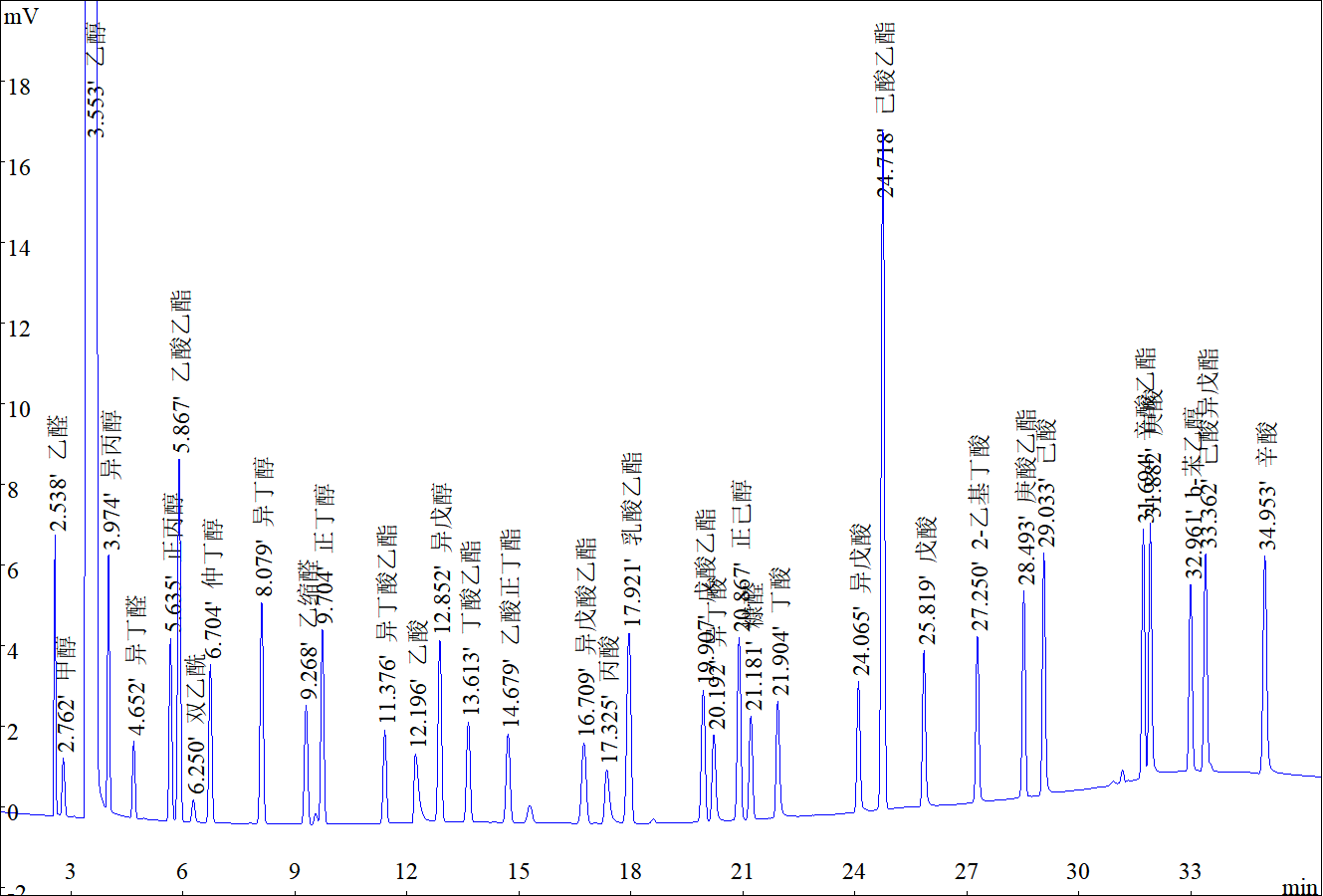
≥ 0.4g/L (premium grade) ≥ 1.4g/L (premium grade)3 Data Processing and Reporting:a: Standard spectrogram:b.0.21Precision:0.22The results of secondary parallel sample determinationRSD≤5%(such as methanol measurement value)、The
1. ,
2. RSD=4.5%
3. ).
4. Notes: