-
E-mail
87692680@qq.com
-
Phone
15689208778
-
Address
3rd Floor, Building 1, Weifang High tech Zone Optoelectronic Industry Accelerator (Phase I), No. 155 Guangdian Road, Yuqing Community, Xincheng Street, Weifang High tech Zone, Shandong Province
Shandong Leiente Intelligent Technology Co., Ltd
Application fields of COD ammonia nitrogen total phosphorus total nitrogen detector
Date: 2025-12-19Read: 0
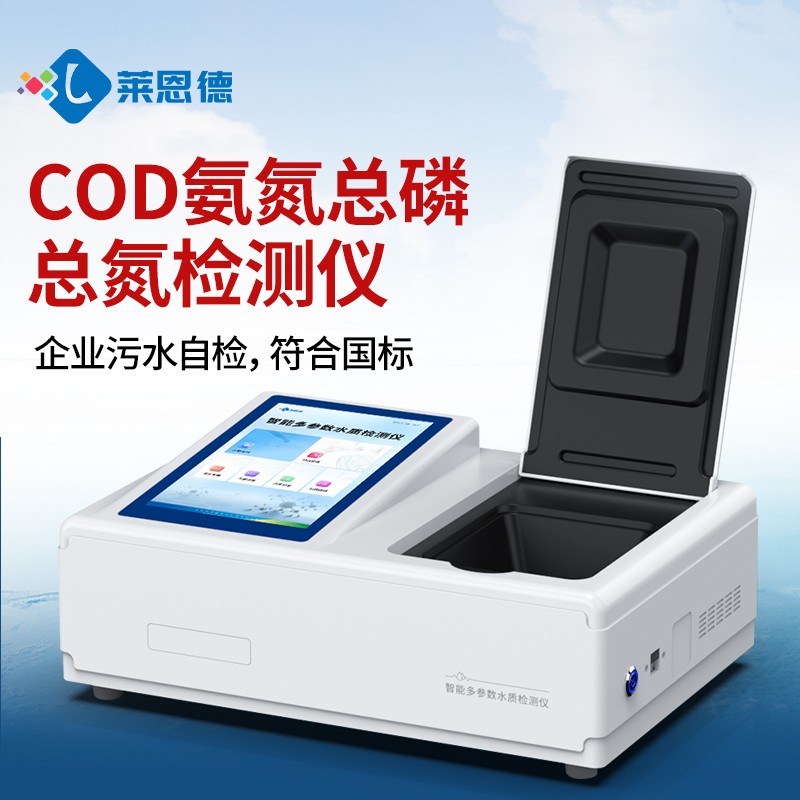
COD ammonia nitrogen total phosphorus total nitrogen detector is an instrument and equipment used for water quality analysis. It can quickly and accurately measure the chemical oxygen demand (COD), ammonia nitrogen, total phosphorus, and total nitrogen content in water bodies, providing important technical support for environmental protection, water quality monitoring, and water resource management.
The following are the application areas of COD ammonia nitrogen total phosphorus total nitrogen detector:
1. Environmental monitoring
Regularly monitor Rivers and Lakes, reservoirs, groundwater and other water bodies to grasp the water quality status and change trend.
Set up monitoring stations in key watersheds and drinking water sources, install online detectors, and provide data basis for water environment quality assessment and ecological protection planning.
A portable detector can quickly identify the wastewater discharged by enterprises, determine whether it meets the standards, and crack down on environmental violations.
2. Wastewater treatment
Monitor the COD, ammonia nitrogen, total phosphorus, total nitrogen and other indicators in the inflow, treatment process water and outflow, and evaluate the effectiveness and operation status of the sewage treatment process.
Optimize the process based on monitoring data, improve processing efficiency, reduce operating costs, and achieve clean production and energy conservation and emission reduction.
3. Research and Teaching
Researchers study the formation mechanism and evolution law of environmental problems such as eutrophication and organic pollution by detecting indicators in different water bodies, and explore pollution control technologies and methods.
In teaching experiments, students master the principles and methods of water quality analysis by operating instruments, enhancing their practical skills and scientific research literacy.
4. Industry and Agriculture
Monitor the pollutant indicators in industrial wastewater and domestic sewage from industries such as chemical, petroleum, papermaking, metallurgy, brewing, and pharmaceuticals to ensure compliance with discharge standards.
Evaluate the quality of agricultural irrigation water, guide agricultural production, and reduce non-point source pollution.