-
E-mail
3830284546@qq.com
-
Phone
19106362018
-
Address
Oulong Technology Park
Shandong Horde Electronic Technology Co., Ltd
Full guide for operation and use of headspace gas analyzer (residual oxygen analyzer): precise control of packaging gas composition
Date: 2025-12-23Read: 2
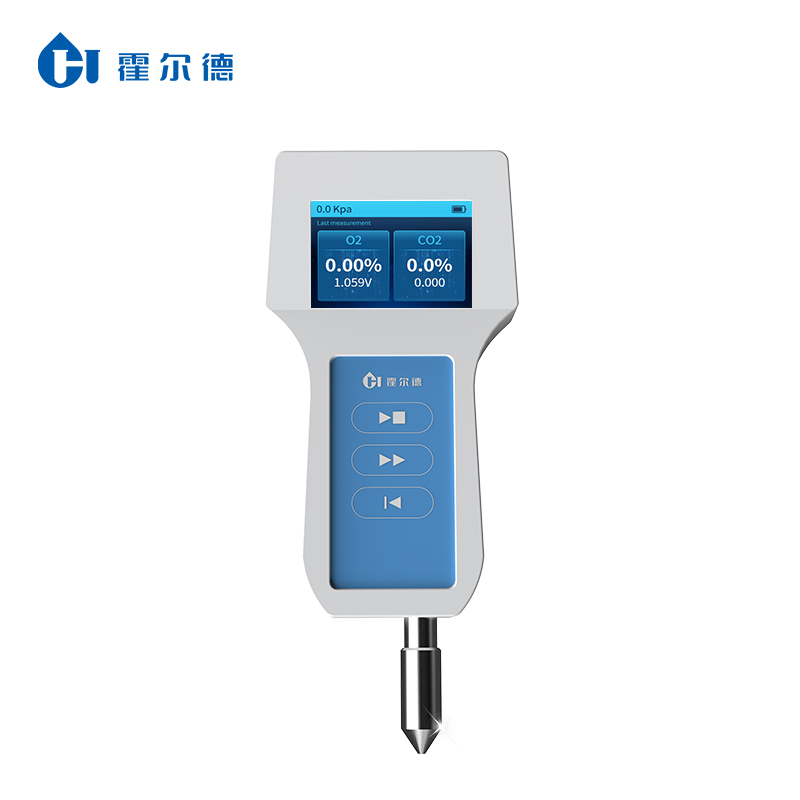
The headspace gas analyzer (also known as residual oxygen analyzer), as the core equipment for detecting gas components in sealed packaging, is developed and produced according to the "JJG365-2008 Electrochemical Oxygen Analyzer" standard. It can accurately measure the oxygen content, carbon dioxide content, and mixing ratio inside sealed packaging, providing key data support for production quality control and shelf life guarantee in industries such as food and pharmaceuticals. Its operation and use need to follow standardized procedures, combined with the advantages and core functional characteristics of handheld design, to achieve standardized operation throughout the entire process from equipment preparation, sample testing to data management, ensuring the accuracy of testing data and improving on-site operation efficiency. This article constructs a standardized operating system for headspace gas analyzers from three dimensions: operating procedures, core operating points, and usage precautions, providing professional guidance for on-site testing and laboratory analysis.
Standardized operating procedures: closed-loop control from equipment preparation to data output. Before operation, it is necessary to complete equipment status verification and basic preparation. Firstly, check the instrument's battery level, confirm the remaining battery level through the intuitive operation interface, and ensure that the built-in 6800mAh large capacity lithium battery has sufficient power to avoid data loss due to power failure during the detection process; If the battery is low, it needs to be charged in a timely manner. Subsequently, switch the operating language according to the detection requirements, support one click switching between Chinese and English, and adapt to the usage habits of different operators. Equipment calibration is a key prerequisite for ensuring detection accuracy. It is necessary to complete one click calibration operation according to the instrument instructions, relying on the high-precision characteristics of imported brand sensors to ensure that the instrument is in a precise detection state after calibration. At the same time, check whether the protective cover of the quick insertion sampling needle is intact to ensure the safety of the sampling process and avoid damage to the sampling needle or accidental contact by the operator.
Core testing operation: precise sampling and analysis adapted to diverse packaging. The sampling process needs to select the corresponding sampling method according to the packaging type (soft packaging bag, hard packaging container, ampoule bottle, etc.) to ensure that the sampling needle smoothly punctures the packaging and avoid a large amount of gas leakage inside the packaging affecting the detection results. For non negative pressure packaging bags, the quick insertion sampling needle can be directly inserted through the packaging film; For hard containers such as cans and ampoules, it is necessary to accurately locate the puncture point to ensure that the sampling needle enters the headspace area. After the puncture is completed, the one click detection function is activated, and the built-in gas sensor and pressure sensor of the instrument will work synchronously to accurately analyze the oxygen and carbon dioxide content inside the packaging, while measuring the vacuum degree inside the sample. During the detection process, the instrument automatically completes gas extraction, analysis, and calculation without manual intervention. After the detection is completed, the detection results are displayed immediately on the operation interface, achieving rapid on-site data reading.
Data management and equipment maintenance: ensuring data traceability and instrument stability. After the detection is completed, the instrument automatically stores the detection data, and the built-in storage module can accommodate 2000 sets of data. At the same time, it has the function of automatic memory in case of power failure, effectively preventing data loss. If further analysis of data is required, it can be imported into a computer through a USB interface to achieve data archiving, report generation, and batch analysis, providing data support for production guidance. After the testing is completed, basic equipment maintenance should be carried out, the protective cover of the sampling needle should be removed, and residual impurities on the surface of the sampling needle should be cleaned to avoid contamination affecting subsequent testing; If the instrument is not used for a long time, the automatic shutdown function should be turned on to reduce power consumption. In addition, the instrument supports remote upgrade and maintenance functions, and can regularly update system programs remotely to optimize detection algorithms and ensure long-term stable operation of the instrument.
Key usage precautions: Improve detection accuracy and operational safety. During the sampling process, it is necessary to ensure that the puncture position of the sampling needle is well sealed to avoid air infiltration into the interior of the packaging, which may cause deviations in the test results; For different types of packaging samples, cross use of sampling needles should be avoided to prevent sample contamination. The detection environment should meet the requirements for instrument use, avoid operating in high temperature, high humidity, or strong electromagnetic interference environments, and ensure stable sensor performance. The built-in sensor of the instrument is the core precision component, and it is necessary to avoid severe collisions or vibrations of the instrument, while staying away from corrosive gases to extend the service life of the sensor. Calibration operations need to be carried out regularly. It is recommended to regularly check the calibration status based on the frequency of use and testing environment to ensure the accuracy and repeatability of the testing data. In addition, operators need to be familiar with the instrument operation interface and functional buttons, strictly follow the one click operation instructions to complete the detection, and avoid misoperation that may cause abnormal detection.
The core of the operation and use of the headspace gas analyzer lies in "standardized processes, precise sampling, and standardized management". Its handheld design and one click operation greatly reduce the operating threshold, adapting to the detection needs of diverse scenarios such as production sites, warehouses, and laboratories. By strictly following the operating procedures and controlling key links such as sampling and calibration, the high-precision detection advantages of the instrument can be fully utilized to accurately obtain gas composition data inside the packaging, providing reliable support for production process optimization and product shelf life guarantee. At the same time, standardized equipment maintenance and data management can not only extend the service life of instruments, but also achieve traceability of detection data, helping enterprises build a sound quality control system. Against the backdrop of increasing packaging quality requirements in industries such as food and pharmaceuticals, standardized operating methods for headspace gas analyzers have become a key guarantee for improving quality control efficiency and product safety.