-
E-mail
3830284546@qq.com
-
Phone
19106362018
-
Address
Oulong Technology Park
Shandong Horde Electronic Technology Co., Ltd
Analysis of the working principle of laser methane telemetry instrument: the technical core of precise remote leak monitoring
Date: 2025-12-23Read: 3
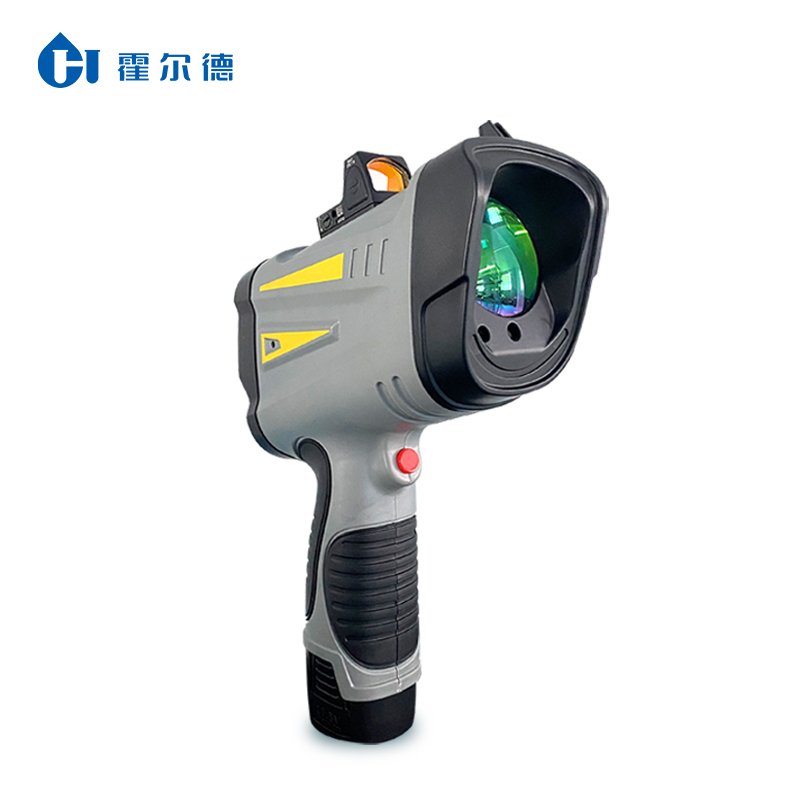
Accurate, rapid, and safe monitoring of methane leaks is a core requirement for ensuring public safety in the field of gas safety inspections. Traditional portable gas detectors have obvious limitations in special scenarios such as overhead pipelines and narrow spaces due to the need for close contact with the detection environment, making it difficult to balance detection efficiency and personnel safety. The laser methane telemetry instrument relies on tunable diode laser absorption spectroscopy (TDLAS) technology to break through the spatial limitations of traditional detection modes and achieve remote non-contact monitoring of methane gas. Its working principle revolves around the closed-loop process of laser emission, gas absorption, signal reception, and data analysis. By accurately capturing the characteristic spectral absorption signal of methane gas and combining optimization algorithms to achieve quantitative analysis of leakage concentration, it provides efficient and safe technical support for gas inspection.
Core technology foundation: Principle adaptation of tunable diode laser absorption spectroscopy (TDLAS) technology. The core logic of this technology is to utilize the selective absorption characteristics of gas molecules towards specific wavelength lasers for gas detection. Its key advantages lie in the precise tunability and high monochromaticity of laser wavelengths. Methane gas exhibits a characteristic strong absorption peak near 1653nm in the near-infrared band, and there are no strong absorption peaks of other common gases in this band. This spectral characteristic provides a natural basis for the specific detection of methane. The laser methane telemetry instrument integrates a tunable diode laser with a specific wavelength to accurately output a laser beam that matches the characteristic absorption peak of methane, ensuring only response to methane gas and avoiding cross interference from other gases such as water vapor and car exhaust from a theoretical perspective, providing core guarantee for detection accuracy.
Closed loop workflow: full chain analysis from laser emission to concentration output. The working process of the instrument can be divided into four core steps: laser emission, beam transmission and gas interaction, signal reception, and data processing. Firstly, the tunable diode laser is controlled by the built-in driver module of the instrument to emit a specific wavelength (around 1653nm) laser beam. At the same time, the pointing laser is used to assist in aiming and positioning, ensuring that the laser beam is accurately directed towards the detection area. Subsequently, the laser beam passes through the space to be detected (such as above pipelines, around narrow spaces, etc.). If there is methane leakage in this space, some of the laser energy will be selectively absorbed by methane molecules, and the degree of absorption is positively correlated with methane concentration and the length of the gas column along the laser propagation path. The unabsorbed laser beam reflects off the surface of the target object and is captured by the built-in receiver of the instrument.
Signal processing and accuracy assurance: synergy of WMS technology. The receiver converts the captured reflected laser signal into an electrical signal, which is then transmitted to the core data processing module. To further improve the detection accuracy, the instrument integrates wavelength modulation spectroscopy (WMS) technology, which enhances the absorption signal of methane gas by high-frequency modulation of the laser wavelength, while suppressing the interference of background noise, achieving precise capture of small leakage signals. The data processing module is based on Lambert Beer's law, combined with preset calibration curves and algorithms, to analyze and calculate the electrical signal, and finally obtain the concentration value of methane gas. Its unit is ppm * m (concentration path length product), which can intuitively reflect the cumulative concentration of methane in the leakage area. The entire data processing process is fast and efficient, coupled with trigger type one click detection design, to achieve real-time output of detection results.
Technological advantages derived from principles and design adaptation. Based on the above working principle, the laser methane telemetry instrument has formed multiple core technological advantages: non-contact detection mode does not require detection personnel to be in a dangerous environment, combined with remote telemetry capability, it can easily cope with scenarios such as overhead pipelines and narrow spaces that are difficult for personnel to access, fundamentally ensuring inspection safety; The principle of specific spectral absorption ensures that the instrument only responds to methane, avoids cross interference, and improves detection accuracy; The application of WMS technology greatly improves instrument sensitivity and achieves precise capture of small leaks. At the same time, the handheld lightweight design, low-power driver module, LCD color LCD graphic display and other structural and functional designs of the instrument are all based on the core working principle. On the basis of ensuring detection performance, they improve operational convenience and battery life, and are suitable for long-term field inspection needs. In addition, the integration of self diagnostic function and power detection function ensures the stability of instrument operation and the reliability of detection data by monitoring the status of core modules such as laser emission and signal reception in real time.
The working principle of the laser methane telemetry instrument is based on spectral analysis technology. Through precise laser wavelength control, efficient signal capture, and optimized algorithm processing, an efficient, accurate, and safe remote methane leakage monitoring system is constructed. Its core advantage lies in the precise utilization of methane characteristic spectral characteristics, as well as the synergistic effect of TDLAS and WMS technology, which not only breaks through the spatial limitations of traditional detection techniques, but also solves the interference problem in complex environments.