-
E-mail
info@palas.com.cn
-
Phone
02157850190
-
Address
5th Floor, Building 6C, No. 650 Shunqing Road, Songjiang District, Shanghai
Pallas Instruments (Shanghai) Co., Ltd
Shanghai University chooses Palas ® Study on Atmospheric Composite Pollution by Scanning Electron Mobility Particle Size Spectrometer
Date: 2025-07-07Read: 0
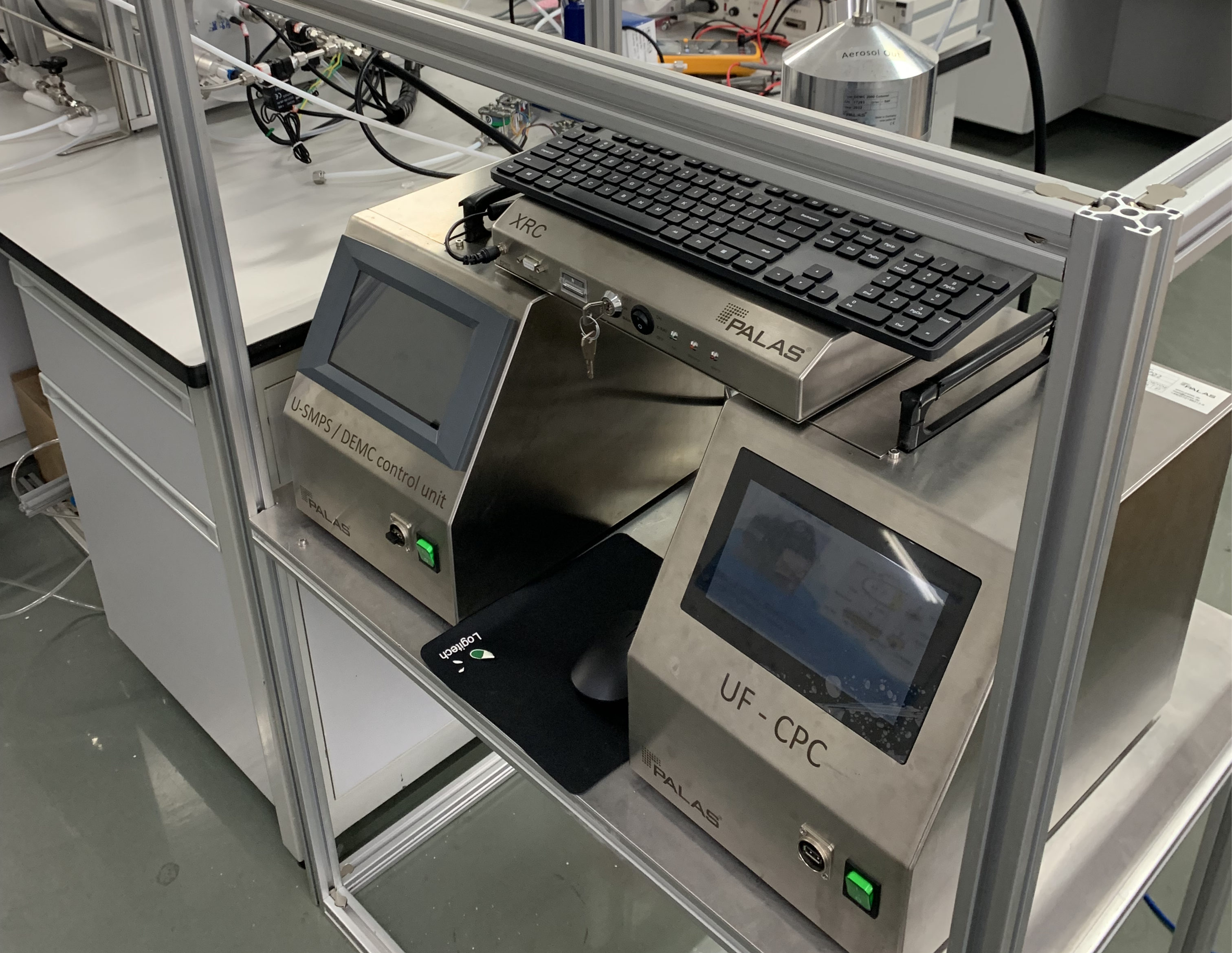
In recent years, the total emissions of air pollutants in China have been decreasing year by year, but the task of preventing and controlling air pollution is still very arduous. China is facing the dual pressure of relatively unfavorable meteorological conditions and a significant increase in pollution emissions. The Atmospheric Pollution Causes and Control Research Group of the School of Environmental and Chemical Engineering at Shanghai University has been engaged in long-term research on the causes, sources, and control of atmospheric composite pollution, using Palas ® The SMPS 2050 Universal Scanning Electron Mobility Particle Size Spectrometer is used to measure and analyze particulate matter in experiments. Palas ® The device displays measurement results graphically, supports multiple interfaces and remote access, and facilitates better observation of experimental data, providing strong support for research.
Palas ® U-SMPS measurement of aerosol particles after passing through a reaction device
The selection of research teams in universities
As a national "Double First Class" university, Shanghai University has achieved remarkable results in academic research. The research group on the causes and control of atmospheric pollution in the School of Environmental and Chemical Engineering at Shanghai University has been engaged in the study of the causes, sources, and control of atmospheric composite pollution for a long time, dedicated to exploring the generation and consumption mechanisms of atmospheric composite pollution and proposing pollution control strategies. In recent years, continuous attention has been paid to the formation mechanism, transformation process, and pollution sources of particulate matter secondary pollution, and rich research results have been achieved. This time, the college adopts Palas ® The SMPS scanning electron mobility particle size spectrometer measures the particulate matter produced by the oxidation of OH radicals in gas through an oxidation flow reactor, which not only meets the testing requirements of the laboratory, but also Palas ® SMPS has excellent stability and consistency, ensuring the reliability and reproducibility of experimental results, and providing assurance for the accuracy of experimental data.
School of Environmental and Chemical Engineering, Shanghai University
Real time data display, stable and reliable
Palas ® SMPS can measure the particle size and quantity concentration of particulate matter in real time. The test data can be viewed in real-time through the device monitor, and can also be viewed through txt files, allowing researchers to quickly conduct in-depth analysis of the experimental data. This real-time data and analysis capability greatly improves research efficiency. In addition, in the particle RTD experiment, the condensation counter UF-CPC 50 can be used independently, providing assurance for the conduct of RTD experiments.
The stability and reproducibility of experimental results are crucial for scientific research work. Palas ® The SMPS system ensures the reliability of experimental results with its excellent stability and consistency, allowing researchers to obtain consistent data in different experiments and better explore the complex mechanisms of air pollution.
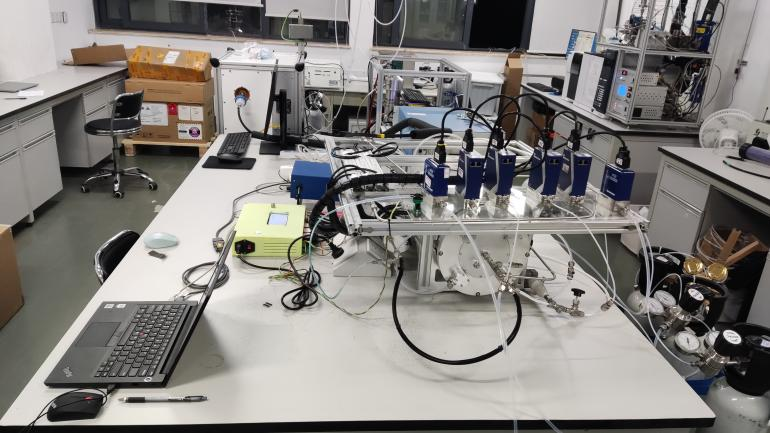
Oxidation flow reactor(Oxidation flow reactor,OFR)
technical advantage
Palas ® The SMPS universal scanning electric mobility particle size spectrometer has a logarithmic scanning mode, with a scanning time of up to 20 seconds; You can also freely choose the scanning time, size range, and scanning direction (upward or downward scanning). In addition, SMPS can automatically determine the dwell time (delay time between the grading column and the counter), minimizing the impact of experimental settings as there is no need to measure the length of the test tube.

UF-CPC measurement of reaction residence time of particulate matter
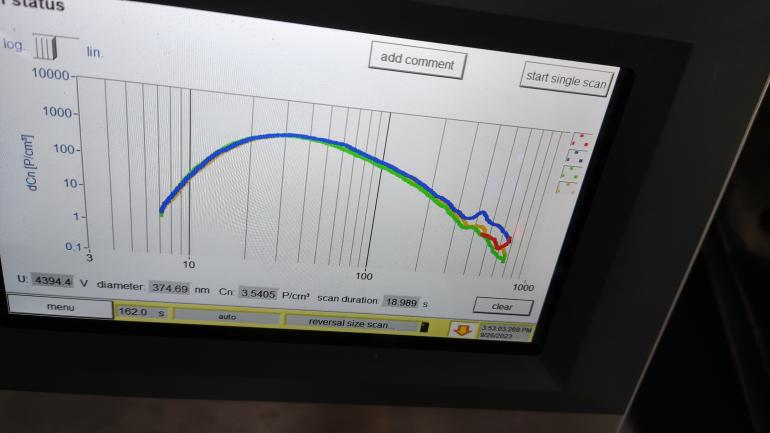
Measurement of particle transport efficiency using ammonium sulfate aqueous solution and 460 nm particle spheres
Reliable instruments Timely service
Palas ® The instrument not only provides reliable and highly reproducible results, but also helps the experimental team overcome any issues with its use, Palas ® We will also provide timely guidance through SMS or remote viewing. Palas ® The SMPS system is suitable for multiple fields, including atmospheric condensation nuclei research, nanoparticle technology process monitoring, environmental atmospheric monitoring, official CPCs calibration reference instruments, and occupational health and workplace exposure monitoring. This wide applicability makes the system an ideal choice in the fields of scientific research and monitoring.
Palas®SMPS Scanning Electromigration Particle Size Spectrometer
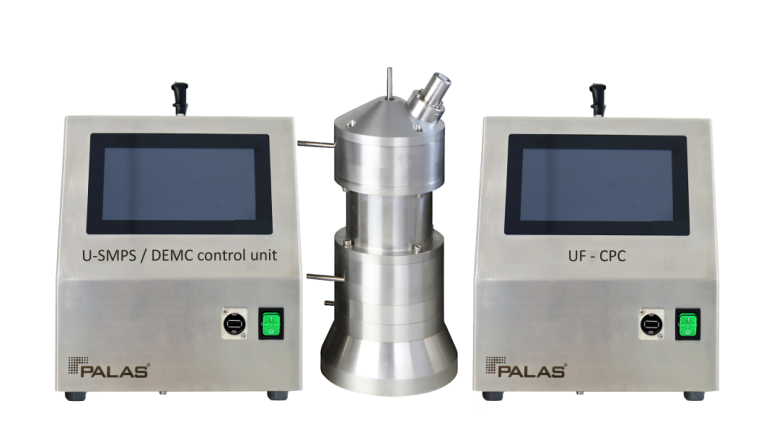
Product advantages
·The particle size distribution range is from 8 nm to 1200 nm
·Principle of Continuous and Rapid Scanning Measurement
·High resolution, up to 256 channels (128 channels/ten times particle size)
·Suitable for up to 108Particles/cm3The concentration
·Can connect DMA and nanoparticle counters from other manufacturers
·Graphic display of measured values
·Intuitive operation, using a 7-inch touch screen and GUI
·Integrated data logger
·Support multiple interfaces and remote access
·Low maintenance reduces your operating costs
·Reliable functionality
Application field
·Aerosol research
·Climate research
·Finding and locating emission sources
·Workplace measurement
·Filter test
·Exhaust monitoring