-
E-mail
info@palas.com.cn
-
Phone
02157850190
-
Address
5th Floor, Building 6C, No. 650 Shunqing Road, Songjiang District, Shanghai
Pallas Instruments (Shanghai) Co., Ltd
Palas ® U-SMPS - The Professional Choice of the Atmospheric Particulate Matter Research Team at Peking University
Date: 2025-07-07Read: 0
In today's society, the problem of air pollution is becoming increasingly severe, causing profound impacts on human health and ecosystems. In order to further explore the sources and impacts of atmospheric particulate matter, researcher Wu Zhijun and his team from the School of Environmental Science and Engineering at Peking University are dedicated to studying the generation and growth mechanisms of new particles under the conditions of atmospheric composite pollution in China, as well as the role of aerosol phase transition processes in environmental pollution and climate change, in order to seek solutions to atmospheric pollution. During this process, they chose Palas ® The U-SMPS nanoparticle measuring instrument, as a key equipment for research, provides strong support for revealing the mysteries of air pollution.
The Palace ® SMPSNano particle measuring instrumentDue to its excellent performance and precise measurement capability, it has been widely used in the field of atmospheric particulate matter research. This instrument can monitor the quantity concentration and particle size distribution of nanoparticles in the atmosphere in real time, providing important basic data for the environmental research team at Peking University.
The selection of research teams in universities
As a comprehensive higher education institution with significant influence in China, Peking University has accumulated rich research experience and achievements in the field of environmental science and engineering since its establishment of the Environmental Chemistry major in 1972. Professor Wu Zhijun, as a researcher and doctoral supervisor in the Department of Environmental Science at the School of Environmental Science and Engineering, Peking University, is also an outstanding representative in this field. He led his research group to achieve innovative results in revealing the evolution laws of water content and phase state of aerosol liquid water during the occurrence and development of heavy pollution, as well as the ice forming activity of particles, which has improved the understanding of the physical and chemical causes of regional atmospheric heavy pollution; Further expanding the research on urban aerosol phase, water content, and ice nucleation in the field of international atmospheric science.
In practical applications, atmospheric comprehensive field observation research often requires multiple sets of nano particle measurement instruments to provide information on the number, concentration, and particle size distribution of particles in different particle size ranges. However, the price of nanoparticle measuring instruments is generally high, and research institutions often cannot meet the measurement of particle number concentration and particle size distribution information within a wide range of particle sizes. To overcome this challenge, Researcher Wu Zhijun and his team chose Palas ® U-SMPS facilitates the smooth progress of research work.
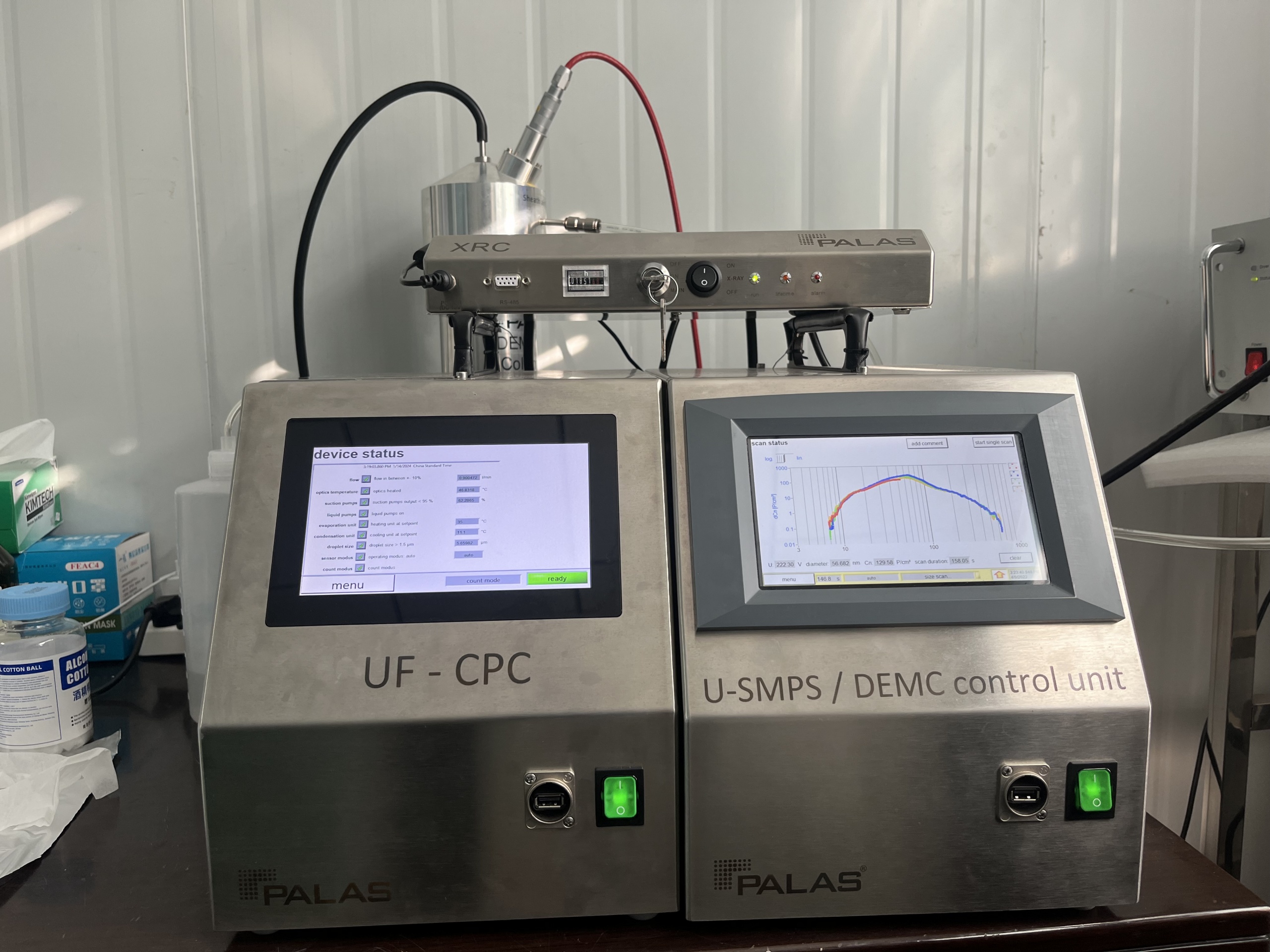
Particle size spectrometer providing key dataU-SMPS
Palas ® The U-SMPS nanoparticle measurement instrument is an instrument that can accurately measure the number concentration and particle size distribution of atmospheric nanoparticles online, providing key basic analytical data for studying the generation and growth mechanisms of new particles. Compared to other similar products, U-SMPS has the characteristics of moderate size and high integration level, making it easy to transport for conducting atmospheric comprehensive field observation experiments. In addition, its particle size measurement range is wide, covering a particle size range of 8 nm-1.2 μ m, solving the problem of missing measurement data in some particle size ranges. At the same time, the user interface of the instrument has an excellent interactive experience, which enables clicking on the screen to control the instrument and display measurement data in real time, making it easy to grasp the quality of data in a timely manner.
Palas®Comfortable service provided by a professional team
In collaboration with Palas ® During the collaboration, the research team led by Wu Zhijun highly praised its products and services. Palas ® The technical support team provided timely, patient, and rigorous guidance in instrument construction, maintenance, and data processing, ensuring the smooth progress of the research work. In addition, Palas ® We also customized a transport box for U-SMPS to ensure the safety of the instrument during transportation, and this detail has won the appreciation of the research team.
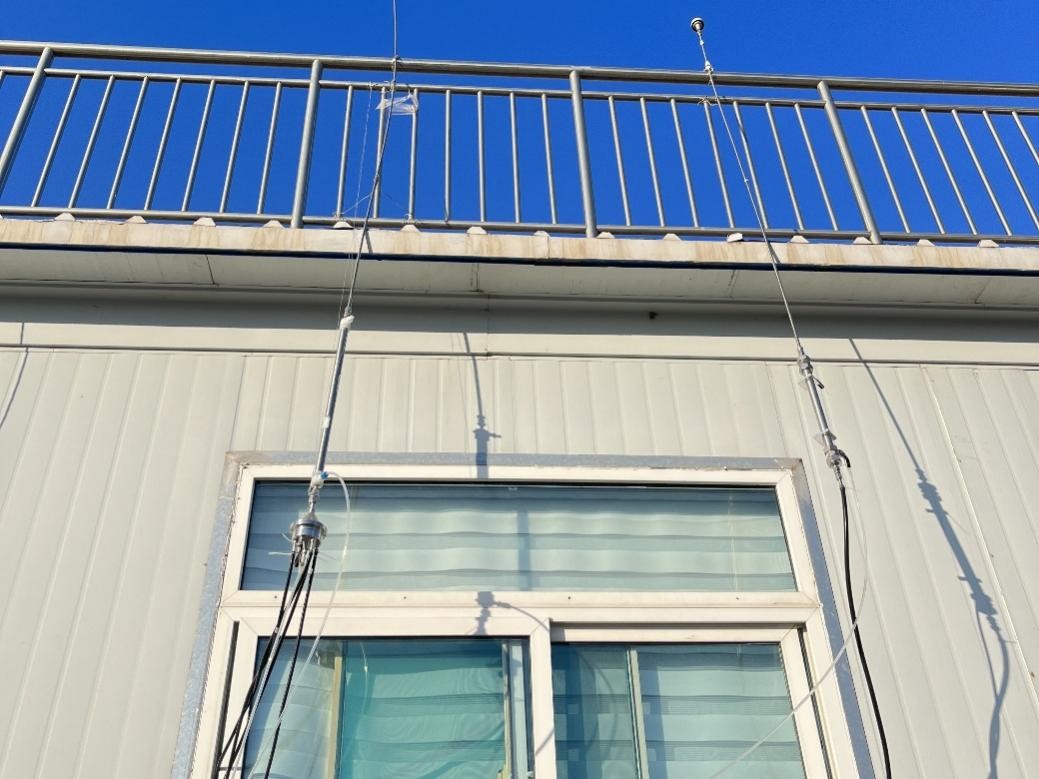
Palas ® The U-SMPS nanoparticle measuring instrument, with its excellent performance and professional services, has provided strong support for the atmospheric particulate matter research team led by Researcher Wu Zhijun from the School of Environmental Science and Engineering at Peking University, and has also laid a solid foundation for future cooperation in atmospheric particulate matter research. Both sides will continue to deepen cooperation and jointly promote the development of atmospheric particulate matter research. Palas ® We also look forward to collaborating with more research institutions to promote scientific research in the field of environmental protection and contribute to achieving sustainable development of the environment.
The Palace ® SMPSSeries Universal Scanning Electromobility Particle Size Spectrometer
Palas ® The combination of U-SMPS universal scanning electron mobility particle size spectrometer and ENVI-CPC 100 coagulation particle counter can provide monitoring data on the quantity concentration and particle size distribution of ultrafine particles. These two instruments can be flexibly combined according to different needs and connected to the network. In addition, Palas ® The ultrafine particle monitoring system supports DMA, CPC, and other manufacturers' aerosol electrostatic meters. This system can be remotely controlled without the need for duty, and is suitable for long-term aerosol research, climate research, as well as filtration testing, workplace measurement, or exhaust monitoring, helping people cope with the challenges brought by various ultrafine pollutants in the air.
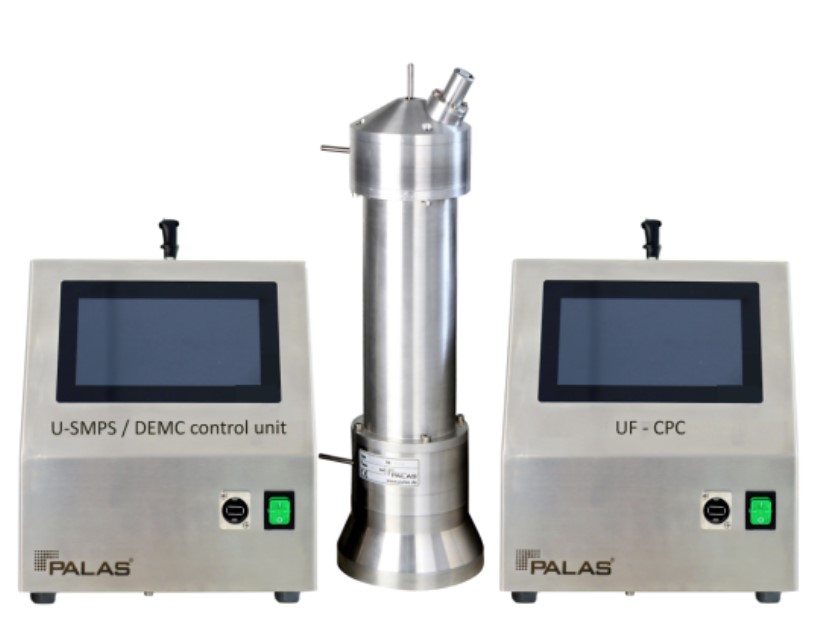
Product Advantages:
·The particle size distribution range is from 8 nm to 1200 nm
·Principle of Continuous and Rapid Scanning Measurement
·High resolution, up to 256 channels (128 channels/ten times particle size)
·Suitable for up to 108Particles/cm3The concentration
·Can connect DMA and nanoparticle counters from other manufacturers
·Graphic display of measured values
·Intuitive operation, using a 7-inch touch screen and GUI
·Integrated data logger
·Support multiple interfaces and remote access
·Low maintenance reduces your operating costs
·Support multiple interfaces and remote access
·Reliable functionality
Application areas:
·Aerosol research
·Climate research
·Finding and locating emission sources
·Workplace measurement
·Filter test
·Exhaust gas monitoring