Welcome Customer !

Membership

Help

Nordas (Beijing) Information Technology Co., Ltd
Custom manufacturer

Main Products:

instrumentb2b>Article

Nordas (Beijing) Information Technology Co., Ltd

  • E-mail

    info-china@noldus.com

  • Phone

    18501168738

  • Address

    507, Building 6, No.33 Guangshun North Street, Chaoyang District, Beijing

Contact Now
Less is More: The Effect of Implicit Learning in Nursing Education
Date: 2025-12-03Read: 0
Training clinical skills may seem simple in a classroom environment. However, in real-life scenarios, the situation is completely different. The pressure suddenly increases, the patient's condition is unpredictable, and multitasking has become the norm.

So, can nursing students still apply their learned skills at critical moments? Can students learn nursing skills with less guidance?

A recent study has given a positive answer. Researchers utilizeBehavior Measurement Rapid Review System (Viso)A comparison was made between two teaching methods, explaining why strict and systematic guidance may not be the method for cultivating practical skills (Van et al., 2025).

Focus on results, not steps

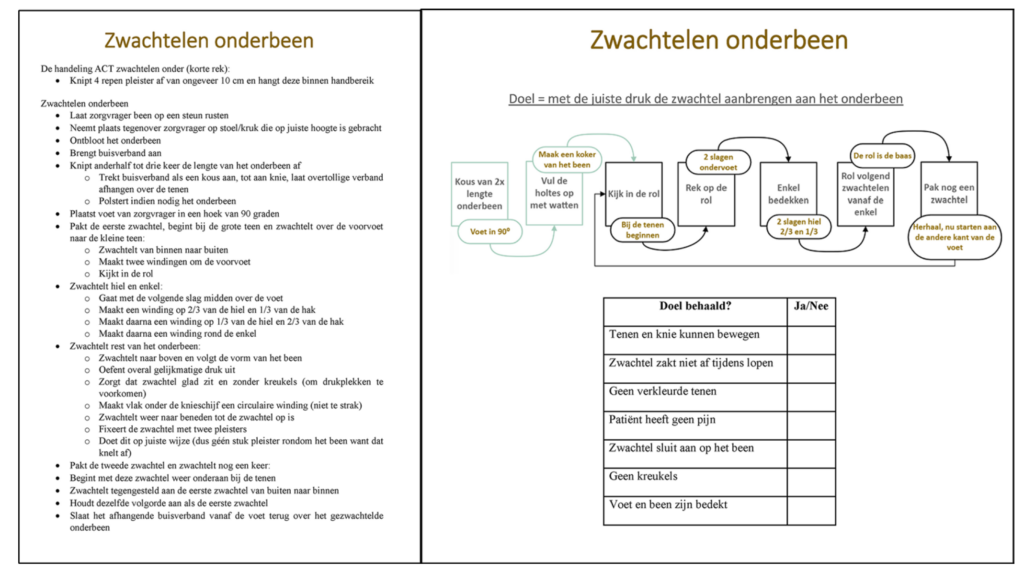
In many nursing courses, students learn clinical skills through detailed and structured protocols. Taking bandaging skills as an example, students need to face multiple pages of guidance instructions, followed by demonstrations and extensive repetitive exercises. This is what experts call explicit learning: students consciously learn every step. But what if students can achieve the same or even better learning outcomes without having to memorize all the details?

This is the concept of implicit learning. In implicit learning, students can master skills without having to think about each action one by one. They no longer focus on the 12 steps, but on the results: wrapping the leg, ensuring that the bandage is fixed, comfortable, and does not cause pain. This is like riding a bicycle, there is no need to memorize instructions, just get started.

Using Viso for practical research

Researchers from the Netherlands conducted experiments to validate a simple idea: Does reducing guidance have the same effect?

The study randomly divided nursing students into two groups (Figure 1):

  • Accept detailed and clear guidance, which is usually found in training manuals;

  • Get a guide card that only contains key points and practice according to this brief guide.

Figure 1

All students practice bandaging their peers' calves. They first put on a soft and elastic sheath to protect the skin, and then add padding to protruding areas of the bones (such as ankles) to prevent pressure points. Finally, they wrapped two layers of bandages to apply gentle and even pressure. The bandage should be fixed without displacement, comfortable to feel, and not hinder the free movement of the legs, without causing any discomfort.

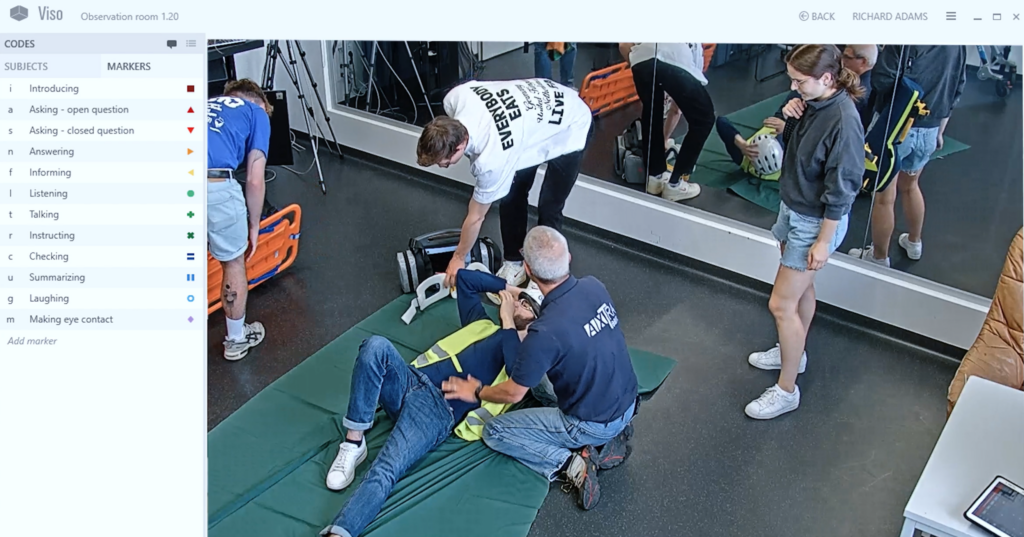
The experimental process uses Nordas'Behavior Measurement Rapid Review System (Viso) Record and replay videos. At the same time, the experimental simulation classroom is equipped with cameras connected to the Viso system. This is a multi camera device that can record the exercise process for detailed review and analysis. For educators,Face Provides a powerful way to observe student behavior, identify errors, and monitor their progress over time, all without disrupting the training process.

Noldus Plan: Medical Education Simulation Training Laboratory

AIXTRA Training andPatient safetycompleteThe center is GermanyexcellentThe modelOne of the proposed laboratories, dedicated to cultivating the next generation of healthcare professionals through innovative and practical medical teaching. The center has multiple simulation rooms, comprehensive review spaces, and a dedicated control room equipped with Viso, all designed to create a realistic learning environment. Trainers can demonstrate to students their performance during the training process and analyze whether they have achieved the predetermined goals.

Watch the video to understand the reasons why they chose Nordas tools.

Learn more
Less is more.

Surprisingly, students who received brief guidance performed equally well as those who received complete protocol guidance. In fact, when dealing with multiple tasks simultaneously (such as communicating with patients while performing tasks), the group receiving brief guidance showed more stable performance.

The results indicate that adopting brief guidance will bring about changes:

  • Detailed guidance is not always necessary, students can learn effectively under simpler guidance.

  • Reducing guidance can free up cognitive space. When students do not need to focus on memorizing steps, they can concentrate on adapting to the patient's situation, engaging in critical thinking, or communicating clearly.

  • Save time and increase practical opportunities. Students who receive brief guidance spend less time on reading and more time on actual practice.

In addition, the study also revealed another finding: students in the explicit learning group remembered more rules about how to bandage, but this did not make them better in practical operation. In real-life scenarios, being able to operate smoothly and adapt flexibly is more important than being able to memorize instructions. Moreover, many students who use the complete protocol begin to ignore guidance on their second attempt. This is a warning signal that too much information can be overwhelming, especially for beginners.
How to introduce implicit learning into the classroom

If you are planning to try implicit learning, here are some introductory suggestions:

  • Simplify the material: Simplify the guidance content to key points. Focus on the goal, not the steps.

  • Using analogies and visual cues: Metaphors like "wrapping the legs like smooth pipes" can help students form clear thinking images without the need for task lists.

  • Encourage self-assessment: Ask students, 'Have your toes remained rosy? Have your bandages loosened?' This shifts the focus from following the steps to assessing the results.

  • Recording and Review: Using tools like Viso allows you and your students to observe performance afterwards, identify patterns, and make adjustments without real-time feedback pressure.

  • Leave time for reflection: After practicing, let students discuss what they did well or what they found difficult. Reflection helps to consolidate learning, especially in situations where guidance is limited and experience is the primary teacher.

It takes time to shift from step-by-step teaching to a more intuitive, student-centered teaching method. But the rewards are worth it: students are more confident, perform better under pressure, and the transition from the classroom to clinical practice is smoother.

References
  • Van Brakel-Van Lobenstein, N.; Van Leeuwen-Prins, S.T.; Verdoes, L. et al. (2025). Teaching nursing skills without detailed protocols: effects of an implicit learning strategy in nursing education.Advances in Health Science Education.

Welcome to the official account

Learn more exciting content