Welcome Customer !

Membership

Help

Nordas (Beijing) Information Technology Co., Ltd
Custom manufacturer

Main Products:

instrumentb2b>Article

Nordas (Beijing) Information Technology Co., Ltd

  • E-mail

    info-china@noldus.com

  • Phone

    18501168738

  • Address

    507, Building 6, No.33 Guangshun North Street, Chaoyang District, Beijing

Contact Now
Invisible threat: How does freshwater acidification affect fish?
Date: 2025-12-24Read: 0
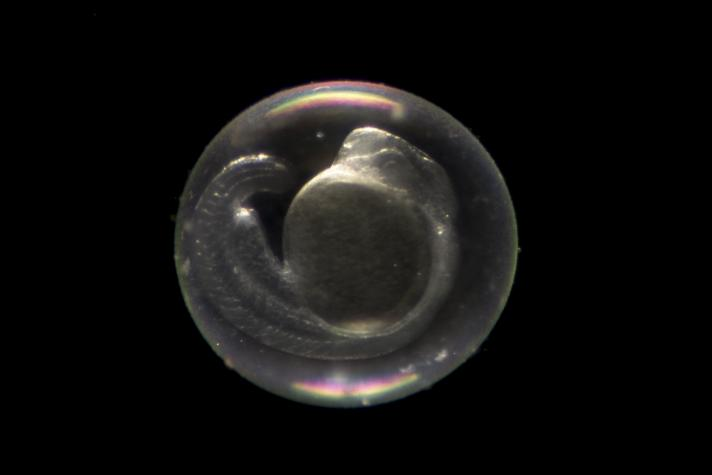
The impact of climate change is ubiquitous, not only reflected in rising temperatures and sea levels, but also in chemical changes occurring in seemingly calm freshwater environments. Among them, an increase in carbon dioxide content in aquatic environments can lead to weak acidification. Although the degree of acidification is far less than industrial acid rain, it still poses an undeniable threat to aquatic organisms.

As key members of aquatic ecosystems, fish are particularly vulnerable in their early stages of life - embryos and juveniles. They are small in size, have weak mobility, and cannot escape harsh environments like adult fish, and their acid-base regulation mechanisms have not yet developed well. When the concentration of CO ₂ in water increases, the level of CO ₂ in their blood also increases (i.e. hypercapnia), which in turn has a negative impact on physiological processes.

So, what specific impact will this weak acidification caused by an increase in CO ₂ have on the early life stages of freshwater fish? To answer this question, the research team introduced in this article conducted a detailed study on Oryzias Latipes.

Materials and Methods

The study selected Oryzias latipes as the model organism. This is a small freshwater fish with strong reproductive ability and easy laboratory cultivation. It is a commonly used model in developmental biology and environmental toxicology. The study used Oryzias latipes embryos and juveniles approximately 72 hours after fertilization (hpf) and 9 days after fertilization (dpf).

Researchers set five acidification gradients using a pH controller by introducing CO ₂ gas into the water body

  • Control group: pH 7.1

  • Weakened acid group 1: pH 6.4

  • Weakened acid group 2: pH 6.1

  • Weakened acid group 3: pH 5.8

  • Strong acidification group: pH 5.7

Each treatment group has 3 replicates, and embryos or juveniles are exposed to the corresponding pH water for 24 hours.

After the exposure, the researchers conducted a series of precise measurements:

For embryos (still in the egg):

Record embryos for 10 minutes using a camera mounted on a microscope. InZebrafish Micro Visual Behavior Analysis System (DanioScope)Analyze the embryos.

  • Heart rate:Observe and measure heart rate directly under a microscope;

  • End of rollActivity:Record the number of twists and tail curls of the embryo inside the egg;

  • Survival rate:Observe continuously for multiple days and record the success rate of hatching

toJuvenile fish(Hatched):

  • Swimming behavior:Place the juvenile fish in a circular observation area and useAnimal Movement Trajectory Tracking System (EthoVision XT)Record their 10 minute activity. The analysis indicators include total swimming distance, average speed, as well as time spent at the edges and center of the area and frequency of visits

result

  1. Heart: The Most Sensitive Alarm Device

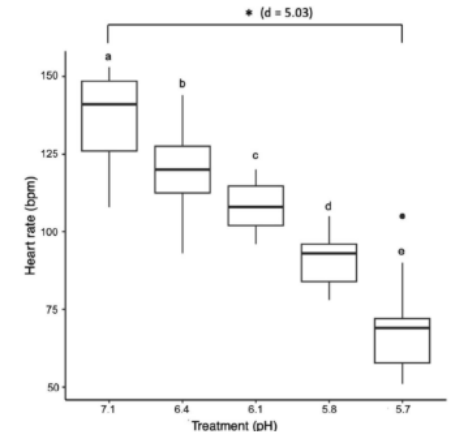
The heart is an organ that develops earlier in the embryo and is also one of the most sensitive indicators to acidification stress. The experimental results showed that the embryonic heart rate significantly decreased with the decrease of pH value (Figure 1). Ultimately, the heart rate decreased by 2 times between the 7.1 pH treatment group and the 5.7 pH treatment group. The decrease in heart rate may be due to intracellular acidification caused by CO ₂, which affects the normal functioning of sodium and calcium ion channels in myocardial fibers, leading to a decrease in cardiac contractility.

Figure 1. Heart rate (bpm) of Oryzias latipes embryos treated for 24 hours at pH values of 7.1, 6.4, 6.1, 5.8, and 5.7
  1. Survival: Crossing the Threshold is Crisis

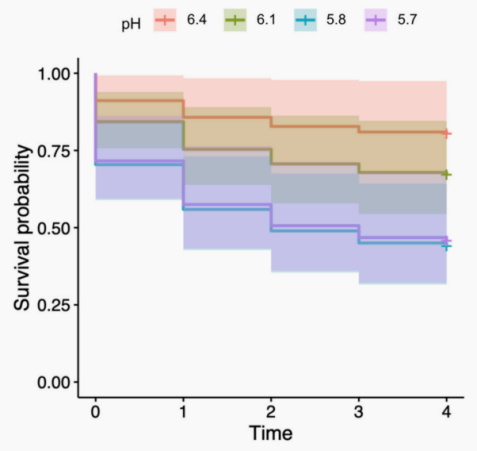
Exposure of embryos to carbon dioxide levels significantly affected the survival rate of all groups, with lower pH values resulting in higher mortality rates (Figure 2). The survival rates of the treatment groups with pH values of 6.4 and 6.1 decreased by 0.2 times, while the survival rates of the treatment groups with pH values of 5.8 and 5.7 decreased by 0.6 times and 0.5 times, respectively. Indicating the existence of a critical 'acidification threshold', beyond which the compensation mechanism of the embryo collapses and the mortality rate accelerates.

Figure 2. Cox proportional hazards regression analysis of the survival probability of Oryzias latipes embryos during the 4-day observation period after carbon dioxide treatment

3. Behavior: Complex and unpredictable responses

Unlike the regular changes in physiological indicators, behavioral responses appear more complex and do not exhibit a simple dose-dependent relationship.

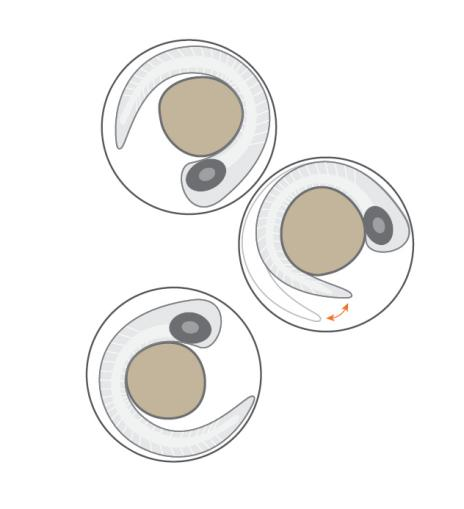
  • Embryo activity: Only in the pH 6.4 group, the "burst activity" of embryos inside the egg significantly increased (about 2-3 times that of other groups), while there was no change in other groups. This may be a brief excitement caused by stress.

  • Juvenile behavior: The total movement distance and average speed were not affected. However, there were significant but non-linear changes in the duration of stay and number of visits in the central area.

summary

As the pH value decreases, the heart rate of Oryzias latipes embryos shows a statistically significant 2-fold decrease; As the degree of acidification increases, the survival rate of embryos significantly decreases. The behavior of juvenile fish has undergone significant changes, but these changes do not occur in a pH dependent manner. The research presented in this article suggests that weak acidity can have negative effects on early life physiology and may lead to behavioral changes. In the future, more research is needed to observe the effects of multi generational exposure and explore whether wild populations have adapted to increasingly acidic habitats through cross generational adaptation. The small fish eggs have sounded the alarm for us about the ecological health of freshwater.

References

Wallace, Grace E., Rosemary C. Minns, and Caleb T. Hasler. “Effects of acute exposure to freshwater acidification on developing Oryzias latipes.” Comparative Biochemistry and Physiology Part A: Molecular & Integrative Physiology 300 (2025): 111774.

More exciting content

Welcome to our official account