-
E-mail
2553933004@qq.com
-
Phone
13566621953
-
Address
Building 5, Senxiang Science and Technology Park, No. 367 Buzheng East Road, Jishigang Town, Haishu District, Ningbo City, Zhejiang Province
Ningbo Guante Refrigeration Technology Co., Ltd
Functional characteristics of each component of the low-temperature cooling cycle pump
Date: 2025-08-21Read: 1
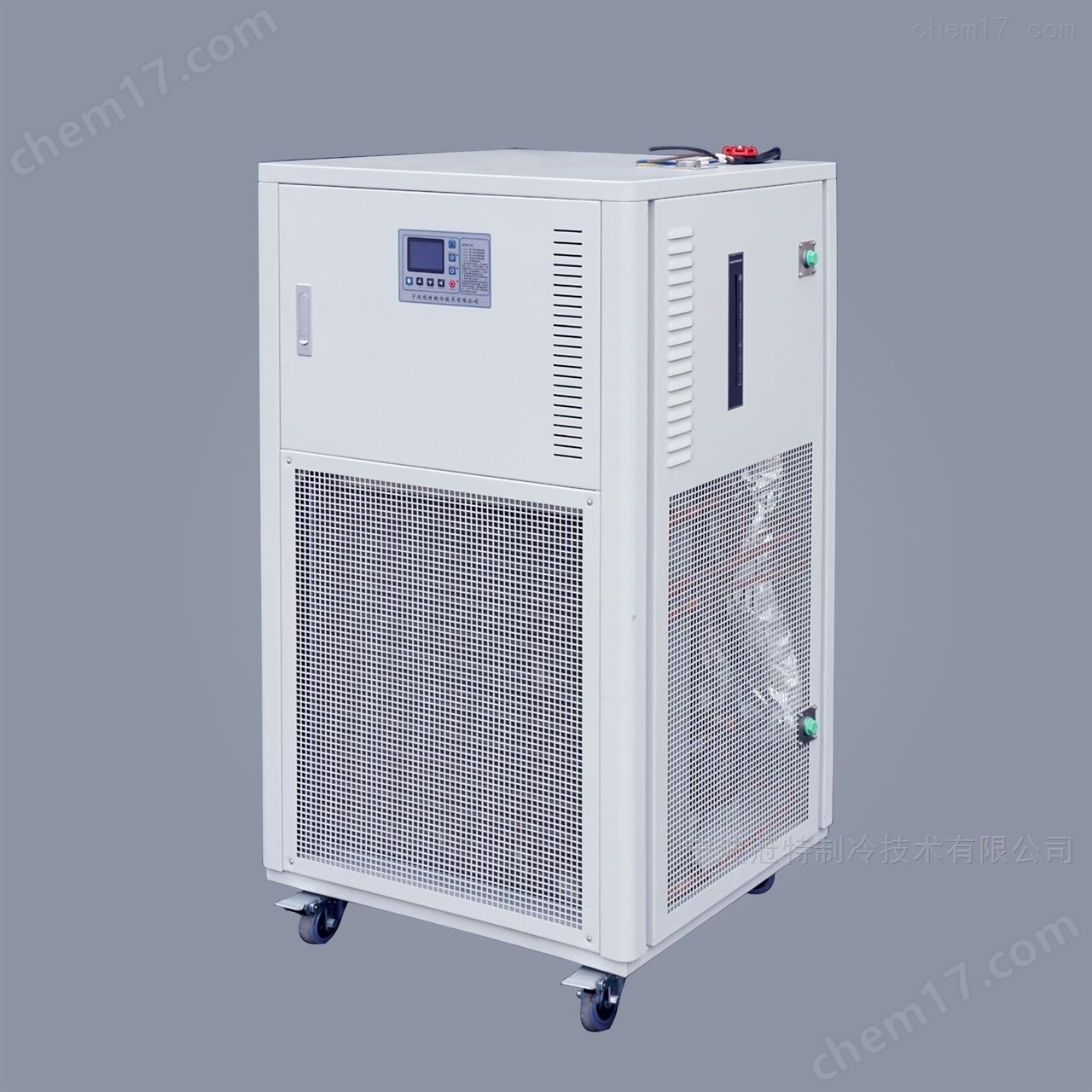
In experimental and industrial scenarios such as chemical synthesis, biopharmaceuticals, material testing, and precision instrument cooling,Low temperature cooling cycle pumpAs a stable cold source, the "cold pump" center delivers coolant (such as ethylene glycol aqueous solution or silicone oil) to the reaction vessel, condenser, or equipment jacket through a built-in circulation pump, achieving precise temperature control and efficient heat dissipation.
Low temperature cooling cyclerThe key to the performance of a pump lies in the coordinated operation of the system and its components to ensure continuous cooling.
1. Circulating pump
Circulating pumps are the core power source for coolant transportation, usually using magnetic driven centrifugal pumps or mechanical seal pumps. Magnetic pumps utilize magnetic coupling transmission to achieve leak free performance and are suitable for flammable, toxic, or high-purity coolant systems; Mechanical seal pumps are suitable for high-pressure and high flow conditions. The material of the pump body is mostly stainless steel or corrosion-resistant alloy, ensuring long-term stable operation. Its head and flow rate need to be matched with the cooling system to ensure the cooling efficiency of long-distance or high-rise equipment.
2. Refrigeration compressor
Adopting fully enclosed or semi enclosed compressors (such as vortex and piston) to drive refrigerants (such as R404A, R23) to circulate between the evaporator and condenser, achieving heat transfer. Low temperature equipment often uses a cascade refrigeration system, which can reach temperatures of -80 ℃ or even lower. The compressor is equipped with overload protection and high and low pressure switches to ensure safe operation.
3. Evaporator
Located in the coolant tank, the refrigerant evaporates and absorbs heat, transferring the cooling capacity to the circulating liquid. Efficient plate or coil evaporators increase the heat transfer area and improve cooling efficiency. In terms of design, it is necessary to prevent icing or local supercooling to ensure uniform temperature.
4. Temperature control system
Integrated PID temperature controller and sensor (such as PT100), real-time monitoring of coolant temperature, automatic adjustment of compressor start stop or variable frequency pump speed, temperature control accuracy can reach ± 0.1 ℃. Support program temperature control, remote setting, and data recording to meet complex experimental requirements.
5. Liquid tank and liquid level monitoring
Stainless steel liquid tanks store cooling media with capacities ranging from several to several hundred liters. Built in liquid level sensor to prevent damage caused by pump idling. Some equipment is equipped with level gauges and refilling ports for easy maintenance.
6. Filters and pressure gauges
Install a filter at the inlet to prevent impurities from entering the pump body and causing wear or blockage. The pressure gauge displays the system pressure in real time, monitors the operation status of the pump and the smoothness of the pipeline.
7. Security protection system
It includes overheat protection, low liquid level alarm, leakage protection, phase sequence protection, etc., to ensure that the equipment automatically shuts down in case of abnormal conditions, preventing damage or accidents.