-
E-mail
Judy@nexstarbio.com
-
Phone
17384530128
-
Address
1-2F, Building 4, 1628 Lizheng Road, Lingang New Area, China (Shanghai) Pilot Free Trade Zone
Nazida (Shanghai) Nanotechnology Co., Ltd
How to choose an imported microjet homogenizer to ensure efficient processing?
Date: 2025-11-18Read: 3
choiceImported micro jet homogenizerIt is a key decision to ensure efficient processing of applications such as nanomaterial preparation and drug delivery systems. Faced with numerous brands and models, it is necessary to conduct a comprehensive evaluation from multiple dimensions to ensure that the selected equipment can meet production process requirements and achieve optimal processing results. 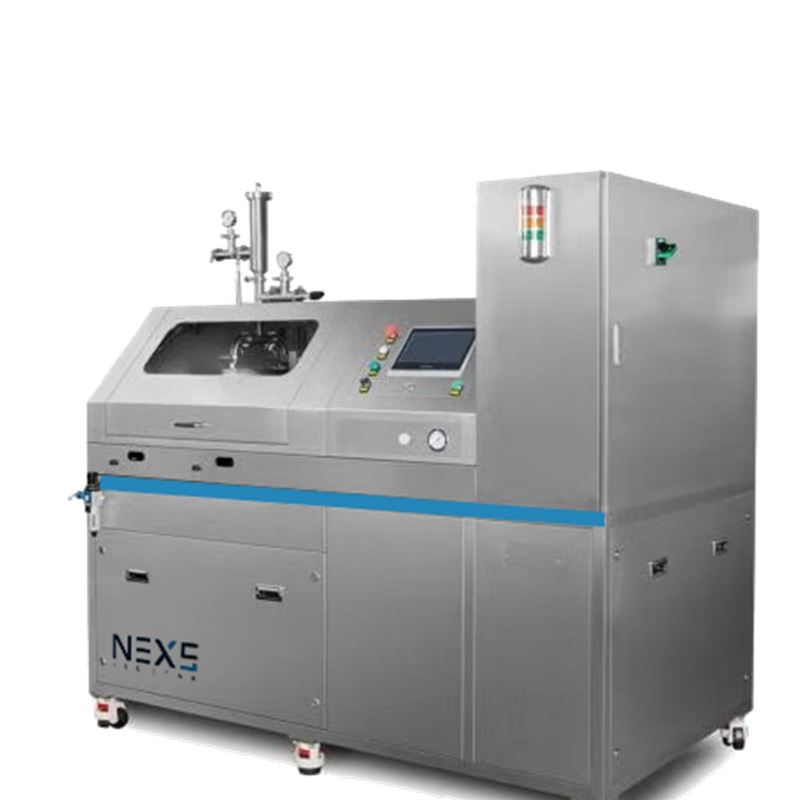
1、 Clarify the matching degree between process requirements and equipment
choiceImported micro jet homogenizerThe important step is to clearly define the production process requirements. Firstly, it is necessary to clarify the characteristics of the material to be processed, including key parameters such as viscosity range, solid content, and particle size distribution, which directly affect equipment selection. Determine the production scale requirements and distinguish the differences in demand at different stages such as laboratory small-scale testing, pilot scale testing, and industrial production. Consider special process requirements, such as the need for low-temperature treatment, sterile environment, or specific reaction conditions. By comprehensively analyzing these process requirements, clear technical specifications can be established to provide scientific basis for equipment selection.
2、 Evaluate equipment performance and technological advantages
In terms of equipment performance evaluation, it is necessary to pay attention to multiple key technical indicators. Homogenization chamber design is a core element, and the structural design of homogenization chambers from different brands directly affects processing efficiency and particle crushing effect. The stability and reliability of the pressure generating system determine whether the equipment can continuously provide the required processing conditions. In terms of material selection, the focus is on whether the materials of the parts in contact with the materials meet the food and drug grade standards, and whether the corrosion resistance meets the process requirements. The level of automation control determines the convenience of equipment operation and process repeatability, and the control system can achieve more accurate parameter adjustment. Considering the ease of cleaning and maintenance of equipment, modular design is usually more conducive to daily maintenance. Understanding a brand's technological innovation capabilities, including technical process characteristics, can often bring additional processing advantages.
3、 Consider service support and long-term value
When making a choice, service support and long-term value are equally important. The coverage of after-sales service network determines whether timely technical support can be obtained when equipment malfunctions. The timeliness and availability of spare parts supply affect the normal operation time of equipment. The supplier's technical training capability ensures that operators can fully utilize the performance of the equipment. Assess the scalability and upgrade potential of the equipment to meet the needs of future process improvements. Evaluating the energy efficiency and operating costs of equipment, as well as long-term energy consumption and maintenance costs, are also important considerations.