-
E-mail
406909520@qq.com
-
Phone
17312275363
-
Address
Mingfa Science and Technology Innovation Headquarters Base, No. 5 Pudong North Road, Pukou District, Nanjing City
Nanjing Weixin Space Information Technology Co., Ltd
【 2025 Technical Encyclopedia 】 Technical Principles and Application Fields of Wireless Ground Penetrating Radar
Date: 2025-12-15Read: 0
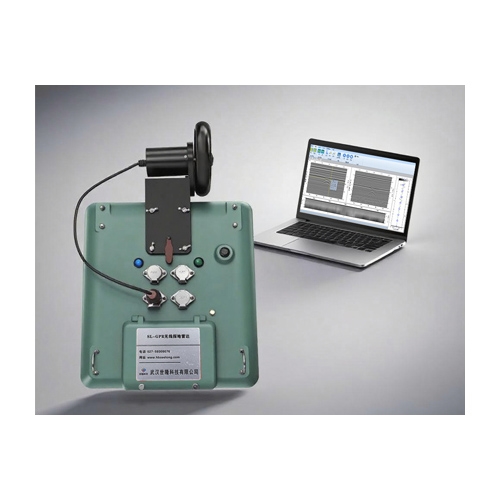
Wireless Ground Penetrating RadarIt is a non-destructive detection technology that uses electromagnetic waves to detect underground objects and structures. The basic principle is to emit high-frequency electromagnetic waves underground, and when the electromagnetic waves encounter different media (such as soil, rock, metal, water, etc.), they will reflect and refract. These reflected signals are captured by the receiver and converted into images, and researchers can analyze the characteristics of underground structures based on information such as time delay, intensity, and phase changes of the reflected waves.
1、 Technical principles
Wireless Ground Penetrating RadarThe working principle mainly includes the following steps:
1. Signal transmission: The antenna in the device emits high-frequency electromagnetic waves, which can penetrate the surface and dive underground.
2. Wave propagation and reflection: When electromagnetic waves enter different underground media such as soil, rocks, water, metals, etc., due to the different electrical conductivity and dielectric constants of these media, electromagnetic waves will exhibit reflection and refraction phenomena. When electromagnetic waves encounter the interface of a medium (such as the boundary between soil and water, soil and metal pipelines, etc.), partial reflection waves will be generated.
3. Signal reception: The reflected electromagnetic waves are captured by the receiving antenna. The received signal contains rich information about the underground medium, including the intensity, time delay, and phase variation of reflected waves.
4. Data processing and imaging: Reflected signals are digitized and analyzed to generate images of underground structures using signal processing algorithms. These images intuitively display the distribution of underground levels, the location and characteristics of objects, helping users make judgments.
2、 Application Fields
Wireless ground penetrating radar plays an important role in multiple fields due to its high efficiency, real-time, and non-destructive characteristics. Specific applications include:
1. Archaeology: It is an important tool in archaeology that can help researchers discover buried relics, tombs, and the outlines of ancient buildings without conducting large-scale excavations. By analyzing underground structures, archaeologists can better plan excavation work and improve the efficiency of archaeological discoveries.
2. Civil engineering: In civil engineering, it is used to detect the health status of infrastructure. For example, it can assess issues such as cracks, peeling, and voids inside roads, bridges, and tunnels. In addition, it can also be used for detecting underground pipelines to avoid damaging existing facilities during construction, thereby reducing safety hazards and economic losses.
3. Environmental monitoring: It is also widely used in environmental science. It is used to detect the distribution of underground pollutants, changes in groundwater levels, and physical properties of soil. This is very important for environmental restoration and protection, as it can help identify pollution sources and assess their impact on ecosystems.
4. Geological exploration: In the fields of mining and oil exploration, detailed information about underground rock formations can be provided to help determine the distribution location of resources. By interpreting underground structures, explorers can assess the potential and development value of mineral deposits.
Wireless ground penetrating radar technology, with its advantages, has shown broad application prospects in various fields such as archaeology, civil engineering, environmental monitoring, geological exploration, military security, and urban planning. With the continuous advancement of technology, its detection accuracy and speed will be further improved, its application scope will be expanded, and more effective support will be provided for scientific research and practical engineering.