-
E-mail
sangli@sangli.com.cn
-
Phone
13770695599
-
Address
No. 38 Shengli Village, Qixia District, Nanjing City
Nanjing Sangli Electronic Equipment Factory
Working principle and basic operation of electrophoresis experimental device
Date: 2025-08-05Read: 0
Electrophoresis is a commonly used separation technique, widely used in fields such as biology, chemistry, and medicine, especially in the analysis and separation of proteins and nucleic acids. The electrophoresis experimental device separates charged particles according to their charge and size through the action of an electric field, and has efficient and accurate separation ability.
1、 Working principle
The basic principle of electrophoresis is that charged substances migrate in a medium under the action of an electric field, driven by the force of the electric field. Specifically, the process of electrophoresis utilizes the difference in migration speed of different substances in an electric field to achieve the goal of separating substances. Its working principle involves the following aspects:
1. The effect of electric field
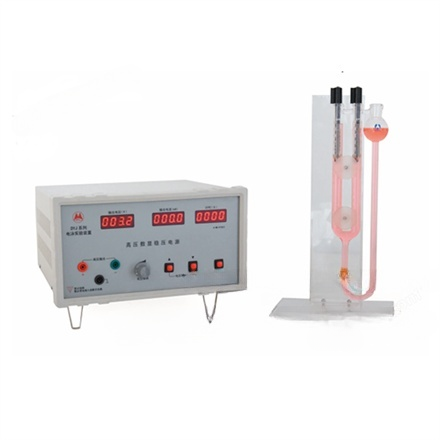
The role of electric field is the core of electrophoresis experiments.Electrophoretic experimental apparatusThere are usually two electrodes in the middle - anode and cathode. When current passes through an electrophoretic solution, charged substances move under the action of an electric field. Due to the different charges, sizes, and forms of different substances, their migration speeds in an electric field are also different. Generally speaking, negatively charged substances move towards the anode, while positively charged substances move towards the cathode.
2. Selection of media
The media commonly used in electrophoresis experiments include gel and solution. As a medium, gel can not only support the separation of samples, but also provide the required electric field strength. Different media have a significant impact on separation. For example, polyacrylamide gel can separate molecules with different molecular sizes according to the size of pores, while agarose gel is suitable for the separation of larger molecules (such as DNA).
3. Separation principle
By adjusting the strength of the electric field and the experimental conditions, the samples can be separated according to the different speeds of the molecules moving in the gel. For example, in polyacrylamide gel electrophoresis, the molecules in the sample are separated according to their size (molecular weight), because small molecules pass through the gel pores faster and large molecules pass through the gel pores slower.
2、 Basic operations
Electrophoresis experimental device includes electrophoresis tank, power supply, gel, buffer, sample, etc. The following are the basic operational steps for electrophoresis experiments:
1. Preparation of gel: the first step of electrophoresis experiment is to prepare gel. Common gel include agarose gel and polyacrylamide gel. According to the needs of the experiment, choose different concentrations of gel. Gel is usually poured in the electrophoresis tank, and gel powder is dissolved by heating and stirring, then poured into the mold to cool and solidify.
2. Sample preparation: Samples are usually charged molecules that need to be separated, such as DNA, RNA, or proteins. Before electrophoresis, the sample needs to be mixed with the loading buffer, which can ensure the charge state of the sample and provide an appropriate pH value. If protein electrophoresis is performed, reducing or denaturing agents are also required to process the sample.
3. Sample loading: After the gel has solidified, use a micropipette to add the sample to the gel hole. During this process, be careful to avoid cross contamination and ensure that the sample accurately enters the well.
4. Electrophoresis operation: After connecting the electrophoresis tank to the power supply, power on and start the electrophoresis process. Generally, the electrophoresis voltage is set between tens of volts and hundreds of volts, depending on the type of gel, the experimental target and the size of the sample.
5. Observation and detection: After the electrophoresis process is completed, dyes can be used to stain the separated samples. Dyes will combine with the target substance to form visible bands. By observing under ultraviolet radiation or ordinary visible light, samples can be analyzed based on the position of the bands.
Electrophoretic experimental apparatus is a common tool in biology and chemistry experiments, widely used for separating and analyzing charged molecules. By controlling the electric field, medium, and experimental conditions, efficient separation can be achieved based on the differences in charge and size of substances. The operation process includes gel preparation, sample loading, electrophoresis operation and result detection.