-
E-mail
info.china@moldev.com
- Phone
-
Address
5th Floor, Building 1, No. 518 Fuquan North Road, Changning District, Shanghai
Meigu Molecular Instrument (Shanghai) Co., Ltd
【 Hot Technologies 】 Biomanufacturing+Synthetic Biology>2
Date: 2024-02-26Read: 0
On May 10, 2022, the National Development and Reform Commission issued the document "14th Five Year Plan for the Development of Bioeconomy", which is also China's first five-year plan for bioeconomy. The term "bioeconomy" has sparked a heated discussion in the field of biology and other industries.
In the plan, it is explicitly stated that biomanufacturing will be the strategic emerging industry development direction of the bioeconomy, proposing to rely on biomanufacturing technology to achieve biotechnology substitution of chemical raw materials and processes, develop high-performance bio environmentally friendly materials and biologics, and promote the deep integration of important industrial product manufacturing such as chemical, pharmaceutical, material, and light industry with biotechnology.
What is biomanufacturing?
Biological manufacturing has a wide range of applications, including energy, chemical, pharmaceutical, food, environmental, and more. Mainly due tomicroorganismCells orenzyme proteinTo synthesize chemicals as catalysts or convert biomass into energy chemicals and materials, promoting the separation of energy and chemicalsPetrochemical industryThe new mode of the route is mainly manifested in the invention and application of advanced fermentation engineering, modern enzyme engineering, biorefinery, biological process engineering and other new technologies, with typical characteristics such as low-carbon cycle and green cleanliness.
You may think that biological manufacturing is far away from our life, but in fact, medical products such as hepatitis B vaccine, insulin, hyaluronic acid and collagen in cosmetics/skincare products; Fuel ethanol and biodegradable materials in energy are products that can be produced using biomanufacturing technology, and they are closely related to our daily lives.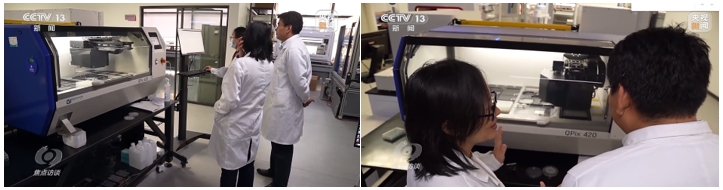
The main application direction of the QPix series microbial cloning screening system is synthetic biology, which can be used for protein engineering, molecular cloning, microbial strain engineering, phage display, gene editing/CRISPR, etc.
Product Features:
The QPix 400 series features white light and fluorescence imaging, automated picking of microbial colonies, sample coating, library screening and management, flux point membranes, and more. It has been widely used in synthetic biology, industrial microbial modification/screening, phage display, protein expression, enzyme directed evolution, biofuels, gene synthesis, and library construction.
Our modular and scalable clone screening system can improve the accuracy and throughput of any scale screening task's workflow, while still allowing for greater throughput in the future.
Efficient clone picking, with a picking speed of 3000 clones per hour and an efficiency of over 98%
• Support multiple different microorganisms and multiple screening methods to identify specific phenotype clones
Coating module, realizing automated bacterial liquid sampling and flat plate coating
Electronic data tracking, suitable for properly recorded data control
Multiple sterilization functions to maintain sterility and prevent contamination
In the plan, it is explicitly stated that biomanufacturing will be the strategic emerging industry development direction of the bioeconomy, proposing to rely on biomanufacturing technology to achieve biotechnology substitution of chemical raw materials and processes, develop high-performance bio environmentally friendly materials and biologics, and promote the deep integration of important industrial product manufacturing such as chemical, pharmaceutical, material, and light industry with biotechnology.
What is biomanufacturing?
Biological manufacturing has a wide range of applications, including energy, chemical, pharmaceutical, food, environmental, and more. Mainly due tomicroorganismCells orenzyme proteinTo synthesize chemicals as catalysts or convert biomass into energy chemicals and materials, promoting the separation of energy and chemicalsPetrochemical industryThe new mode of the route is mainly manifested in the invention and application of advanced fermentation engineering, modern enzyme engineering, biorefinery, biological process engineering and other new technologies, with typical characteristics such as low-carbon cycle and green cleanliness.
You may think that biological manufacturing is far away from our life, but in fact, medical products such as hepatitis B vaccine, insulin, hyaluronic acid and collagen in cosmetics/skincare products; Fuel ethanol and biodegradable materials in energy are products that can be produced using biomanufacturing technology, and they are closely related to our daily lives.
QPix420Microbial cloning screening system (Image source: Focus Interview) 20240126 Developing new quality productivity bio-manufacturing Produce everything)
Synthetic biology provides a new approach for biomanufacturing, and in recent years, it has received sustained attention and strong investment from researchers and investors worldwide, with enormous potential for development.The main application direction of the QPix series microbial cloning screening system is synthetic biology, which can be used for protein engineering, molecular cloning, microbial strain engineering, phage display, gene editing/CRISPR, etc.
Product Features:
The QPix 400 series features white light and fluorescence imaging, automated picking of microbial colonies, sample coating, library screening and management, flux point membranes, and more. It has been widely used in synthetic biology, industrial microbial modification/screening, phage display, protein expression, enzyme directed evolution, biofuels, gene synthesis, and library construction.
Our modular and scalable clone screening system can improve the accuracy and throughput of any scale screening task's workflow, while still allowing for greater throughput in the future.
Efficient clone picking, with a picking speed of 3000 clones per hour and an efficiency of over 98%
• Support multiple different microorganisms and multiple screening methods to identify specific phenotype clones
Coating module, realizing automated bacterial liquid sampling and flat plate coating
Electronic data tracking, suitable for properly recorded data control
Multiple sterilization functions to maintain sterility and prevent contamination