-
E-mail
3892196252@qq.com
-
Phone
13329186925
-
Address
Building 2, Shengfeng Software Park, Huashan District, Ma'anshan City, Anhui Province
Ma'anshan Maisite Intelligent Technology Co., Ltd
Specification for Regular Calibration of Dust Detection Alarm Devices
Date: 2025-11-12Read: 1
Dust detection alarmIt is a core safety equipment for dust explosion high-risk areas such as grain processing, mining, and chemical production. Its detection accuracy is directly related to personnel life and production safety. Regular calibration should follow the principles of "standard traceability, standardized processes, and controllable results", eliminate detection deviations through scientific methods, and ensure that the alarm accurately triggers warnings when the dust concentration exceeds the standard. The following are the key points of regular calibration standards covering the entire process.
Preparation before calibration should take into account both equipment and environmental protection. Firstly, clarify the calibration cycle: Generally, calibration should be conducted every 6 months in places with high dust, high humidity, and other harsh environments, and it should be shortened to 3 months. The first calibration must be completed before the newly installed equipment is put into use. Before calibration, standard materials (such as dibutyl phthalate dust with a particle size of 0.3-10 μ m or ISO standard dust), calibration devices (including aerosol generators and flow controllers), and auxiliary tools (multimeters, dust-free cloths, calibration record forms) need to be prepared. The environment should meet the requirements of temperature of 20-25 ℃, relative humidity of 40% -60%, and no airflow interference. Before calibration, preheat the alarm in this environment for 30 minutes and disconnect the linkage control circuit to avoid triggering emergency equipment by mistake.
Basic performance verification is a prerequisite for calibration. First, conduct a visual inspection to confirm that the alarm housing is not damaged, the sensor window is clean and free of dust accumulation, and the indicator light and display screen are functioning properly. Subsequently, check the stability of the power supply and measure the supply voltage with a multimeter to ensure that it is within ± 5% of the rated voltage. If the voltage fluctuation exceeds the standard, the power supply line should be checked first. Next, perform zero point calibration by placing the alarm in a clean air environment (dust concentration ≤ 0.01mg/m ³), starting the zero point calibration program, and confirming that the zero point error is ≤± 0.02mg/m ³ after the reading stabilizes. Otherwise, it needs to be adjusted to the standard value through calibration software.
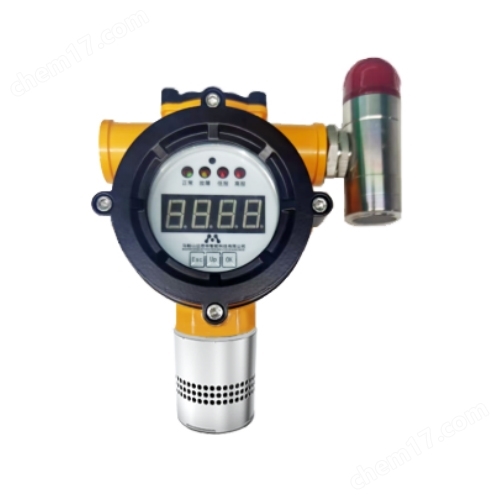
The core calibration process needs to be executed according to "gradient concentration, multi-point verification". Using dynamic calibration method, different concentrations of standard dust are introduced into the alarm through an aerosol generator. The concentration points should cover the alarm threshold (such as low alarm value, high alarm value) and 20%, 50%, and 80% of the measurement range of the alarm. After each concentration point is introduced, stabilize for 5 minutes, record the displayed value of the alarm and the standard concentration value, calculate the relative error, and control the error within ± 10%. For light scattering alarms, special calibration of response time is required, from the introduction of standard dust toDust detection alarmThe stable display time should be ≤ 60 seconds; For ion based alarms, repeatability should be tested, and the coefficient of variation should be ≤ 5% when measuring the same concentration point continuously for 3 times.
The alarm function and data traceability are key closed loops in calibration. After calibrating the high concentration point, verify the sound and light alarm function of the alarm, ensuring that the alarm sound is ≥ 85dB and the visible distance of the alarm light is ≥ 20 meters. At the same time, check whether the alarm signal can be accurately transmitted to the monitoring platform. After the calibration is completed, a calibration record should be filled out, detailing the calibration date, calibration personnel, standard substance number, errors at each concentration point, and calibration results. Qualified equipment should be labeled with a calibration qualification label, indicating the next calibration date; Unqualified equipment must be immediately stopped, repaired, and recalibrated until it is qualified before it can be put into use.
Calibration and management in special circumstances cannot be ignored. If the alarm undergoes severe vibration, maintenance, or replacement of the sensor, additional calibration should be performed immediately; Before reusing equipment that has been idle for a long time, zero calibration and full range calibration must be completed. In addition, calibration reference materials must have a metrological verification certificate, and calibration records must be kept for at least 3 years to provide a basis for equipment lifecycle management and safety traceability, truly making regular calibration a "fixed star" for dust safety prevention and control.