-
E-mail
sales@care-mc.com
-
Phone
18702200545
-
Address
Taikang Zhida Industrial Park, Jinnan District, Tianjin
Kyle Measurement and Control Test System (Tianjin) Co., Ltd
High temperature fatigue performance testing and damage mechanism research of metal materials
Date: 2025-12-13Read: 1
1. Core concepts and significance
High temperature fatigue: refers to the phenomenon of performance degradation and eventual fracture of metal materials under alternating cyclic loads in a high temperature environment.
The difference from room temperature fatigue: High temperature introduces time-dependent creep and environmental oxidation effects, making the failure mechanism more complex and life prediction more difficult.
Meaning: Evaluating the safety and reliability of key high-temperature components such as aircraft engine blades, turbine disks, nuclear power pipelines, and petrochemical reactors during long-term service is an important basis for design and material selection.
2. Main testing methods and equipment
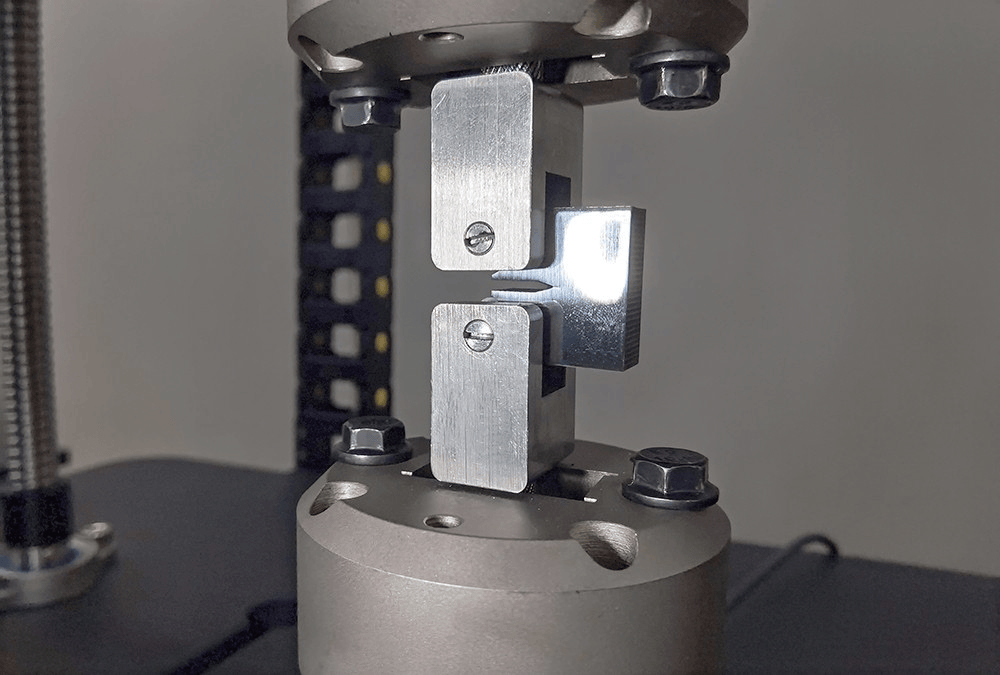
Testing is usually conducted on electro-hydraulic servo fatigue testing machines or high-frequency resonance testing machines, equipped with precision high-temperature furnaces or induction heating systems.
A. Classified by control mode
1. Stress controlled fatigue:
Maintain a constant stress amplitude and monitor the variation of strain with the number of cycles.
Commonly used for studying cyclic softening/hardening behavior, as well as failure dominated by fatigue.
2. Strain controlled fatigue:
Maintain a constant strain amplitude and monitor the variation of stress with the number of cycles.
It can better reflect the actual deformation of components under constraints and is commonly used in low cycle fatigue research.
3. Creep fatigue interaction test:
Introduce hold time (such as stretch hold, compression hold, or bidirectional hold) in cyclic loading.
This is the core and difficulty of high-temperature fatigue testing, aimed at simulating the steady-state operation stage in actual working conditions and studying the synergistic effect of creep damage and fatigue damage.
B. Common Test Types
Low cycle fatigue: high strain amplitude, with failure cycles typically<10 ^ 4~10 ^ 5 times, corresponding to transient processes such as start-up and shutdown.
High cycle fatigue: low stress amplitude, failure cycles>10 ^ 6~10 ^ 7 times, corresponding to high-frequency vibration conditions.
Thermal mechanical fatigue: During cyclic loading, the temperature also changes cyclically in a certain phase (in-phase, out of phase, out of phase). This is the most complex simulation of thermal stress generated by temperature gradient changes in components.

3. Key testing parameters and challenges
Key parameters:
Temperature: Exceeding 80% of the material's melting point (such as high-temperature alloys reaching over 1000 ° C).
Load/strain waveform: sine wave, triangular wave, trapezoidal wave with holding time, etc.
Frequency: Low frequency (usually<1Hz) is more conducive to studying time-dependent damage; High frequency (up to hundreds of Hz) is used for pure mechanical fatigue.
Environment: Air (oxidizing environment), vacuum or protective atmosphere (isolating oxidation effect), specific corrosive atmosphere.
Main technical challenges:
1. Temperature control and measurement: It is required that the furnace temperature is uniform and the temperature difference between the sample gauge section is small (such as within ± 2 ° C). High precision thermocouples (usually welded onto the specimen) are required.
2. Stretcher: A high-temperature extensometer (contact or non-contact laser/video extensometer) that can work stably for a long time at high temperatures is required to accurately measure strain.
3. Environmental control: Ensure a stable testing atmosphere and prevent unnecessary oxidation or contamination.
4. Sample design: Ensure that failure occurs in the gauge length section, not at the threads or fixtures. At high temperatures, the thermal expansion of materials and the fit of fixtures need to be considered.
5. Complexity of data interpretation: There are various failure modes (transgranular fatigue fracture, transgranular creep fracture, surface crack initiation caused by oxidation, etc.), and the damage mechanisms are coupled with each other.
4. Main test results and data analysis
S-N curve/ε - N curve: the relationship curve between stress/strain amplitude and failure cycle number, which is the basic design data.
Cyclic stress-strain curve: reflects the softening or hardening characteristics of materials under cyclic loading.
Lag loop: The stress-strain curve of each cycle, whose area represents the plastic strain energy and shape change reflects the accumulation of damage.
Life prediction model:
Linear damage accumulation rule: simply adding fatigue damage and creep damage (such as Miner's rule, Robinson Taira's rule), but with limited accuracy.
Physics based models: consider oxidation kinetics, creep void nucleation and growth, crack propagation, etc., which are more complex but accurate.
Continuous damage mechanics model.
5. Relevant standards
There are many standards at home and abroad to standardize high-temperature fatigue testing, ensuring data comparability and reliability:
International/United States:
ASTM E606: Strain controlled fatigue standard.
ASTM E2368: Practice of Creep Fatigue Testing with Holding Time.
ISO 12111: Thermal mechanical fatigue testing of metallic materials.
China:
GB/T 15248 (Axial constant amplitude low cycle fatigue test method for metallic materials).
HB 5151 (Metal High Temperature Fatigue Test Method).
YB/T 5345 (Test Method for Creep Fatigue Interaction of Ferritic Steel).
6. Application Fields
Aerospace: engine blades, turbine discs, combustion chambers, nozzles.
Energy and electricity: gas turbine and steam turbine components, nuclear power equipment pipelines and containers.
Chemical metallurgy: cracking furnace tubes, reactors, high-temperature valves.
Automotive industry: exhaust manifold, turbocharger.
summary
High temperature fatigue testing of metal materials is a bridge that connects the fundamental properties of materials with practical engineering applications. It is not just about simply increasing the testing temperature, but also delving into the complex damage behavior under the coupling of time temperature load environment multiple fields. Modern testing technology is developing towards higher precision (in-situ observation), more complex working condition simulation (TMF, multi axis loading), and more intelligent data processing and life prediction.
If you have more specific questions, such as the high-temperature fatigue behavior of a particular material (such as nickel based high-temperature alloys, titanium alloys, austenitic stainless steel), or details of a specific testing standard, we can further explore them in depth.