-
E-mail
info@jiqun-china.com
-
Phone
13236572657
-
Address
Building 9, No. 277 Dongqi Road, Qilin Science and Technology Innovation Park, Jiangning District, Nanjing City
Jiqun (Jiangsu) Instrument Co., Ltd
Deep Analysis of Core Technical Characteristics of Rapid Solvent Extraction System
Date: 2025-08-15Read: 0
Rapid solvent extraction systemAs an innovative equipment in the field of sample pretreatment, ASE is widely used for compound extraction in the environment, food, medicine and other fields due to its efficient, fast and environmentally friendly technological advantages. Its core technological features are reflected in multi-dimensional collaborative optimization, achieving performance breakthroughs that traditional extraction methods cannot match.
High temperature and high pressure collaborative extraction technology is the core competitiveness of the system. Compared with traditional Soxhlet extraction, ASE significantly increases the solubility of the target substance in the solvent (usually by 2-10 times) by raising the temperature inside the extraction tank to 50-200 ℃ (far beyond the boiling point of the solvent), while reducing solvent viscosity and surface tension, and accelerating solute diffusion rate. In conjunction with a high-pressure environment of 8-20MPa, the solvent remains liquid even at its boiling point, avoiding volatile losses and increasing extraction efficiency by 5-10 times compared to traditional methods. The precise control of temperature and pressure is achieved through a closed-loop control system, using platinum resistance thermometers to monitor the temperature inside the tank in real time (accuracy ± 1 ℃), and piezoelectric sensors to feedback pressure fluctuations (control accuracy ± 0.5MPa), ensuring stable reproduction of extraction conditions.
Automated extraction processes and parallel processing capabilities significantly improve work efficiency. The system integrates a fully automatic sample tray (capable of accommodating 24-100 samples), a robotic arm injection device, and a multi-channel extraction pool, achieving a fully automated process from sample loading to extraction completion without human intervention. Through timing control technology, multiple sample extraction operations can be synchronized (such as a 24 channel system processing 48 samples per hour), which increases efficiency by more than 10 times compared to single channel equipment. The programmatic design of the extraction steps supports custom method editing, covering key steps such as preheating (5-10 minutes), static extraction (1-10 minutes), flushing (solvent volume is 60% -150% of the pool volume), blowing (nitrogen pressure 0.5-1MPa, time 60-300 seconds), etc., to meet the extraction needs of different matrix samples.
The solvent compatibility and recycling technology demonstrate environmental and economic advantages. The system is compatible with multiple organic solvents (such as n-hexane, acetonitrile, dichloromethane) and mixed solvents (which can be automatically proportioned). The extraction flow path is constructed using inert materials (Hastelloy alloy, polytetrafluoroethylene) to avoid solvent corrosion and sample contamination. The built-in solvent recovery module adopts vacuum distillation technology, with a recovery rate of over 80%, especially suitable for the recycling of expensive or toxic solvents such as acetone and toluene, reducing experimental costs and environmental pressure.
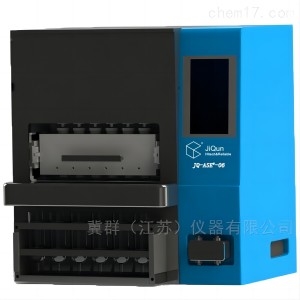
Matrix compatibility and extraction efficiency optimization expand application boundaries. For complex substrates such as soil, sediment, and animal and plant tissues, the system optimizes the structure of the extraction tank (such as a cylindrical design with a sieve plate) to reduce substrate clogging, and enhances solvent penetration through a pulse pressure mode (pressure fluctuation ± 1MPa). Experimental data shows that the extraction recovery rate of ASE for target compounds such as polycyclic aromatic hydrocarbons, pesticide residues, and phthalates can reach 85% -105%, with a relative standard deviation of<5%, meeting the pre-treatment requirements for trace analysis.
Rapid solvent extraction systemThrough the synergistic effect of high temperature and high pressure, automated process control, and environmentally friendly solvent management, the "efficient, precise, and green" transformation of sample pretreatment has been achieved, becoming the core equipment for modern analytical laboratories to improve detection efficiency. The deep optimization of its technical features not only shortens the extraction time (from several hours in traditional methods to 15-30 minutes), but also ensures the reliability and reproducibility of data, laying a solid foundation for accurate analysis of trace compounds.