-
E-mail
info@jiqun-china.com
-
Phone
13236572657
-
Address
Building 9, No. 277 Dongqi Road, Qilin Science and Technology Innovation Park, Jiangning District, Nanjing City
Jiqun (Jiangsu) Instrument Co., Ltd
Core principle and industry application of full spectrum direct reading ICP emission spectrometer
Date: 2025-08-22Read: 0
Full spectrum direct reading ICP emission spectrometerAs a powerful tool for synchronous analysis of trace elements, it has become a key detection equipment in fields such as geology, environmental protection, metallurgy, etc., thanks to its wide detection range and high sensitivity. The core principle is based on the synergy of plasma excitation and full spectrum acquisition technology, achieving rapid and accurate determination of multiple elements.
The core working principle can be divided into three key stages. The plasma excitation system is the core. Argon gas ionizes under a high-frequency electromagnetic field (usually 27.12MHz) to form a high-temperature plasma torch (temperature up to 6000-10000K). The sample solution is atomized into an aerosol by an atomizer and enters the plasma, where it undergoes solvent removal, gasification, atomization, and ionization processes at high temperatures, exciting the atoms of the tested element to high energy states. When excited state atoms transition back to the ground state, they release characteristic wavelength spectra (such as copper 324.754nm, iron 259.940nm).
The spectral acquisition and detection system determines the analysis efficiency. The composite light is decomposed into a full band spectrum (165-800nm) using a mid step grating and prism cross dispersion technique. The full spectrum is collected simultaneously through a charge coupled device (CCD) or charge injection device (CID) array detector, without the need for mechanical scanning of traditional spectrometers. The single sample multi-element analysis time is shortened to 1-2 minutes. The data processing system establishes a calibration curve by comparing the spectral intensity and concentration of standard solutions, and quickly calculates the content of each element in the sample. The detection limit can reach the level of μ g/L to mg/L, and some elements can even be as low as ng/L.
Industry applications cover precision analysis in multiple fields. In geological exploration, it is used for the determination of major elements (silicon, aluminum, iron) and trace elements (gold, silver, rare earth) in rocks and ores. One analysis can complete the detection of more than 70 elements, meeting the needs of mineral resource evaluation. In the field of environmental monitoring, heavy metals (lead, cadmium, mercury) and non-metallic elements (arsenic, selenium) in water and soil can be simultaneously measured. Combined with microwave digestion pretreatment, the detection efficiency is increased by more than 5 times compared to traditional methods.
The metallurgical industry relies on it to achieve smelting process control. In steel analysis, harmful elements such as carbon, sulfur, phosphorus, and alloy elements such as chromium and nickel can be accurately determined to ensure product quality meets standards. In the fields of food and medicine, it is used to detect pollutants and nutrients in raw materials, such as calcium, iron, zinc, and heavy metal residues in infant formula, with detection accuracy meeting the requirements of the GB 5009 series standards.
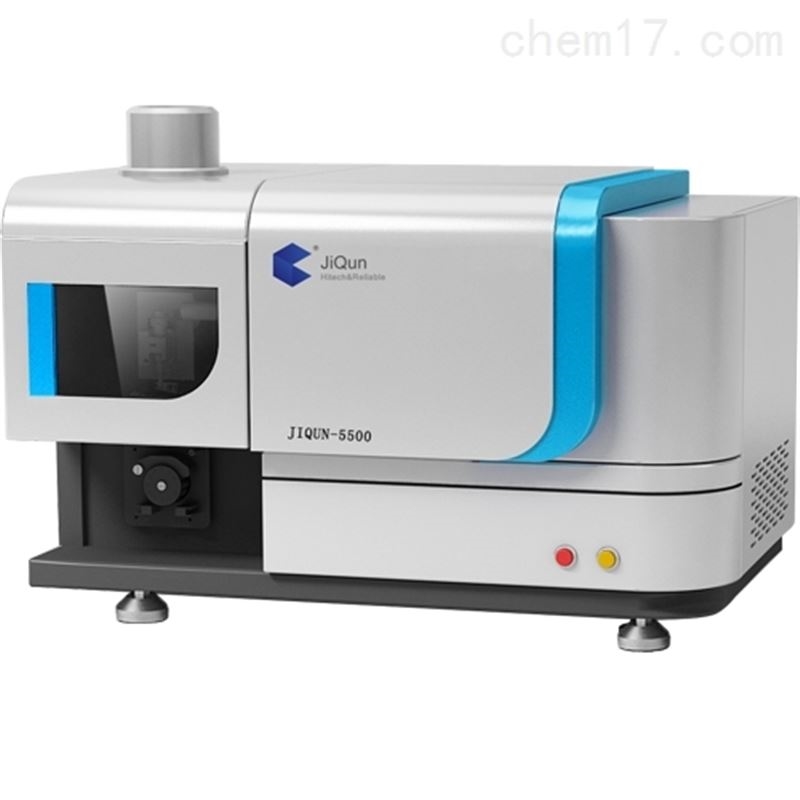
Full spectrum direct reading ICP emission spectrometerThe "multi-element synchronous analysis+wide dynamic range" feature enables it to demonstrate irreplaceable advantages in complex sample analysis, providing efficient and comprehensive elemental information support for scientific research and industrial production. With the upgrading of detector technology, its sensitivity and stability continue to improve, making it one of the core equipment in modern analytical laboratories.