-
E-mail
2729725878@qq.com
-
Phone
17721484389
-
Address
Building V2, No. 500 Kanghe Road, Xiuzhou District, Jiaxing City, Zhejiang Province
Jiaxing Quanpu Environmental Protection Equipment Co., Ltd
Ensuring a clean air source in the laboratory: Guidelines for using an online air generator
Date: 2025-09-23Read: 1
Online air generators have become a standard configuration in modern analytical laboratories.It converts ambient air into clean, dry, and stable compressed air through physical methods, replacing traditional steel cylinder gas and achieving "on-demand production" of gas, which is safer and more economical. However, non-standard operations can directly affect the quality of gas production and even damage precision instruments. Mastering the correct usage method is crucial.
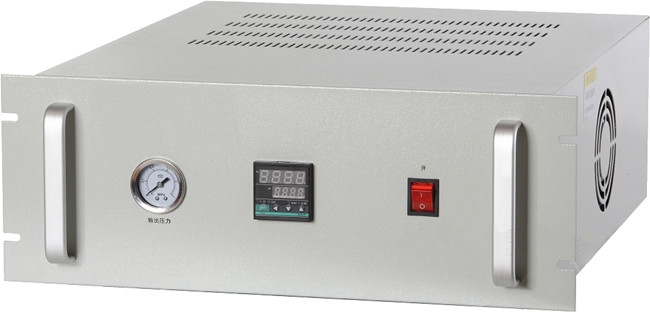
1、 Preparation before startup: Environment and connection are the foundation
1. Placement and Environment: Place the device steadily in a cool, dry, and well ventilated environment, ensuring sufficient space around for heat dissipation. The most crucial point is that the air intake must be kept away from chemical volatilization sources, dust, and high temperatures to ensure that the inhaled air is as clean as possible.
2. Inspection and connection:
① Internal inspection: After initial use or long-term disuse, confirm that the drain valve at the bottom of the air storage tank of the online air generator is closed. Check if the filter is installed properly and has not exceeded its service life.
② Power connection: Use an independent and well grounded power socket.
③ Export connection: Use high-purity gas pipeline to firmly connect the outlet of the air generator to the air inlet of the required instrument (such as GC). Be sure to ensure that all joints are well sealed and there is no risk of air leakage.
2、 Startup and Operation: Startup Process and Status Monitoring
1. Startup process:
① Turn on the power switch of the instrument. At this point, the equipment will start running, the compressor will start, and inflation will begin into the air storage tank.
② Slowly open the outlet pressure valve and adjust the output pressure to the specified value required by the instrument used. Never turn it up instantly to avoid damaging the backend instrument due to pressure impact.
2. Operation monitoring:
① Pressure gauge observation: Pay attention to observing the two-stage pressure gauges. The first level pressure gauge (tank pressure) will gradually rise to the set upper limit and automatically stop, while the lower limit will automatically start; The secondary pressure gauge (output pressure) should remain stable at the set value.
② Noise and vibration: The equipment should operate with uniform noise and slight vibration. If there is an abnormal impact sound or severe vibration, the machine should be shut down immediately for inspection.
③ Automatic drainage: Most modern equipment has automatic drainage function. If it is manual drainage, it is necessary to briefly open the drain valve at the bottom of the gas storage tank every day when the equipment is stopped (or running) to drain the condensed water until gas is sprayed out, and then close it. This is a key step in preventing internal corrosion and ensuring gas dryness.
3、 Shutdown and daily maintenance: ensure long-term stability
1. Standardize the shutdown sequence:
① First, turn off the gas demand of the connected backend instrument (such as GC).
② Close the outlet pressure valve of the air generator.
③ Turn off the power switch of the device.
④ Open the drainage valve of the gas storage tank and drain the accumulated water and pressure inside the tank. This operation can maximize the protection of internal components of the device.
2. Regular maintenance:
① Filter replacement: Strictly follow the user manual or instrument prompts to regularly replace the intake filter (excluding particulate matter) and the packing in the air purification pipe (excluding hydrocarbons, water, and oil). This is the core link to ensure the purity of the produced gas.
② External cleaning: Regularly wipe the equipment casing with a dry cloth to maintain cleanliness.
Conclusion
The online air generator is the "silent partner" of the laboratory, and its stable operation is an important guarantee for the accuracy of data analysis. From standardized startup and shutdown procedures, to daily monitoring of pressure and drainage valves, to regular replacement of filters, every detail embodies the spirit of scientific management that strives for excellence. Proper use not only extends the lifespan of equipment, but also takes responsibility for the precision instruments and scientific experimental results in the backend. Only through persistent and standardized operations can we ensure the continuous and pure flow of this' vitality '.