-
E-mail
2729725878@qq.com
-
Phone
17721484389
-
Address
Building V2, No. 500 Kanghe Road, Xiuzhou District, Jiaxing City, Zhejiang Province
Jiaxing Quanpu Environmental Protection Equipment Co., Ltd
Efficient experiments are necessary, and the correct use of a nitrogen generator specifically designed for nitrogen blowing instruments is necessary
Date: 2025-07-28Read: 1
In fields such as chemical analysis, laboratory research, and food testing, nitrogen purging is a common technique widely used for sample concentration, solvent removal, and promotion of certain reactions. The nitrogen blower and nitrogen generator are the core equipment for achieving this process, especially the nitrogen generator, which provides a stable and pure nitrogen source for the experiment. This article will introduce its usage method to help users better master this device.
I. Overview
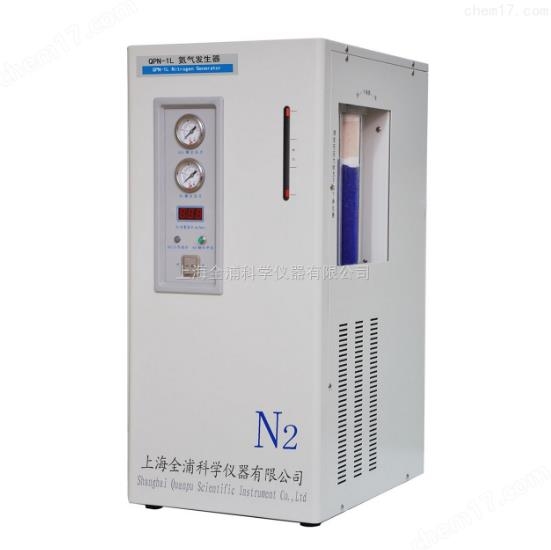
The dedicated nitrogen generator for nitrogen blowing instrument is a device that separates nitrogen from air through physical and chemical methods. Unlike traditional nitrogen cylinders, it can continuously and stably generate high-purity nitrogen gas through nitrogen generation technologies such as membrane separation, pressure swing adsorption, etc., for use in laboratory equipment. Nitrogen purging is a process that utilizes the low-temperature characteristics and chemical inertness of nitrogen to remove volatile solvents from a solution. It is commonly used in liquid chromatography, gas chromatography, and sample processing.
The dedicated nitrogen generator for nitrogen blowers is generally used in conjunction with nitrogen blowers to provide the required nitrogen flow rate. It has the function of automatically adjusting nitrogen flow rate, pressure, etc., adapting to different experimental needs, and ensuring the purity and stability of nitrogen, avoiding gas pollution of experimental samples.
2、 Working principle
1. Membrane separation method: By using special membrane materials, oxygen and nitrogen in the air are separated. The selective permeability of the membrane allows nitrogen to be filtered out, while oxygen, carbon dioxide, and water vapor are eliminated.
2. Pressure swing adsorption method: Using the adsorption characteristics of molecular sieves for gases at different pressures, separate nitrogen and oxygen from the air. By working alternately at different pressures, the adsorption and release processes can continuously and stably output pure nitrogen gas.
Both technologies can provide high-purity nitrogen gas to meet the needs of laboratories.
3、 How to use it correctly
When using a nitrogen generator, the following steps and precautions should be noted:
1. Equipment installation and connection: Before using the equipment, first ensure that it has been correctly installed and connected to the nitrogen blower. Connect the output end of the device to the inlet of the nitrogen blower through an adaptive pipeline to ensure a sealed and leak free environment.
2. Nitrogen flow rate setting: Set the flow rate of the equipment according to experimental requirements. The flow rate of nitrogen can usually be adjusted through the control panel of the equipment. Generally speaking, the nitrogen flow rate needs to be adjusted according to the scale of the experiment and the sample size. The common flow range is 0.5-5 L/min.
3. Purity and pressure regulation: Ensure that the purity of nitrogen meets the experimental requirements. Most equipment can provide 99.99% purity nitrogen gas. Before the experiment, check whether the instrument can stably output high-purity nitrogen gas. In addition, adjust the output pressure of the equipment to ensure uniform and stable airflow.
4. Start nitrogen purging: After starting the equipment, start the nitrogen blower and observe whether nitrogen is smoothly blown into the sample tube. At this point, nitrogen carries away volatile solvents or organic compounds through the surface of the sample, completing the blowing process. According to experimental requirements, the blowing time and nitrogen flow rate can be set.
5. Monitoring and maintenance: During use, regularly check the working status of the equipment to ensure its normal operation. If abnormalities occur (such as unstable airflow, unstable pressure, etc.), the cause should be promptly investigated and necessary repairs and maintenance should be carried out.
4、 Advantages
1. High cost-effectiveness: Long term use of nitrogen generators is more economical than frequent replacement of gas cylinders.
2. Strong stability: able to provide continuous and stable high-purity nitrogen gas, suitable for long-term high load operation.
3. Space saving: No longer need to store gas cylinders, reducing the occupation of laboratory space.
4. High convenience: No need to frequently replace gas cylinders, convenient for daily laboratory management.
V. Conclusion
The combination of nitrogen generator and nitrogen blower greatly improves the processing efficiency of volatile organic compounds in the laboratory. Mastering the correct operating methods can not only ensure the accuracy of experimental results, but also extend the service life of equipment.