-
E-mail
qd158@goodtechwill.com
-
Phone
15066169235
-
Address
Room 101, Building 19, Qingdao Wanggu Hexin Park, No. 8 Tongshun Road, High tech Zone, Qingdao City, Shandong Province
High Tech Scientific Instruments (Qingdao) Co., Ltd. (High Speed Rail Testing Instruments)
Application of Polymer PVT Testing in Non Metallic Materials for Vehicles
Date: 2025-08-25Read: 1
polymerApplication of PVT testing in non-metallic materials for vehicles
High speed railway detection equipment
pick To: With the continuous expansion of market demand, the performance requirements for new materials are becoming increasingly high. The process of converting materials into products is accompanied by changes in temperature, pressure, and volume. These parameters play a very important role in the final shape of the product. How to monitor and analyze the molding process of the productThe changes in P-V-T state and the corresponding quality relationship of the products can be used to obtain high-quality products by adjusting process parameters. Through the explanation of polymer PVT testing technology, this article hopes to provide assistance for the development and application production of new materials and their products, and help promote the development of new energy vehicles.
keywordsNon metallic materials for automobiles, injection and extrusion moldingPVT testing;
1、 Preface:
With the continuous development of the new energy vehicle industry, the requirements for non-metallic materials used in vehicles are moving towards high precision, high functionality, lightweight, low cost, and high added value. However, the current development speed of new materials is far behind the market demand. The problems of dimensional accuracy, weight accuracy, and work stability that arise during the transformation of materials into precision products urgently need more convenient and efficient technological solutions.
Polymer'sThe PVT parameter, which refers to the relationship between the pressure (P), volume (V), and temperature (T) of polymers, is a fundamental property of polymers and plays a crucial role in their production, processing, and application [1].Made of polymerThe PVT relationship curve can be used to obtain the influence of temperature and pressure on the specific volume of polymers, and to intuitively understand information such as polymer density, specific volume, compressibility, volume expansion coefficient, and equation of state. By studying the relationship between polymer PVT, phenomena related to pressure, density, temperature, etc. during injection molding can be obtained. The causes of defects such as warping, shrinkage, bubbles, and defects in product processing can be analyzed, and the optimal process parameters can be formulated more quickly to obtain high-quality products. Therefore, it is necessary to obtain more accurate and practical PVT data for more precise prediction, evaluation, optimization, and calculation.
IIPVT testing principle:
polymerThe PVT testing equipment mainly consists of a testing material cylinder, a testing transmission system, a heating and cooling control system, sensors, and a data acquisition and analysis system. During testing, a fixed amount of polymer is heated or cooled according to the set temperature, and rate based temperature control can be selected. Analog airflow cooling is used to increase the accuracy of temperature control. A servo motor is used to control the pressure plunger to maintain a constant pressure according to the set pressure. Then, a high-precision grating ruler is used to sense the volume change of the polymer during expansion or contraction when the temperature changes. The process ensures the sealing of the system, prevents leakage and air from entering, and obtains density, specific volume and other data.
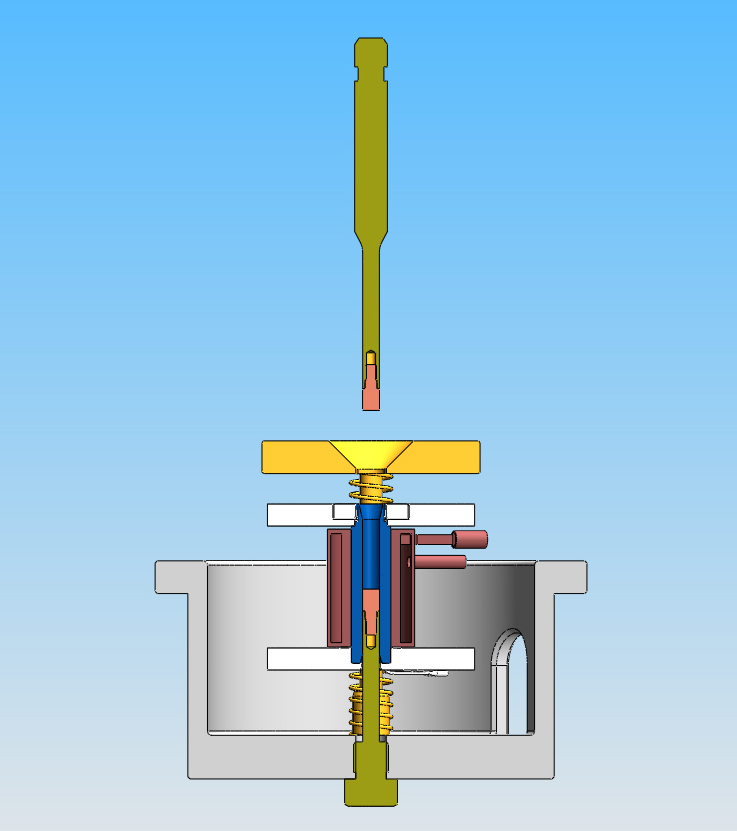
image1 PVTStructure of testing equipmentprinciple
IIIApplication of PVT relationship
application1:Obtained during injection moldingPVTState change curve;
During the injection molding process, non Newtonian plastic melt undergoes non isothermal transient flow in the mold cavity. On the one hand, the melt rapidly cools due to contact with the low-temperature mold, and on the other hand, heat is generated due to high-speed shear. During this period, it undergoes different pressure, temperature, and shear rate changescomprehensiveTo describe the influence of processing conditions on the flow properties of the melt, it is necessary to know the viscosity under various conditions (pressure, temperature, and shear rate)[2]Polymer materials undergo a series of changes in their physical properties during the molding process. By analyzing the properties of the materialsThe analysis of P-V-T characteristic relationship can find the corresponding processing path in the material PVT relationship curve.
table12] Injection molding process parameters
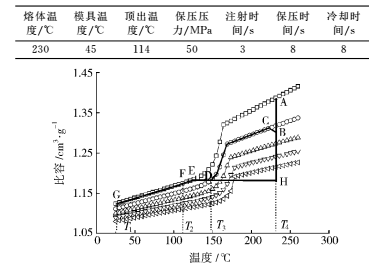

image2[2] PVTState curve and injection molding process route
image2shown,A-B-C-D-E-F-GThe route is through a tablegridProcess parameters andPVTThe entire injection molding process described by the curve.The injection molding process generally includesThe following stages:
1. Plasticization: A in the picture Point represents the state of the melt that has been plasticized and is at the melting temperature before injection.The plasticizing pressure increases,Plasticization timeincreaseMelt Temperaturepromote,Good plasticizing quality, uniform temperature, but plasticizing efficiencyDecrease,Generally, the back pressure is not too high. In general, the lower the back pressure, the better, and it should not exceed20MPA。
2. Mold filling (injection): Sections A-B are the filling and injection stages of the material at the plasticizing temperature (T4). If the injection pressure is not sufficient, it is easy to cause product indentation. When the pressure is high, the product becomes compact and shrinks less.
3. Injection switching to holding pressure: The B-C section switches from filling to holding pressure. Accurate switching is the key to ensuring pressure in the mold cavity. If the switching is too early, the filling of the mold must be completed under holding pressure, causing a significant orientation of holding pressure; Switching too late, excessive pressure rise in the mold cavity may lead to overcharging, resulting in flash and internal stress in the product. During the pressure holding processfeed inletThe high orientation generated at this point is very detrimental to the quality of the product. In order to reduce the pressure holding orientation, the material pressed into the mold cavity during the pressure holding stage should be minimized as much as possible.
4. Cooling molding: The C-D section on the isobaric line is the process of maintaining pressure and cooling the material inside the mold cavity. The holding pressure should not be less than the injection pressure, slightly greater than the injection pressure, in order to achieve the holding pressure effect. holding pressureincreaseMold cavity pressureincreaseProduct densityenlarge,shrinkage rateBecome smaller,internal stressincrease.Point D indicates that the material inside the mold cavity is cooled to a certain pressurefeed inlettemperatureT3, At this point, its corresponding specific volume is VD. From then on, the material will no longer enter the mold cavity. The D-E section is a process of equal specific volume cooling, which determines the pressure change inside the mold cavity until it reaches the atmospheric pressure line.
5. Mold ejection: The E-F section refers to the ejection of the product when it cools along the constant pressure line and reaches the ejection temperature T2. The G point represents the ambient temperature, indicating that the product is cooled to room temperature T1 under normal pressure, thus completing the entire injection molding cycle. At this point, VG represents the specific volume of polypropylene at room temperature.
As can be seen from the figure,There are many processing paths for injection molding,That is, throughDifferent process conditions,all acceptableBy ensuring that each injection molding reaches the constant pressure line at the same point, the same volume shrinkage can be achieved, resulting in high dimensional accuracy, 利用PVT testing technology can quickly select the simplest machining path.
shoulduse2Obtaining thermodynamic parameters of polymers using equation of state method;
Currently describing polymers in injection molding simulationPVTThe widely used relationship is the modified dual domainTaitEquation of State. By analyzingPVTNonlinear regression of test data, obtainingTaitEquation of State.
The equation of state method can obtain thermodynamic parameters of polymers, providing material property parameter database support for injection molding simulation software, such as material specific volume, thermal expansion coefficient, isothermal compression coefficient, and crystallization temperature. Due to the influence of accurate and reliable material property parameters, there may be differences between computer simulation results and actual forming processes.
By analyzing9928HThis material'sPVTPerformance research utilizing modified dual domainsTaitSimulate the curve of the state equation,As shown in the figure3It can be seen that300barand600barThe fitted curve under pressure conditions is basically consistent with the actual test curve.
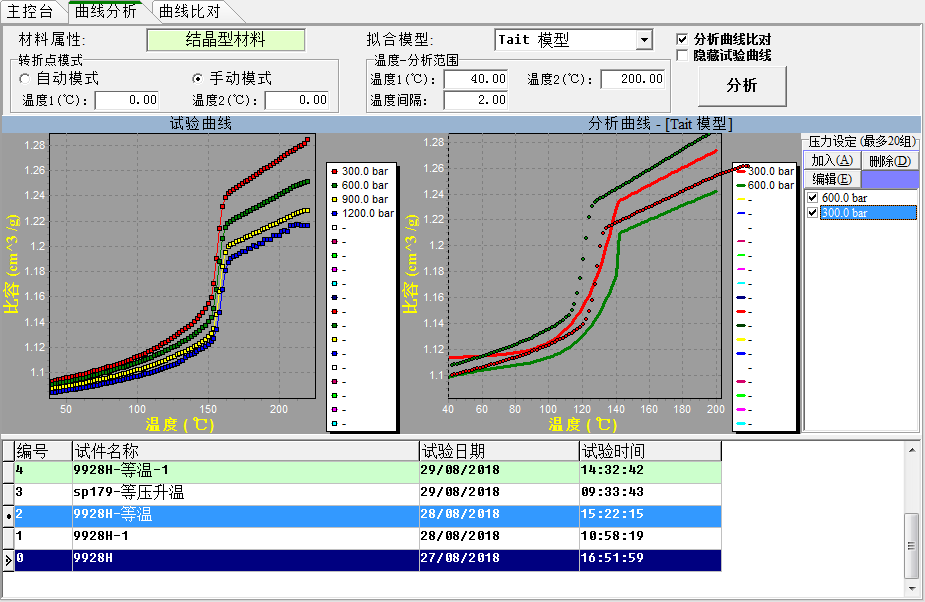
image3 Experimental curve andTaitModel curve comparison
application3Measurement aggregationcombine, synthesizePhase transition temperature and pressure of substances;
|
|
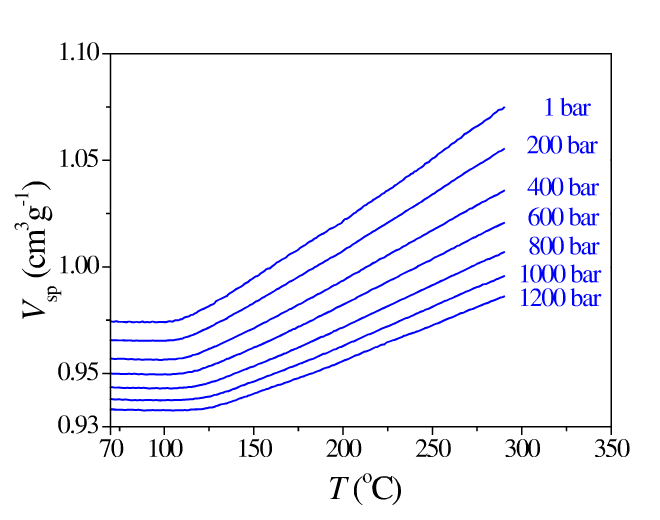
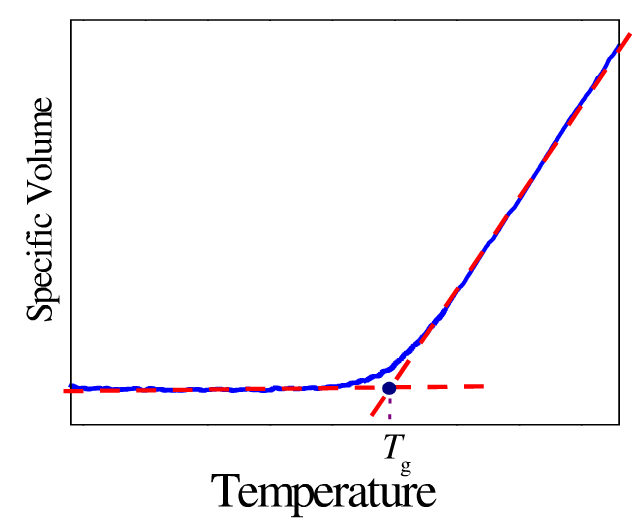
image4 gathercombine, synthesizethingPhase transition temperature under different pressures
As shown in the figure4As shown, by testing the polymer under different pressuresPVTThe relationship curve can intuitively show the phase transition temperature of this polymer under different pressure conditions.
4、 Conclusion
By studying polymersPVTrelationaltest,Not only can it find the best production process path, but it can also reduce the occurrence of products in productionAppearance, size, weight, etcQuality issues, and the various physical parameters of materials can be obtained through the equation of state, providing data support for theoretical research;PVTtestCombined with actual production processes,canImprove the conversion efficiency from research and development of new materials to mass production, assist in the development of non-metallic materials, and promote technological breakthroughs and innovative applications in new energy vehicles in China.
References:
[1] Yang Weimin, Wang Jian, Xie Pengcheng, Ding Yumei, Research Progress on Polymer PVT Relationship Testing Technology, China Plastics, 2008, 22 (2): 81-89
[2] Li Feng, Sun Jin, Li Yongquan, Study on the Relationship between Rheological Properties and PVT of Polypropylene and Its Application in Injection Molding, China Plastics, 2012, 26 (6): 62-66