-
E-mail
qd158@goodtechwill.com
-
Phone
15066169235
-
Address
Room 101, Building 19, Qingdao Wanggu Hexin Park, No. 8 Tongshun Road, High tech Zone, Qingdao City, Shandong Province
High Tech Scientific Instruments (Qingdao) Co., Ltd. (High Speed Rail Testing Instruments)
A new method for detecting non-metallic materials in vehicles - high-temperature Vicat
Date: 2025-09-01Read: 3
A new method for detecting non-metallic materials in vehicles-High temperature Vicat
Hot deformation test
Song Yating Yu Guoling
High speed railway detection equipment
pick To:With the rapid development of the performance and processing technology of non-metallic materials, they are rapidly being applied in various fields such as automobiles, aerospace, and military industry. Among them, non-metallic plastic products are widely used in automobiles. They not only have good processing and usage performance, but also have lower density than metal materials, which is of great significance for promoting the lightweighting and energy conservation of automobiles. This article mainly elaborates on non-metallic materials for automobiles-A method for high-temperature Vicat thermal deformation testing of plastics, which can be effectively applied in the non-metallic materials industry for automobiles. The Vicat softening point measured in the test is suitable for quality control and serves as an important indicator for judging the thermal properties of materials, providing assistance for the development and research of new and special materials.
keywordsNew energy vehicles, plastics, thermal performance, high-temperature Vicat deformation
1、 Introduction to New Energy Vehicles
Today, the development of fuel vehicles has faced challenges“environmental pollution”and“energy crisis”The dual pressure. Seeking new alternative energy sources and developing low pollution new energy vehicles(Also known as environmentally friendly cars or clean cars)It has become the theme of the development of the automotive industry in the world today. New energy vehicles refer to vehicles that use unconventional vehicle fuels as their power source (or use conventional vehicle fuels and adopt new on-board power devices), integrate advanced technologies in vehicle power control and drive, and form advanced technical principles, new technologies, and new structures. Compared to traditional fuel vehicles, new energy vehicles have significant advantages in terms of energy sources and exhaust emissions.
2moon9According to data released by the China Association of Automobile Manufacturers,2018year1Monthly, domestic car sales28110000 vehicles, year-on-year growth11.59%Among them, the new energy vehicle market has a good start, with a total of sales3.8510000 vehicles, year-on-year growth4.3Twice.2018This year will be a crucial year for the development of the new energy vehicle industry.
2、 Non metallic materials for automobiles
Non metallic materials are lightweight, which can make cars lighter and achieve energy-saving effects. Especially, the good processing technology of non-metallic materials gives car manufacturers higher parts design and freedom. With the improvement of the performance and processing technology of non-metallic materialswidely usedNon metallic materials are gradually replacing traditional metal materials in various parts of automobiles. For example, polypropylene plastic has the characteristics of being lightweight and maintaining good mechanical properties at high temperatures. It is mainly used in ventilation and heating systems, certain engine accessories and exterior parts, car steering wheels, instrument panels, front and rear bumpers, accelerator pedals, battery cases, air filters, cooling fans, fan covers, radiator grilles, steering gear sleeves, distributor covers, lamp housings, wire coverings, etc; Polycarbonate has good impact resistance, creep resistance, heat resistance, etc., and is used in car bumpers, scale plates, heater base plates, etc; Polyetherimine(PEI)Due to its glass transition temperature reaching249℃It can meet the requirements of products such as reflective plates, flexible circuit boards, and temperature control box boards for automotive reflectors. With the increasing application of non-metallic materials and the higher requirements for material performance, systematic performance testing will provide stronger support for the safety and optimized use of materials.
3、 A new method for detecting non-metallic materials in vehicles-High temperature Vicat thermal deformation test
The use and processing performance of non-metallic materials such as plastics for vehicles are largely related to temperature. As the temperature increases, molecular chain movement becomes easier, manifested as softening and deformation. The influence of temperature on the geometric stability and mechanical properties of plastics can generally be characterized by testing the Vicat softening point and thermal deformation temperature of plastics, mainly used to determine the loading of plastic test pieces(Bending stress under three-point loading)The deformation temperature(HDTDetermination of Load Deformation Temperature)And for the determination of plastic samples under specified loads, the standard pressure needle is inserted into the surface of the thermoplastic sample1mmDeep temperature(plasticVicatSoftening temperature testing method).
|
image1:Vikasoftening pointTest Principle
image2Principle of Thermal Deformation Temperature Testing |
|

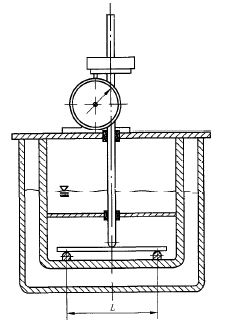
The mainstream Vicat thermal deformation testing machines on the market currently use oil as the heat transfer medium, includingGB/T1633TheGB/T1634It has been mentioned that liquid paraffin, transformer oil, glycerin, and silicone oil are all suitable heat transfer media. However, after long-term experiments, it has been found that oil, as a heat transfer medium, can only reach a maximum temperature of300℃LikePEKThePEEKHigh temperature resistant plastics such as polyimide cannot be tested; At high heating rates, oil will decompose, smoke, and burn, and long-term use will produce impurities that affect the heat transfer of the oil. Long term use will result in trend data deviation; During use, oil needs to be replaced regularly, which incurs high costs. Many customers often overlook this point, resulting in data bias.
To avoid these issues,Breaking through conventional testing conditions,Brand new high-temperature thermal deformation/VikaThe testing machine adopts a special methodHeating system,The temperature can reach up to500℃,Avoiding the potential drawbacks of using oil media; By using this heating method simultaneously, the consumption of heat transfer medium is small, and it will not decompose due to temperature changes. Datasustainablestable.
As follows:A certain materialThermal deformation(HDT)Experimental examples include installing samples according to standard testing requirements, setting experimental conditions, using a computer program to test curves in real-time, and automatically recording test data. From the following data, it can be seen that the thermal deformation temperature deviation of the three groups of samples is extremely smallAccurately measure the materialHeat Deflection TemperatureMake accurate judgments on the performance range of materials,Provide necessary basis for production, design, and scientific research.
Specifications |
batch number |
test date |
Sample width/mm |
Sample thicknessdegree/mm |
bending stress/Mpa |
Standard deflection /mm |
testtemperature /℃ |
Standard material |
1 |
2018/1/5 |
10.23 |
3.66 |
1.82 |
0.32 |
375.8 |
Standard material |
2 |
2018/1/5 |
10.11 |
3.82 |
1.82 |
0.32 |
377.5 |
Standard material |
3 |
2018/1/5 |
10.25 |
3.71 |
1.82 |
0.32 |
376.6 |

With the rapid development of the new energy vehicle industry represented by electric vehicles in recent years, the urgent demand for lightweight vehicles has greatly promoted the development of non-metallic materials. However, in order to fully utilize the advantages and characteristics of materials, a large number of performance tests need to be conducted on the materials themselves to truly make full use of them.
4、 Conclusion
This article elaborates on the principle and significance of high-temperature Vicat testing, indicating that Vicat thermal deformation testing provides assistance for the research and technological breakthroughs of non-metallic materials for automobiles, and thus contributes to the lightweighting, energy conservation, and emission reduction of automobiles. High temperature Vicat testing can overcome the temperature limitations of ordinary Vicat testing and has guiding significance for the research of new and special materials.