-
E-mail
qd158@goodtechwill.com
-
Phone
15066169235
-
Address
Room 101, Building 19, Qingdao Wanggu Hexin Park, No. 8 Tongshun Road, High tech Zone, Qingdao City, Shandong Province
High Tech Scientific Instruments (Qingdao) Co., Ltd. (High Speed Rail Testing Instruments)
A new evaluation method for extrusion flowability of rubber sealing strips
Date: 2025-08-19Read: 4
A new evaluation method for extrusion flowability of rubber sealing strips
High speed railway detection equipment
Abstract:The vast majority of polymer material processing techniques are completed through various flow processes, and the flowability of the rubber directly affects the uniformity of the rubber mixing and the dimensional stability of the product. Currently, it is commonly usedMooney viscosityTo characterize. However, in the actual production and processing of rubber, it needs to go through various processing steps such as plasticizing, mixing, rolling, and extrusion, and its shear rate is much higher than the testing range of Mooney viscosity. Simply usingMooney viscosityThere are certain limitations to using a single indicator to characterize the flowability of rubber materials. This article mainly provides a new evaluation method for the extrusion flowability of rubber sealing strips, which is closer to the production process and can effectively control the quality of rubber materials at high speed, helping to improve processing technology and guide material research.
KeywordsRubber sealing strip, extruded molding, flowability, processing performance;
Rubber belongs to polymer materials, and there are many differences between the motion characteristics of polymers and low molecules. It has multiple motion units including segments, links, branches, side groups, and the entire molecular chain【1】Adding various additives to rubber makes its movement more complex, and there is a phenomenon of shear thinning, which means that rubber materials have different viscosity and flowability at different shear rates, exhibiting different processing properties. Therefore, simulating the actual extrusion process of rubber in reality,It must be tested within the range of shear rates,Only by obtaining corresponding parameters can we better characterize the processing performance of rubber,To optimize processing conditions and ensure the stability of rubber material quality.
Regarding the properties of rubber materials, rheology has been the most extensively studied both domestically and internationally. Rheology mainly studies the flow and deformation laws of materials. And the flowability of the rubber material mainly affects its subsequent processability【2】.Traditional liquidity testing usually uses the Mooney viscosity value to characterize the torque of the rubber material under fixed speed conditions,Its shear rate is much lower than the shear rate experienced in actual rubber mixing, rolling, extrusion and other processes, and the Mooney viscosity machine can only simulate the shear rate range of rubber processing technology in a small range. Therefore, using only the Mooney viscosity value to characterize the flowability or processability of the rubber material is not enough. The rubber extrusion flowability testing machine can cover the shear rate range of most processing techniques and meet different testing requirements.
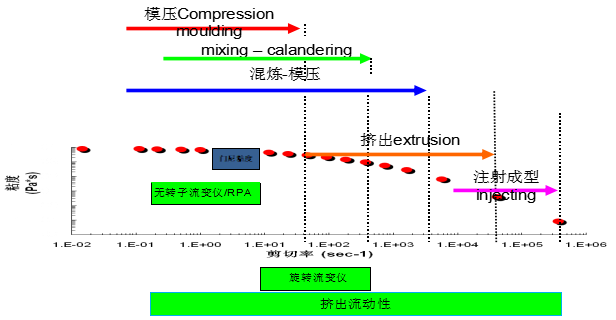
image1 Shear rate diagrams corresponding to different processing techniques
The principle of rubber extrusion flowability testing is to load raw rubber or mixed rubber material into a cylindrical barrel of a plunger type flowability tester, heat it to a set temperature, and then drive the plunger in the barrel with a constant pressure to squeeze the sample, forcing the sample to pass through the capillary die at the bottom of the barrel to determine its rheological properties. By analyzing the flow field of the sample in the capillary die, calculate the shear stress, shear rate, and shear viscosity,And the flowability of rubber can be characterized by the amount of mold extrusion volume of the sample under constant temperature and pressure conditions over a constant period of timeCan.
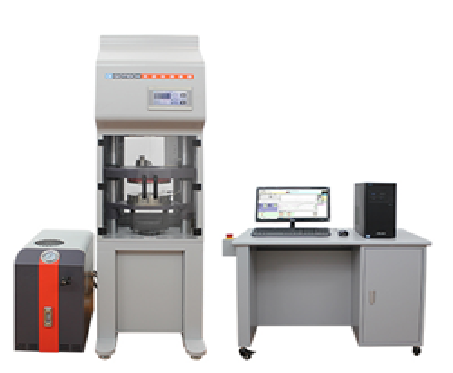
image2 RCR-6000Rubber extrusion flowability testing machine
Rubber sealing strips are usually produced using extrusion molding technology due to their complex shape, and the rubber material is controlled to have a certain shape through the mouth mold. There are many factors that affect the final molding of the rubber material during this process, such as rubber formula, extrusion temperature, extrusion rate, mouth size, and so on. Different temperature, pressure, and shear rate conditions can be set through rubber extrusion flowability testing to simulate different testing process conditions and provide more accurate guidance for the processing of extruded products. For example, in the actual production of rubber sealing strips, the extrusion temperature is the key to the basic process. If it is too high or too low, it will affect the extrusion rate and the smoothness of the product surface. Choosing the appropriate temperature can ensure that the semi-finished product does not have excessive burning, and the surface does not have roughness or bubbles.
For the sealing industry, in order to improve overall product quality, stabilize production, reduce defective products, and enhance efficiency, it is necessary to start from the details. The rubber extrusion flowability analyzer can guide the processing technology through more realistic and effective performance parameters, compensate for the shortcomings of traditional characterization methods, help control product quality, and improve product performance.
References
1 Rubber Technology Teaching and Research Office of Shandong University of Chemical Technology.Theoretical basis of rubber technology.
2 Mechanism and Experimental Study of Rubber Material Flow Testing