-
E-mail
qd158@goodtechwill.com
-
Phone
15066169235
-
Address
Room 101, Building 19, Qingdao Wanggu Hexin Park, No. 8 Tongshun Road, High tech Zone, Qingdao City, Shandong Province
High Tech Scientific Instruments (Qingdao) Co., Ltd. (High Speed Rail Testing Instruments)
A Brief Discussion on the Influence of Temperature on the Friction Performance of Automotive Sealing Strips
Date: 2025-08-19Read: 4
A Brief Discussion on the Effect of Temperature on Automobilessealing stripThe influence of friction performance
High speed railway detection equipment
Abstract:The car window glass is a component that moves frequently. When the glass rises and falls, it directly rubs against the glass guide groove sealing strip, requiring the latter to have good wear resistance and small frictional resistance. When the car window glass moves up and down, the lower the frictional resistance of the glass guide groove sealing strip, the smoother the glass movement, and the lower the friction coefficient. Changes in environmental temperature and residual impurities such as ash layer left by untimely cleaning of rubber seals can affect the friction performance of rubber seals, especially in high and low temperature environments. This article uses a high and low temperature friction coefficient testing machine to investigate the influence of environmental temperature changes on the friction performance of sealing strips.
KeywordscarSealing strip,Glass guide groove sealing strip; coefficient of friction;Friction performance;NVH
Automotive glass guide groove sealing strip is a very important functional component of automobiles, which plays a role in sealing and guiding the window glass. The repeated upward and downward movements of the car window glass form wear on the glass guide groove sealing strip, and its wear resistance is a prerequisite for ensuring the long-term effective operation of the glass.[1]
The base material of the automotive glass guide groove sealing strip is ternary BAcrylic rubber(EPDM)Thermoplastic elastomers and polyvinyl chloride, etc.
Rubber car glass guide groove sealing strip glass friction layerThere are flocking, spraying, and polyethylene available(PE)Tiao Fu3Various processing methods.
The environmental temperature has a significant impact on the various properties of the sealing strip. Taking low temperature as an example,Due to the extremely slow relaxation process of vulcanized rubber at low temperatures, the hardness, modulus, and intramolecular friction increase, and the elasticity significantly decreases, resulting in a decrease in the working ability of rubber productsAt very low temperatures, rubber loses its thermal energy and behaves like glass, becoming harder and increasing in modulus; As the temperature continues to rise, the thermal energy improves the flexibility of the material, the modulus decreases, and it exhibits typical rubber behavior.
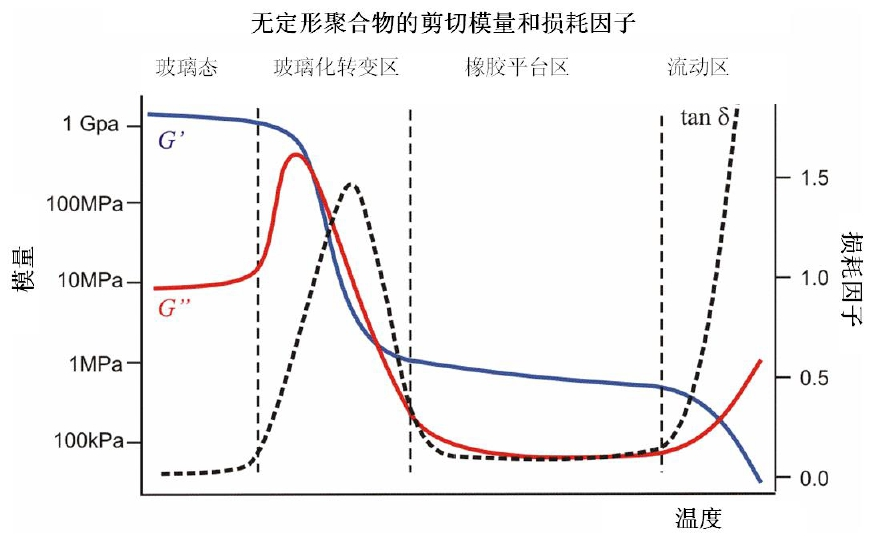
Qu Tao and others from the Shanghai Aircraft Design and Research Institute of Commercial Aircraft Corporation of China used a specially developed high-temperature and low-temperature dynamic friction test machine to study the dynamic friction performance of rubber seals with different cross-sectional shapes of aircraft cabin doors under different temperatures, compression amounts, and surface treatment conditions. They analyzed the influence of environmental factors on the dynamic friction performance of rubber seals.[2]Similarly, the friction performance of automotive seals at different temperatures is of great significance for the design and optimization of automotive seals.
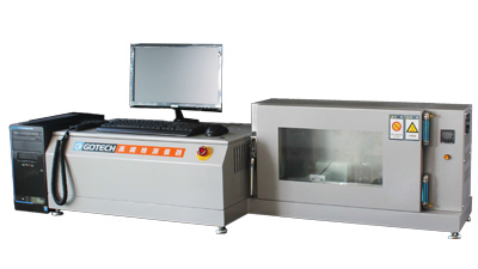
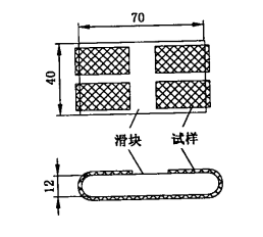
The high-speed rail testing instrument, high and low temperature friction coefficient testing machine, provides a high and low temperature testing environment. The testing principle is that the sample in close contact with the testing table is clamped on a clamping plate that can be connected and fixed to the body, and a specified load is applied. The sample and the sliding testing table form a relative motion. The frictional force on the sample is measured by a force sensing device, and the dynamic and static friction coefficients are automatically calculated by the computer system, and the test curve is drawn. It can be used to measure the dynamic and static friction coefficients of rubber seals under different temperatures, friction media, testing speeds, and other conditions.
The high and low temperature friction coefficient testing machine includes several parts: high and low temperature environment simulation system, transmission system, friction testing fixture, force sensing system, data processing and control system.
Conclusion
With the rapid development of China's automobile industry, passenger car sealing strip production enterprises have introduced many advanced production equipment and
Manufacturing technology, China's emphasis on performance testing of automotive seals is also increasing. In addition to traditional testing methods, we should pay more attention to the performance of automotive seals under real application conditions, such as friction performance testing in high and low temperature environmentshelp businessesControl product quality and improve product performance.