-
E-mail
1936867037@qq.com
-
Phone
17395967875
-
Address
5th Floor, Building 03, Liandong U Valley Science and Technology Innovation Valley, Qiming East Road, Yuhe District, Luoyang City, Henan Province, Suijing Environmental Protection
Henan Suijing Environmental Protection Technology Co., Ltd
The full process specification of portable ammonia nitrogen rapid analyzer from preparation to reporting
Date: 2025-10-20Read: 1
The portable ammonia nitrogen rapid analyzer, as a key tool in environmental monitoring, water treatment, and aquaculture fields, has a direct impact on the accuracy of detection results and equipment lifespan due to its standardized operation.The following regulations integrate core processes such as equipment preheating, reagent preparation, colorimetric measurement, and data recording, providing standardized guidance for operators.
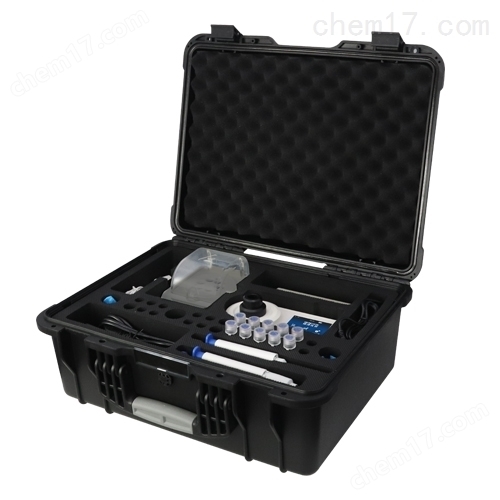
1、 Equipment startup and preheating
Before starting up, it is necessary to check the appearance integrity of the portable ammonia nitrogen rapid analyzer, confirm that the display screen is free of scratches, the button functions are normal, and check the power adapter or lithium battery level (the lithium battery needs to be charged for more than 4 hours). After starting, select the "preheating" mode and wait for 30 minutes for the light source to stabilize. During this period, reagents and water samples can be prepared synchronously. Some models (such as devices using constant light source semiconductor emitters) do not require preheating, but it is necessary to confirm whether the lifespan of the light source is within its effective period (usually 20 years).
2、 Reagent preparation and calibration
Select a pre made reagent kit based on the concentration range of the water sample to be tested. The transfer volume for low range reagent A is 4.00mL, and for high range reagent A is 4.8mL. For blank samples, add 1.00mL of ammonia free water (low range) or 0.20mL (high range) using a pipette, and for test samples, add an equal volume of water sample. After adding reagent B (1.0mL), tighten the bottle cap and shake well. Let it stand for 10 minutes to allow the color reaction to complete. The calibration process requires the use of standard solutions for multi-point calibration to ensure that the instrument's built-in curve matches the actual concentration. After calibration is completed, the screen displays a "Calibration Complete" prompt.
3、 Colorimetric measurement and data recording
Wipe the outer wall of the reaction tube clean, first place the blank sample for zeroing, and then insert the test sample in sequence and click the "Measure" button. The instrument analyzes the depth of yellow through the principle of photoelectric colorimetry and automatically displays the ammonia nitrogen concentration value (with a resolution of 0.01mg/L). It is recommended to perform 3 consecutive tests and take the average. If the data fluctuates by more than 5%, recalibration is required. After the measurement is completed, the data is automatically stored in the instrument memory (which can record the last 1000 records), and the detection time, water temperature, and environmental parameters need to be manually recorded.
4、 Equipment Maintenance and Safety Standards
After the measurement is completed, rinse the colorimetric dish with distilled water and wipe the surface of the instrument with a soft cloth. When stored for a long time, the battery should be removed and placed in a dry and dark environment. Reagents should be stored in a cool and shady place (temperature ≤ 30 ℃), away from direct sunlight. Operators are required to wear laboratory gloves and protective goggles to prevent reagents from splashing and corroding the skin or eyes. Verify accuracy using standard solutions every quarter and promptly contact the manufacturer if any abnormalities are found.
This regulation is designed through standardized processes to minimize human error, and establishes a complete quality control system from sampling to reporting through equipment self inspection, reagent expiration management, and environmental parameter recording. Strictly following this specification can significantly improve the efficiency and data reliability of portable ammonia nitrogen rapid analyzers.