-
E-mail
1936867037@qq.com
-
Phone
17395967875
-
Address
5th Floor, Building 03, Liandong U Valley Science and Technology Innovation Valley, Qiming East Road, Yuhe District, Luoyang City, Henan Province, Suijing Environmental Protection
Henan Suijing Environmental Protection Technology Co., Ltd
Intelligent Sentinel for Online COD Detector Water Pollution Monitoring
Date: 2025-10-26Read: 1
As a core equipment in the field of environmental monitoring, online chemical oxygen demand (COD) detectors provide key data support for industrial wastewater treatment, municipal sewage discharge, and river ecological protection through real-time and continuous water quality analysis technology.Its core function is to quantify the concentration of organic pollutants in water bodies, becoming an important tool for evaluating the degree of water pollution, controlling emission standards, and optimizing treatment processes.
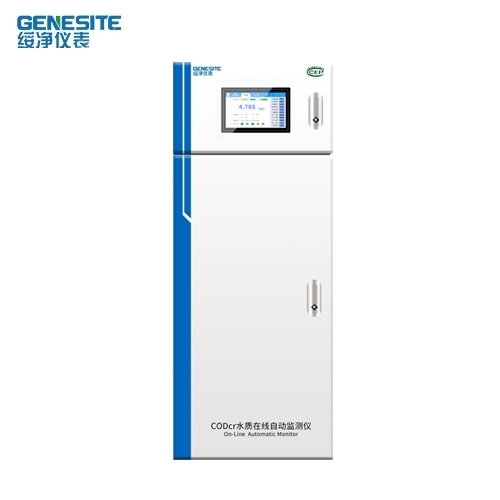
1、 Core function: Quantify the organic pollution load of water bodies
The core task of an online COD detector is to measure the content of organic matter in water samples that can be oxidized by strong oxidants, expressed in oxygen equivalents (mg/L). This indicator directly reflects the degree of organic pollution in water bodies - the higher the value, the more aerobic substances there are in the water, and the faster dissolved oxygen is consumed, thereby threatening the survival of aquatic organisms. Through 24-hour continuous monitoring, the equipment can capture instantaneous fluctuations in COD concentration, providing time dimension data for pollution tracing.
2、 Application scenario: Covering the entire chain of water quality management
In the industrial field, chemical, pharmaceutical, food processing and other enterprises deploy online COD detectors to monitor in real time whether the discharge of production wastewater complies with the Comprehensive Wastewater Discharge Standard (GB 8978-1996). If the detection value exceeds the standard, the system can automatically trigger an alarm and coordinate the adjustment of the processing technology to avoid environmental penalties. The municipal sewage treatment plant uses this equipment to optimize the operating parameters of activated sludge process, A ² O and other processes, ensuring that the effluent COD is stable below 50mg/L (Class A standard). In addition, online monitoring networks for natural water bodies such as rivers and lakes can dynamically track the impact of agricultural non-point source pollution and urban runoff on water bodies through distributed detection devices.
3、 Technical advantage: Integration of real-time performance and automation
Compared to traditional laboratory testing methods that require sampling, digestion, titration, and other steps that take 2-4 hours, this instrument uses UV absorption, electrochemical, or redox methods to achieve minute level response. Its built-in self-cleaning system can regularly flush the sampling pipeline to prevent biofilm or particle blockage; The temperature compensation function eliminates the influence of environmental temperature fluctuations on the measurement results. Some advanced models also integrate data transmission modules, supporting 4G/5G or LoRa wireless transmission, which can upload monitoring data in real time to the environmental protection department's regulatory platform, forming a closed-loop management of "monitoring warning disposal".
4、 Environmental value: promoting the refinement of water environment governance
The widespread application of online COD detectors has significantly improved the timeliness of water pollution prevention and control. Through long-term data accumulation, a regional water quality change model can be constructed to provide scientific basis for watershed management planning. For example, in the protection of drinking water sources, equipment can provide early warning of organic pollution risks to prevent water quality deterioration; In the treatment of black and odorous water bodies, the synergistic changes of COD and dissolved oxygen are continuously monitored to evaluate the effectiveness of the treatment project. In addition, its data can also be used for carbon emission accounting (organic matter oxidation process accompanied by CO ₂ production), helping to achieve the "dual carbon" goal.
From industrial emission control to natural water conservation, instruments have become the "intelligent sentinels" of modern water environment management with their real-time, automation, and precision. Its technological evolution not only promotes the upgrading of monitoring methods, but also provides key technical support for building a "harmonious human water" ecosystem through data-driven decision-making.
Last Article: Operation steps of pesticide residue analyzer
Next Article: Advantages and disadvantages of pesticide residue analyzer