-
E-mail
zhenhe17@foxmail.com
-
Phone
15658102012
-
Address
No. 86 Yuzhang Road, Jianqiao Town
Hangzhou Zhenhe Scientific Instrument Co., Ltd
Key Application of High and Low Temperature Cycle Integrated Machine in New Energy Battery Testing
Date: 2025-12-04Read: 0
With the acceleration of global energy structure transformation and the rapid development of the new energy vehicle industry, the safety, reliability, and performance stability of power batteries, as their core components, have become the focus of industry attention. Environmental simulation testing is an important part of battery research and development, production, and quality control processes. Among them, the high and low temperature cycling integrated machine plays a crucial role in the testing of new energy batteries due to its advantages of precise temperature control, rapid temperature change, and high integration.
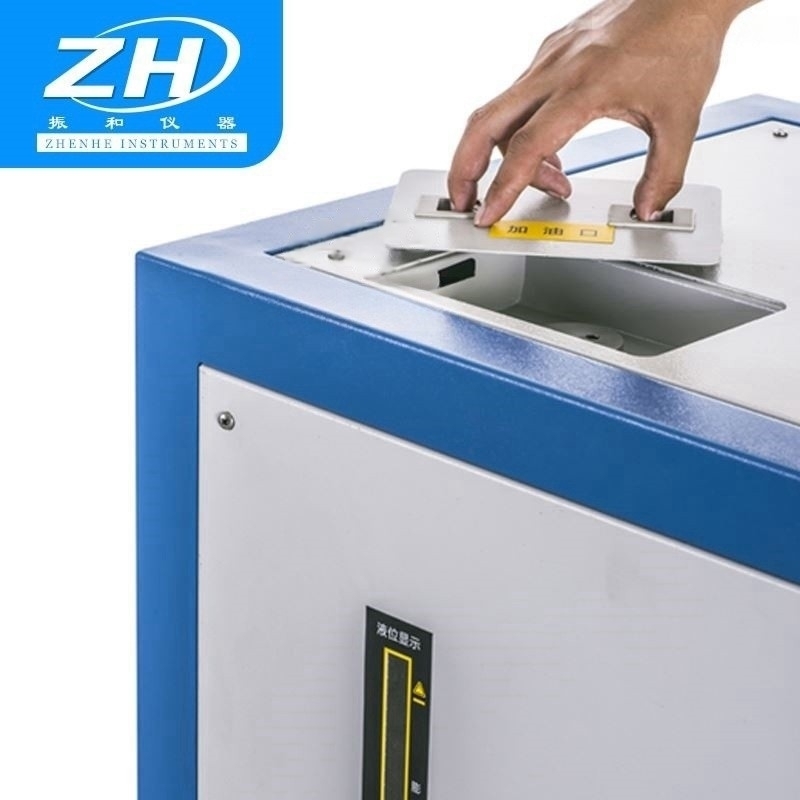
The integrated high and low temperature cycle machine is an environmental testing equipment that can quickly switch between high and low temperatures and maintain stable operation for a long time. It can be precisely controlled within a temperature range of -70 ℃ to+150 ℃ or even wider by integrating refrigeration system, heating system and intelligent control system, meeting various rigorous testing requirements. In the testing of new energy batteries, this device is mainly used to simulate the working state of the battery under various climatic conditions, evaluate its thermal management ability, electrochemical performance degradation, safety boundary, and lifespan performance.
Firstly, in the battery thermal runaway test, the process of heat accumulation inside the battery under high temperature environment can be reproduced, which helps researchers identify the triggering point and propagation path of thermal runaway. For example, in a continuous high temperature environment above 80 ℃, some batteries may experience phenomena such as diaphragm shrinkage and electrolyte decomposition, which can trigger a chain reaction. By conducting such tests under controlled conditions, companies can optimize battery structure design and thermal management systems, and enhance product safety levels.
Secondly, in the high and low temperature alternating cycle test, the equipment simulates the frequent switching and use of vehicles in cold and tropical regions to examine the structural integrity and electrical performance stability of the battery under severe temperature changes. Under repeated cold and hot shocks, lithium-ion batteries may experience microcracks or interface delamination in the electrode plates, separators, and packaging materials due to thermal expansion and contraction, leading to increased internal resistance, capacity degradation, and even short-circuit risks. The integrated high and low temperature cycling machine can be set with multiple programs (such as holding at -40 ℃ for 2 hours → heating up to 60 ℃ for 2 hours, cycling dozens of times), accurately reproducing the actual usage environment and providing data support for battery life prediction.
In addition, it also plays an irreplaceable role in system level testing at the Battery Pack level. Vehicle manufacturers usually require battery packs to be able to charge and discharge normally and maintain a certain output power under operating conditions of -30 ℃ to+60 ℃. With the help of this device, engineers can conduct thermal balance testing, cooling efficiency verification, and BMS (Battery Management System) response logic verification on the entire package to ensure its reliable operation in various climate zones.
It is worth mentioning that modern high and low temperature cycle integrated machines have gradually evolved towards intelligence and energy conservation. Some models are equipped with real-time data acquisition interfaces, which can be linked with the charge and discharge testing system to achieve "temperature electric" coupling testing; Simultaneously adopting variable frequency compressors and heat recovery technology significantly reduces energy consumption, in line with the concept of green manufacturing.