-
E-mail
sale@zjuee.com
-
Phone
13372416330
-
Address
12th Floor, Building 3, No. 1418-50 Moganshan Road, Gongshu District, Hangzhou City, Zhejiang Province
Hangzhou Zeda Instrument Co., Ltd
Standardizing the installation of temperature and humidity collectors is a key step in obtaining reliable environmental data
Date: 2025-11-17Read: 0
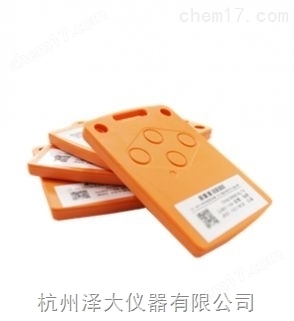
Temperature and humidity collectors are widely used in laboratories, warehousing and logistics, data centers, agricultural greenhouses, and clean rooms. The accuracy of their data not only depends on the accuracy of the sensors, but is also closely related to the installation location, method, and environmental adaptability. Incorrect installation can result in distorted readings, delayed response, and even device damage. Mastering the standardized installation method of temperature and humidity collectors is a key step in obtaining reliable environmental data.
1、 Site selection principle
Stay away from heat and cold sources: Do not install near air conditioning vents, radiators, windows with direct sunlight, or equipment cooling vents to avoid local temperature anomalies;
Avoid moisture sources and airflow disturbances: stay away from humidifiers, sinks, and frequent opening and closing of doors and windows to prevent instantaneous humidity fluctuations from interfering;
Representative monitoring area: Select a location that reflects the overall environment, such as a warehouse where the height of the middle of the goods stack (about 1.5m) should be chosen, rather than corners or passages;
Avoid electromagnetic interference: Keep away from frequency converters, high-power motors, or strong wireless devices to prevent signal acquisition distortion.
2、 Installation height and direction
Universal height: personnel activity area is recommended to be 1.2-1.8m; storage environment should be set according to the height of the goods storage layer;
Natural ventilation priority: The sensor probe should be exposed to free air and should not be enclosed in a box or obstruction;
Probe orientation: If equipped with a protective hundred leaf box, ensure that the air inlet is facing downwards or horizontally to prevent direct intrusion of rainwater and dust;
Wall installation: Use insulation gaskets to isolate wall heat conduction, especially on metal or concrete walls.
3、 Fixed and Wiring Specifications
Secure firmly: Use expansion screws or 3M adhesive (depending on the wall material) to ensure that the equipment does not shake;
Cable management:
Separate the power and signal lines to avoid parallel wiring that is too long;
Outdoor wiring requires the use of galvanized steel pipes or PVC corrugated pipes, with waterproof bends;
Attention to wireless devices: Ensure signal strength (RSSI ≥ -70dBm), and install signal repeaters if necessary;
Explosion proof/clean area: Select the corresponding protection level (such as IP65, ExdIICT6) and seal the wiring port according to explosion-proof specifications.
4、 Special environment adaptation
High humidity environment (such as cold storage and greenhouse): Choose models with heating and dehumidification function or hydrophobic film protection to prevent condensation water from damaging the circuit;
Clean room: adopting stainless steel shell and dust-free installation process to avoid introducing particle pollution;
Outdoor: Standard louver boxes must be installed to prevent exposure to sunlight and rain, while ensuring air circulation.
5、 Verification after installation
Power on preheating: After powering on, let it stand for 30 minutes until the sensor stabilizes;
Cross comparison: Test with a calibrated handheld temperature and humidity meter at the same location, with a deviation of ≤± 0.5 ℃/± 3% RH;
Record initial values: annotate installation time, location, height, and surrounding environmental characteristics for easy data analysis and traceability in later stages.